Why It Happens Here
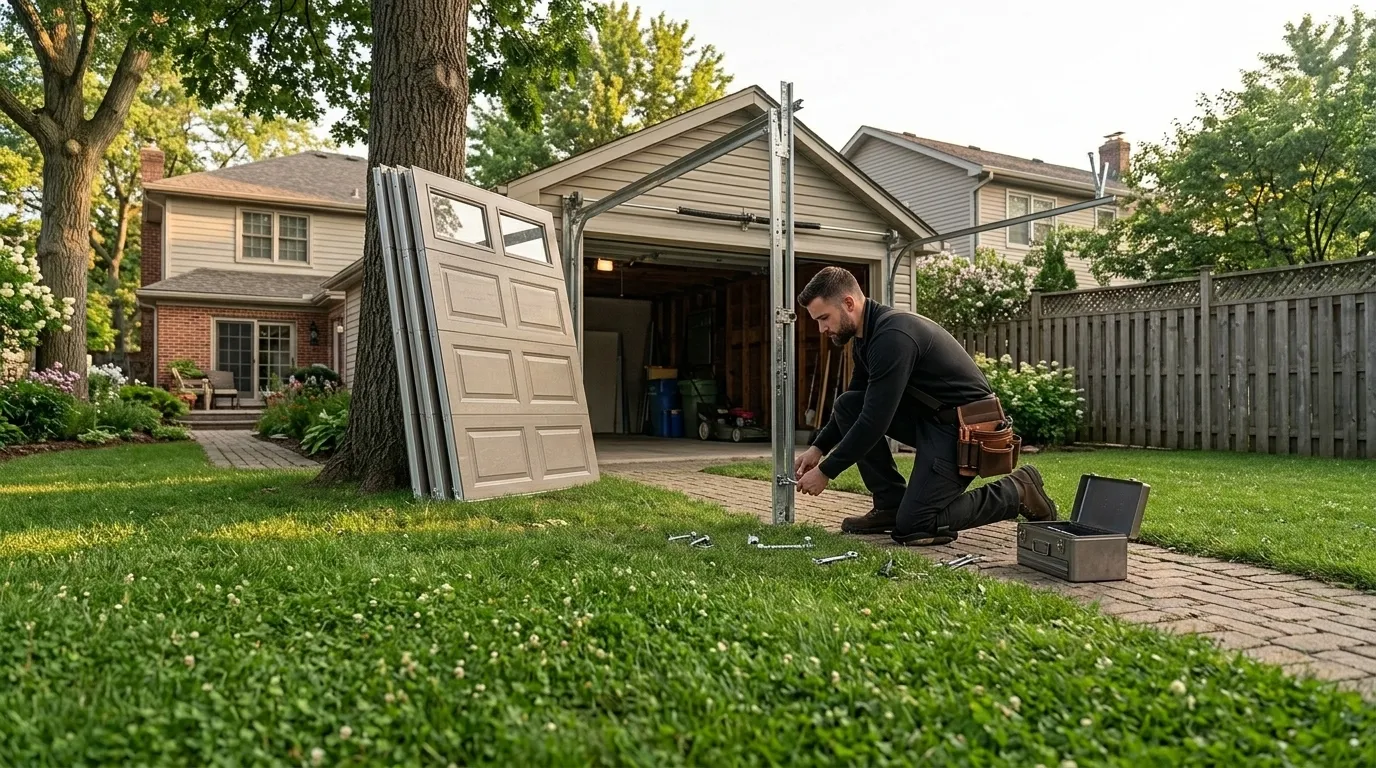
Most of the houses in this part of the county went up between 1938 and 1996, with the bulk of that stock landing around 1974 - a stretch when tracks were hung with lighter gauge steel and jamb brackets that were never meant to carry forty years of expansion and contraction. about a mile southeast, sits in that same build window, and garages there show the same wear pattern we see across the rest of the service area.
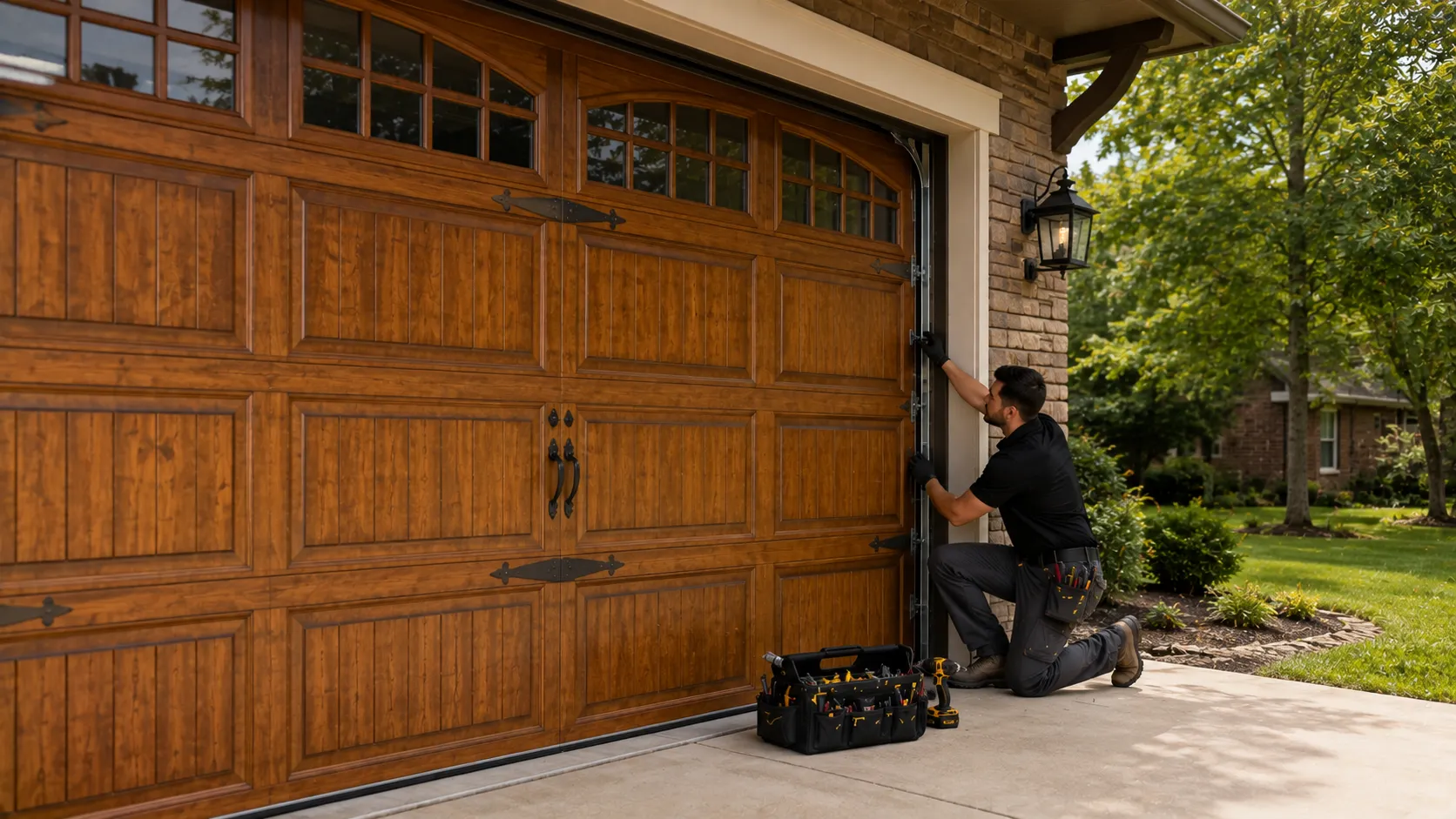
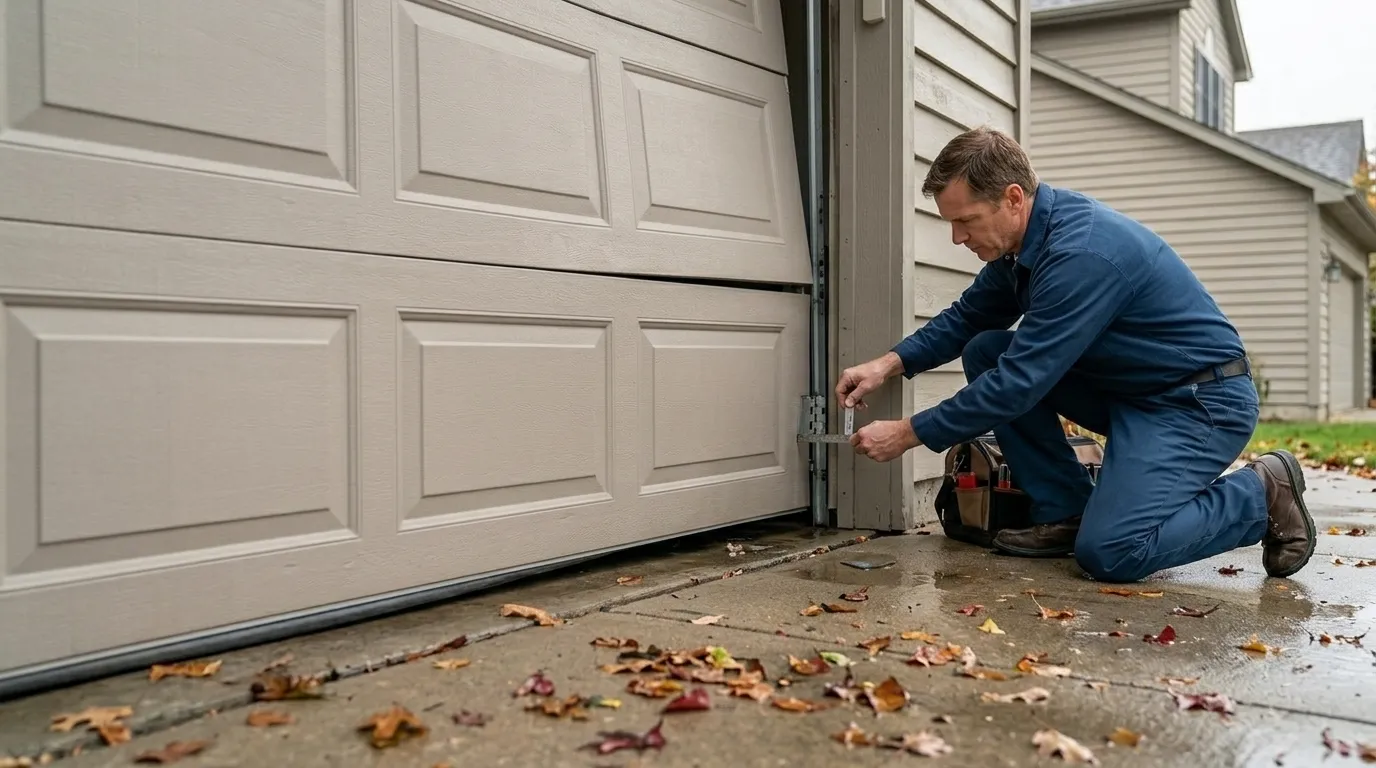
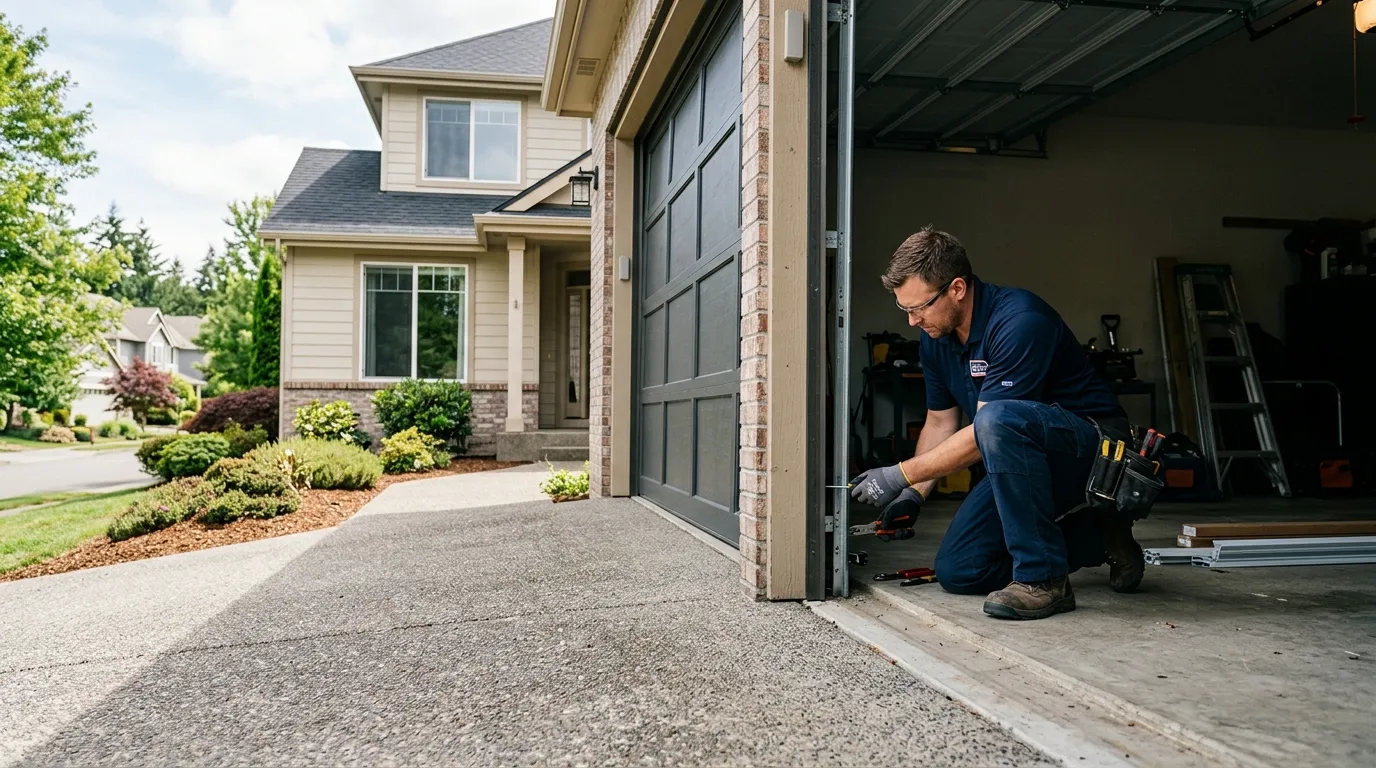
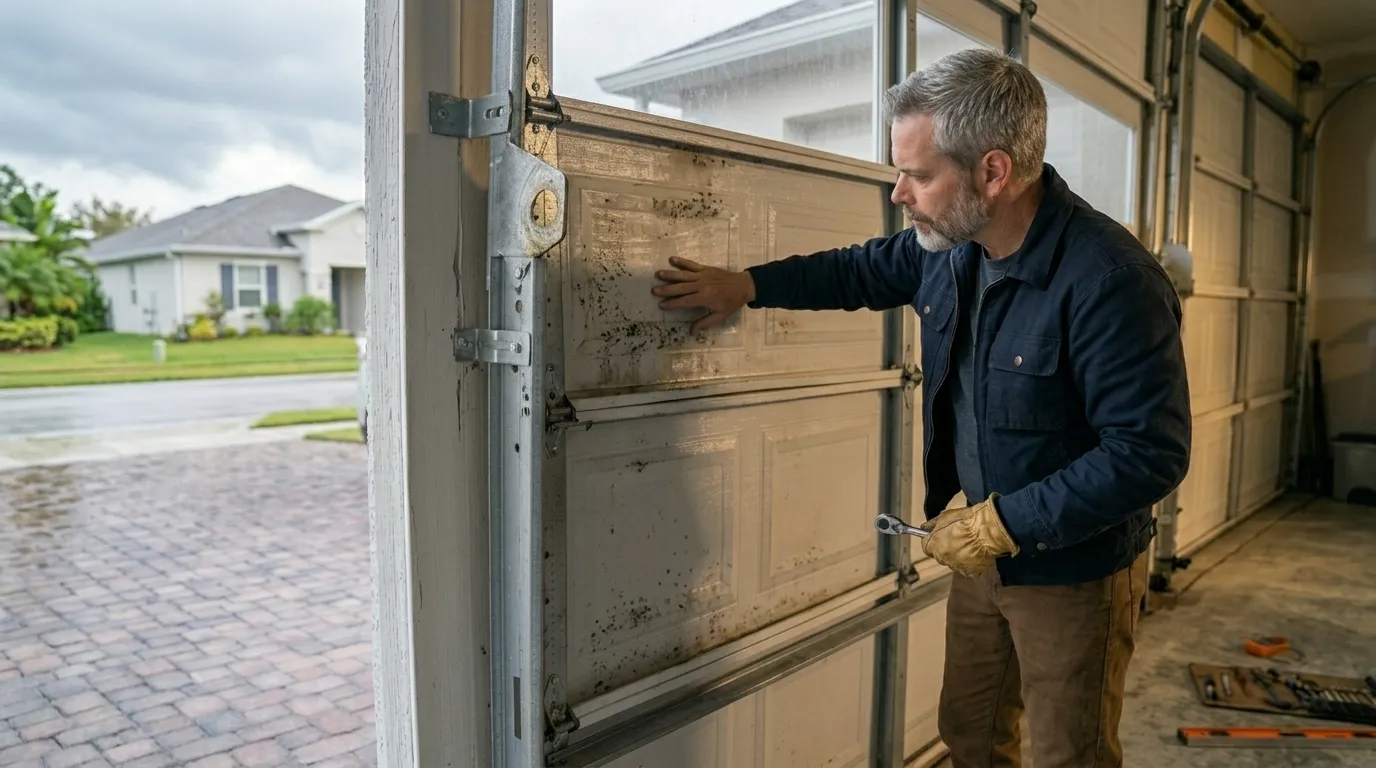
Cold winters do the real damage over time. In a cold-moderate climate band, the metal in a track contracts hard overnight and expands again by afternoon. Do that every winter for four or five decades and the lag screws holding the track to the jamb start to walk loose. Add a roller that's worn past its bearing life, or a cable that's stretched unevenly, and the door has just enough play to ride up out of the track on one side. It's rarely one dramatic event - it's a slow drift that ends with the door catching, binding, or coming free at the bottom corner.
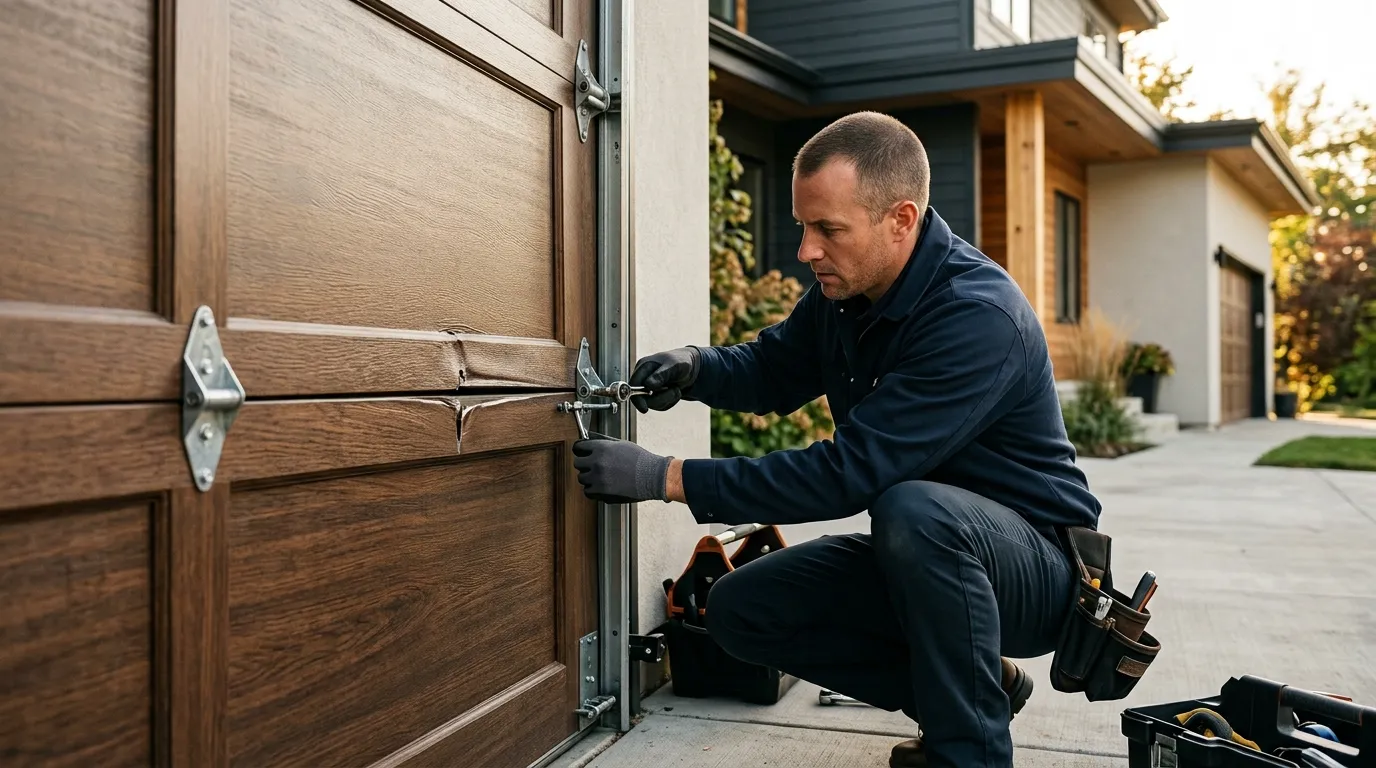
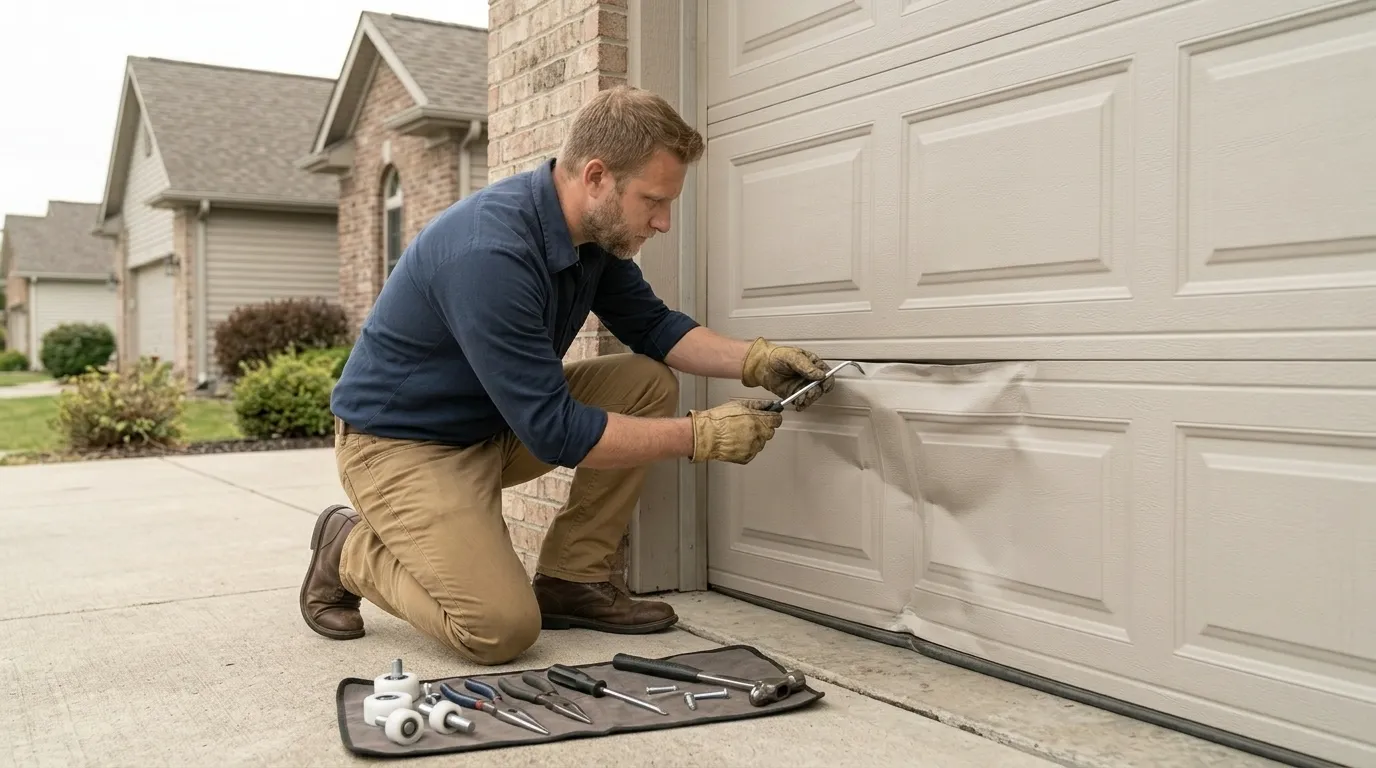
Houses built closer to 1996 have newer track hardware, but they're not immune. A door that's been struck by a car bumper or backed into by a trailer hitch can bend a track section in a single afternoon, no matter the build year.
The DIY Question
An off-track door under spring tension is not a job to eyeball and muscle back into place. If the door is only sagging slightly and the opener still moves it a few inches without binding, you can usually get it closed by hand, unplug the opener, and leave it alone until someone looks at it. That's the extent of what's safe to do yourself.
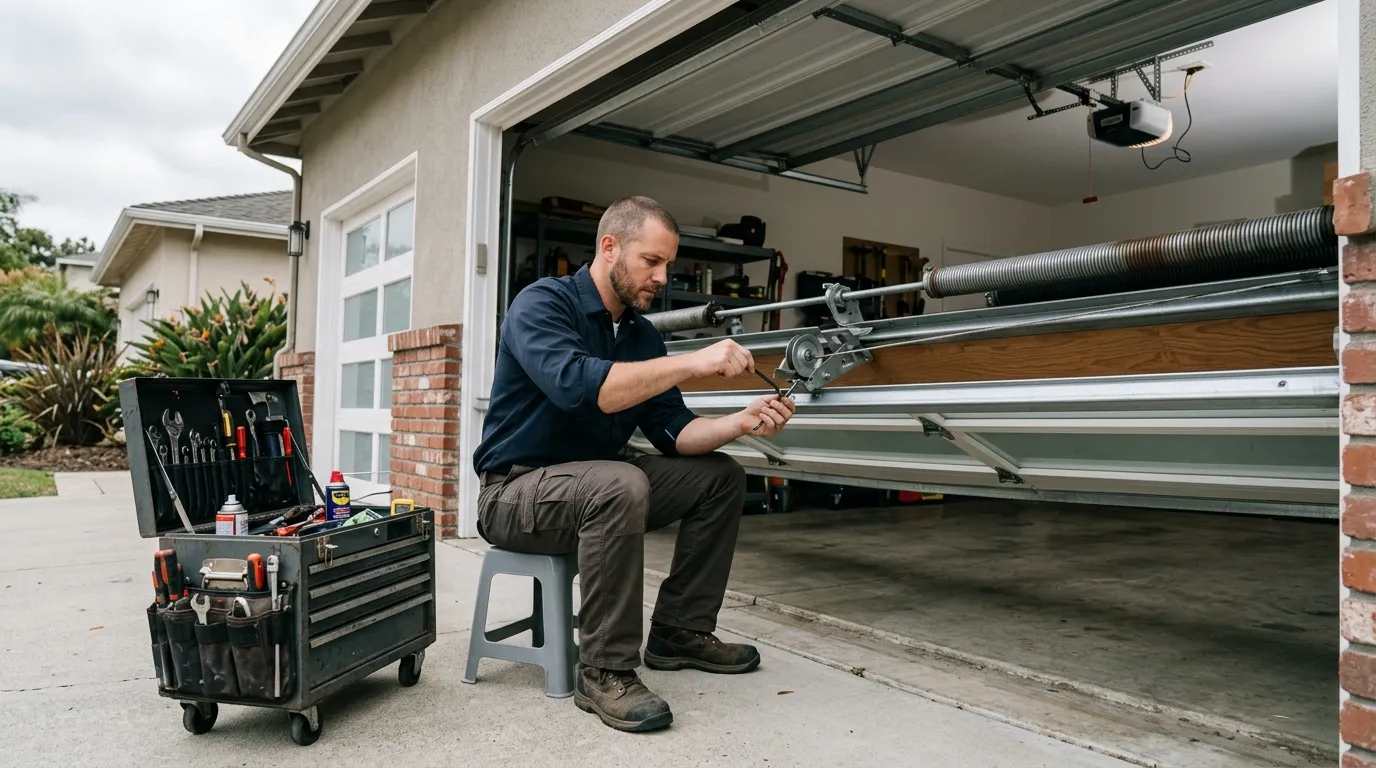
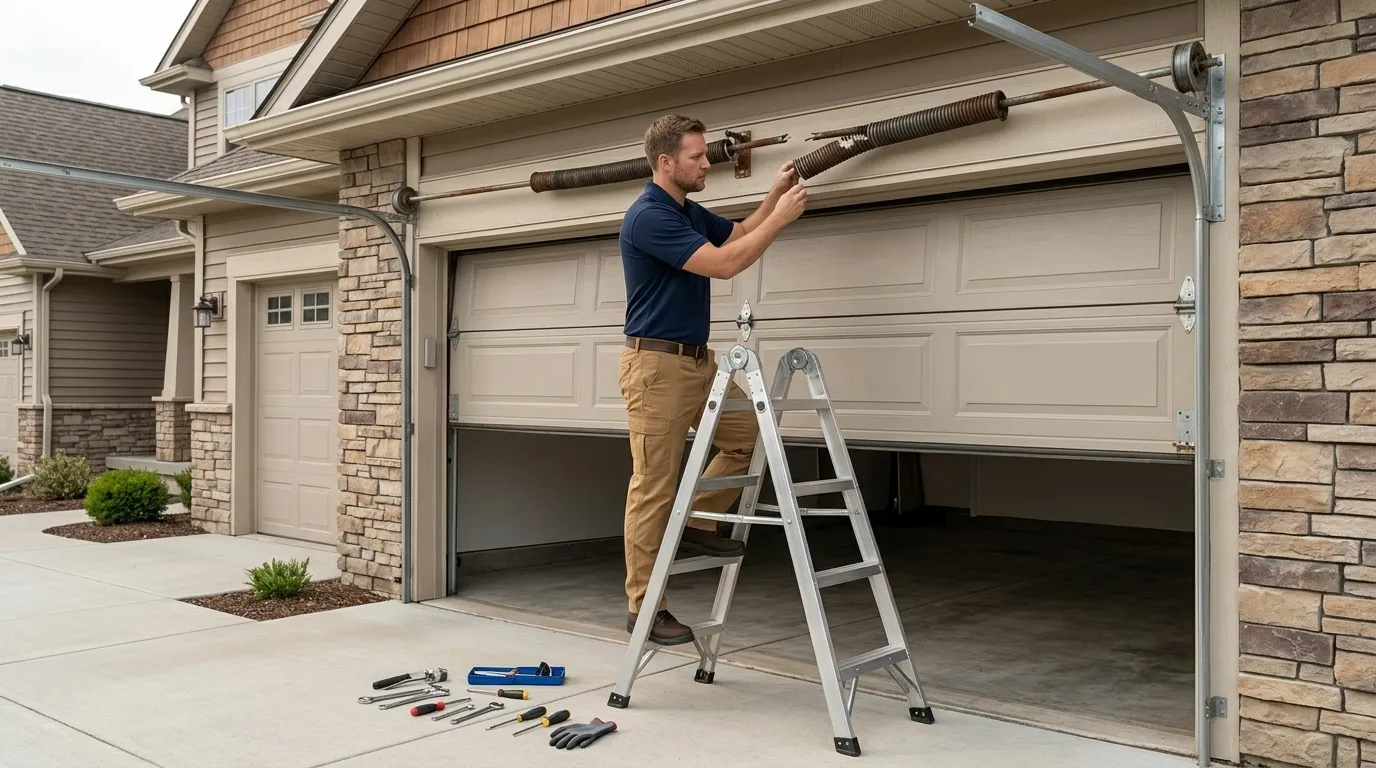
What you should not do is cut the tension, force the door back onto the track with a pry bar, or crawl under a door that's hanging on one cable. A torsion spring holds enough stored energy to break a wrist, and a track that's been bent even slightly will look fine and still bind again within days if it's forced back into shape instead of straightened or replaced.
If the door won't move at all, or one side has dropped more than an inch or two lower than the other, stop trying to adjust anything and call. That kind of lean usually means a broken cable or a spring that's let go, not a track problem you can fix by pushing on it.
Where This Job Goes Sideways
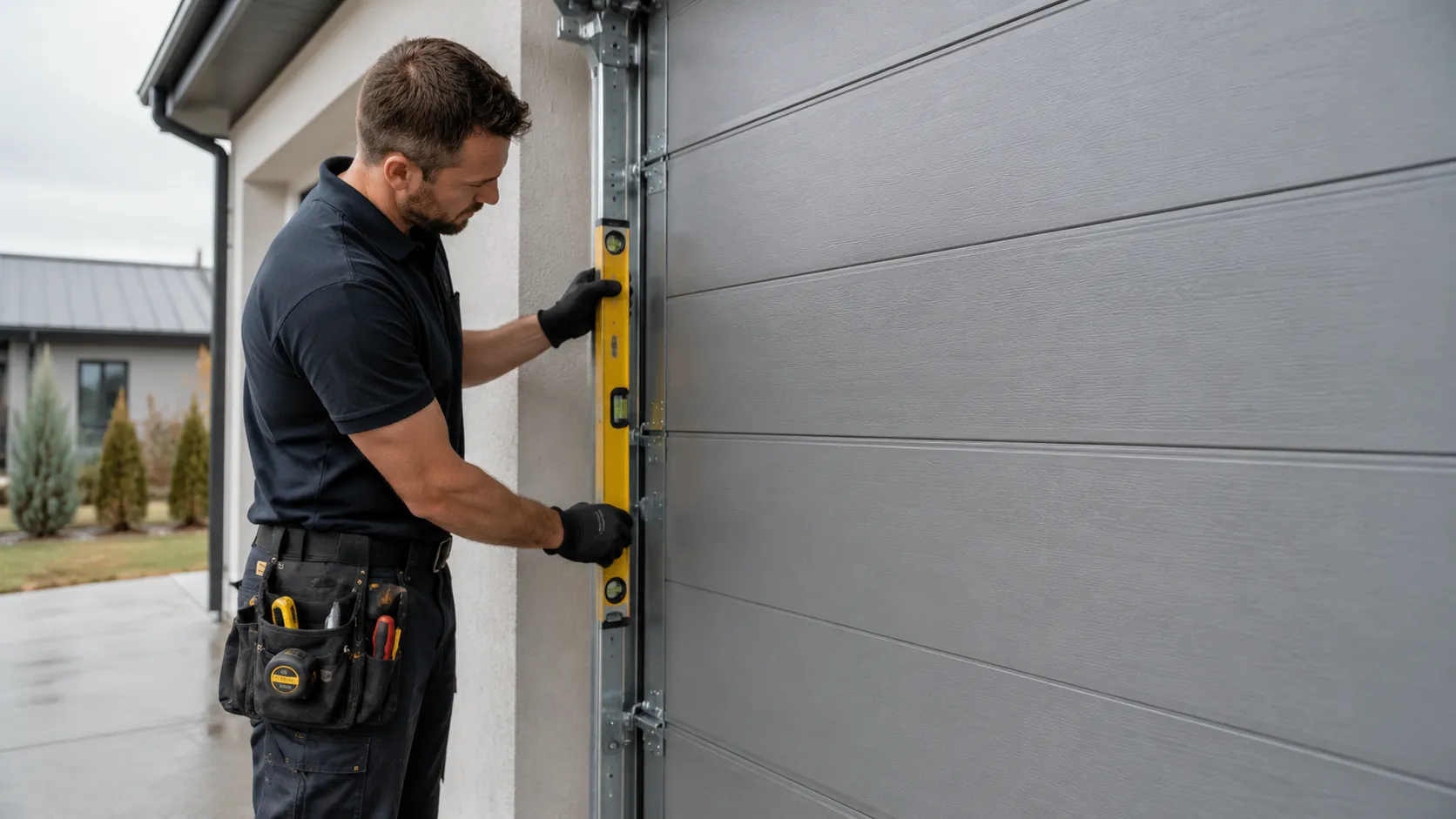
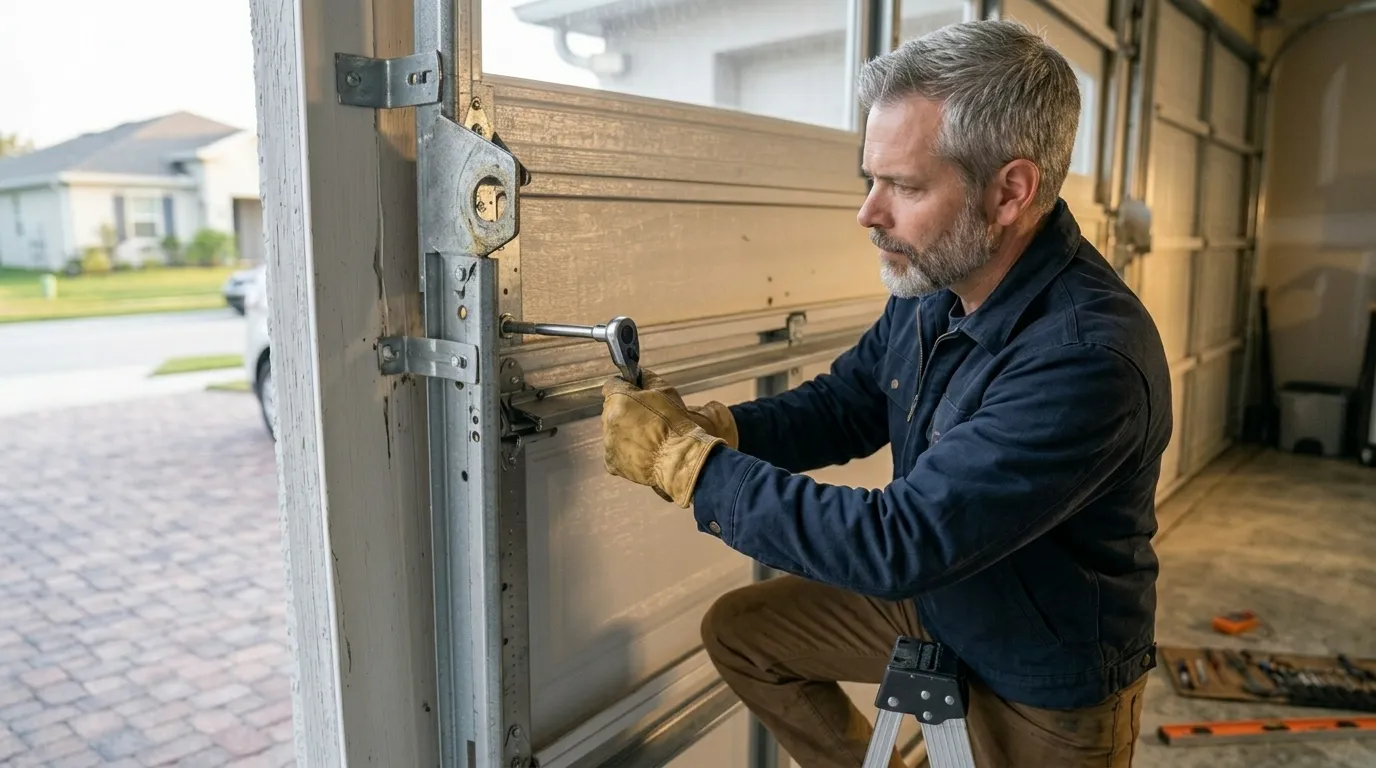
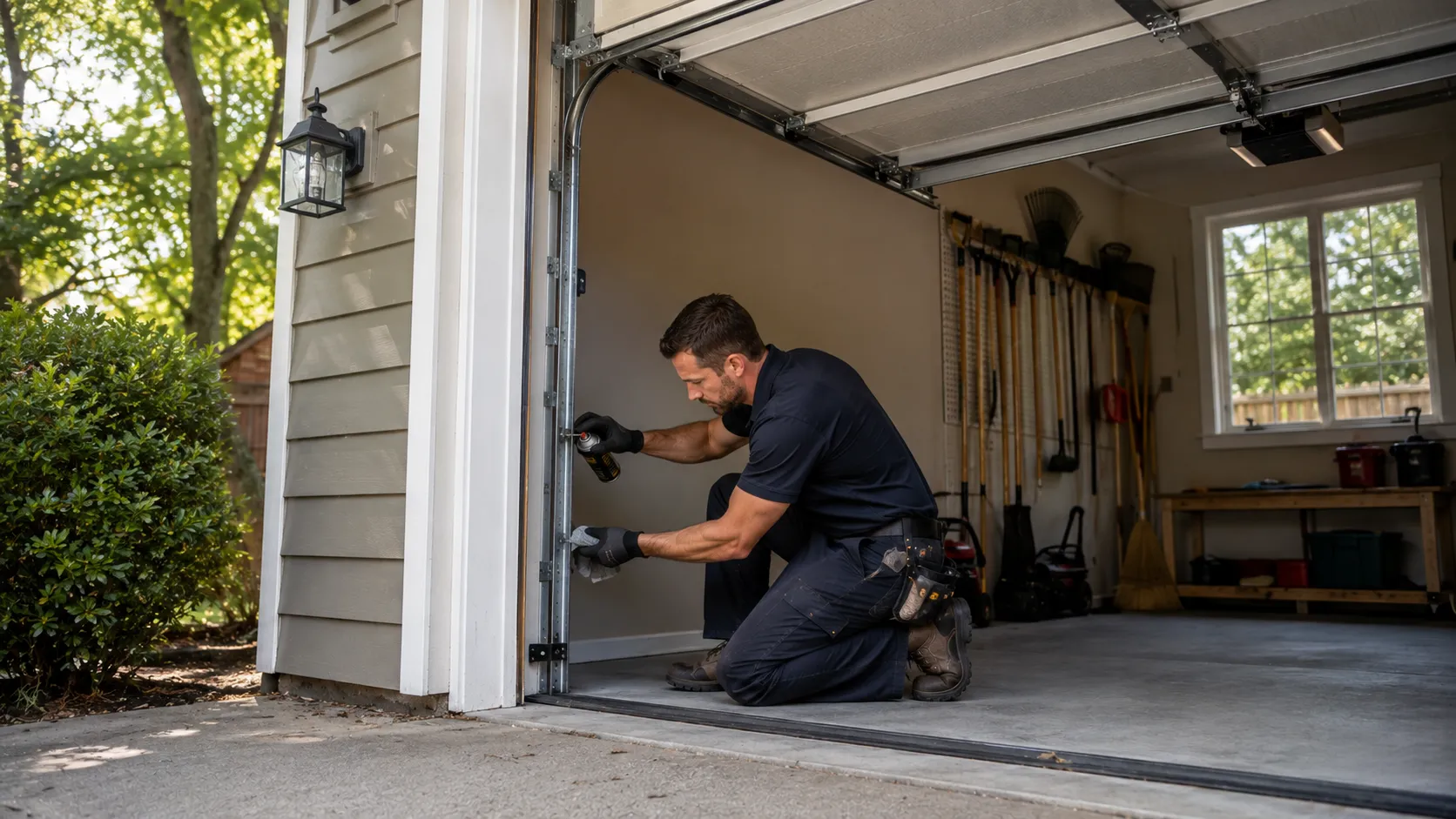
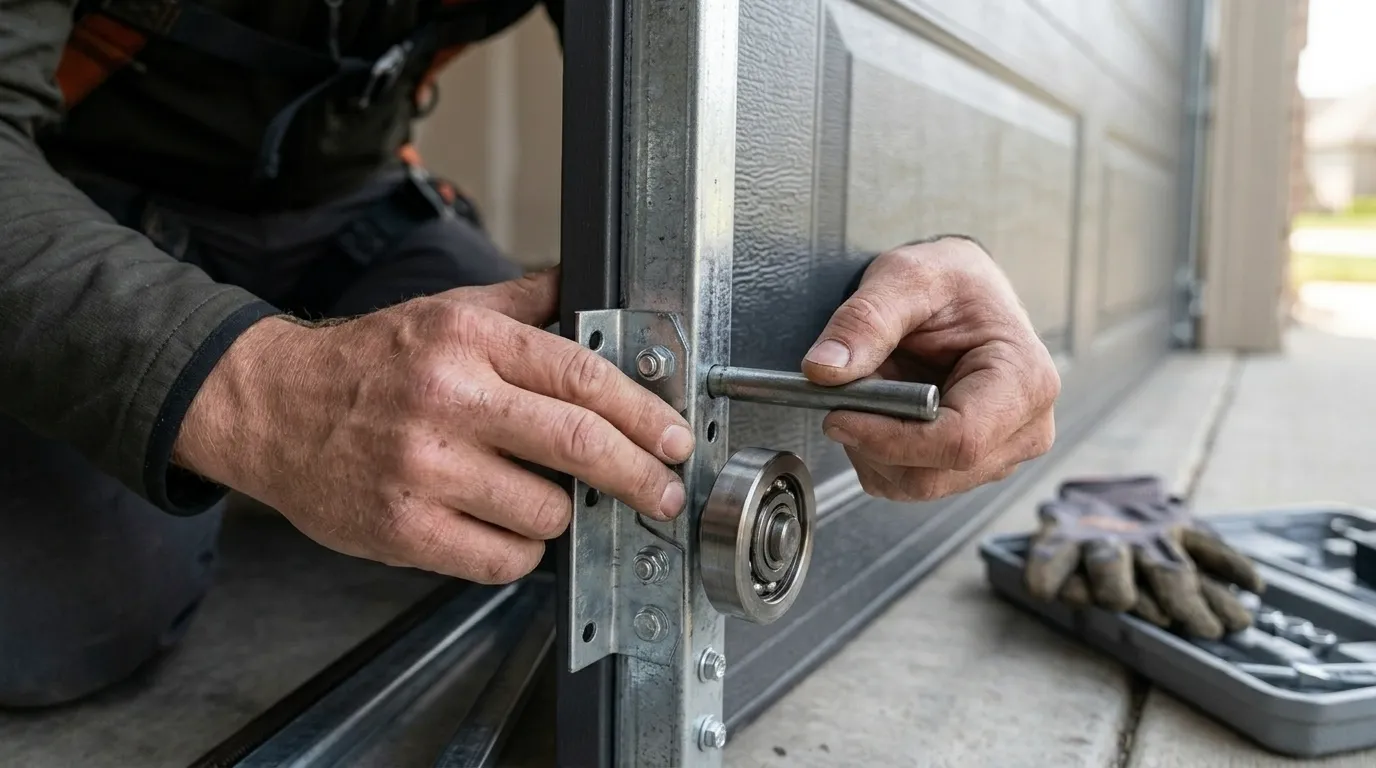
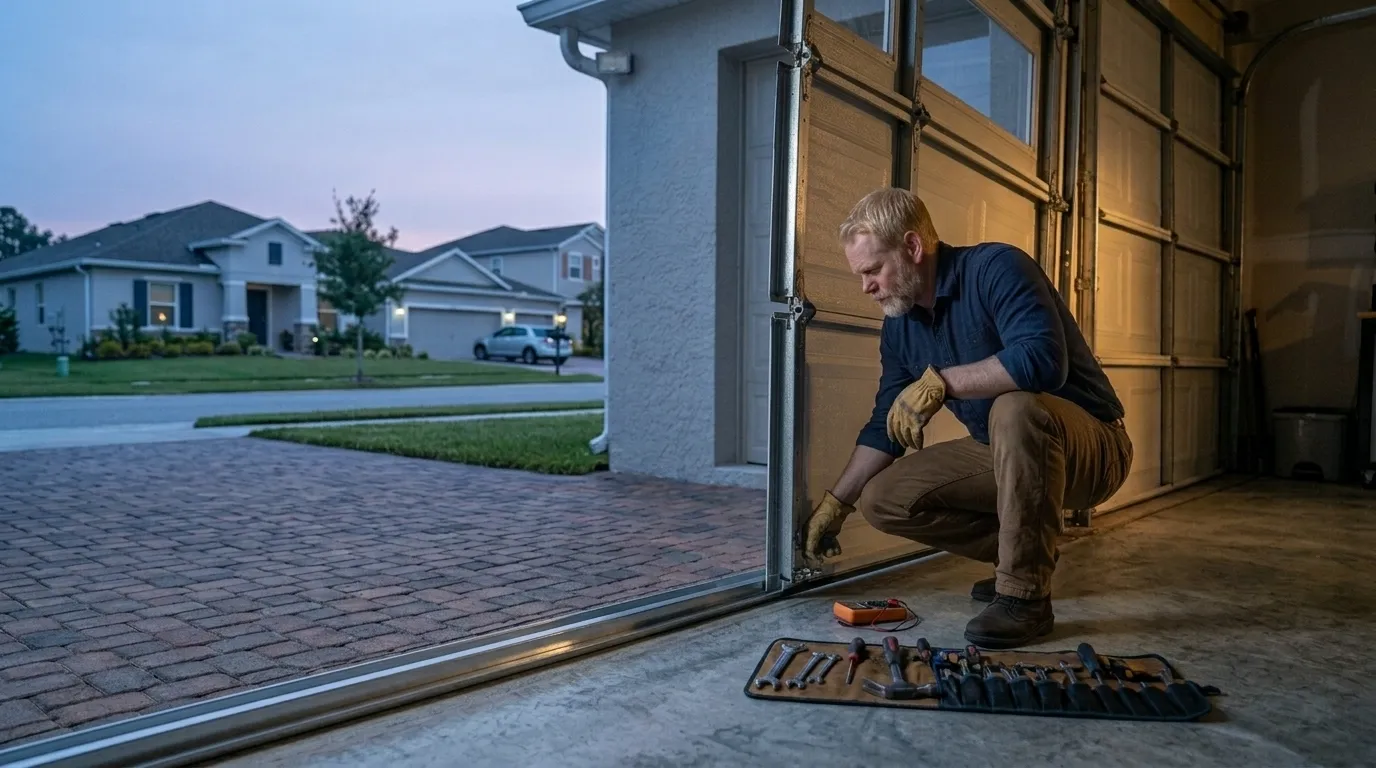
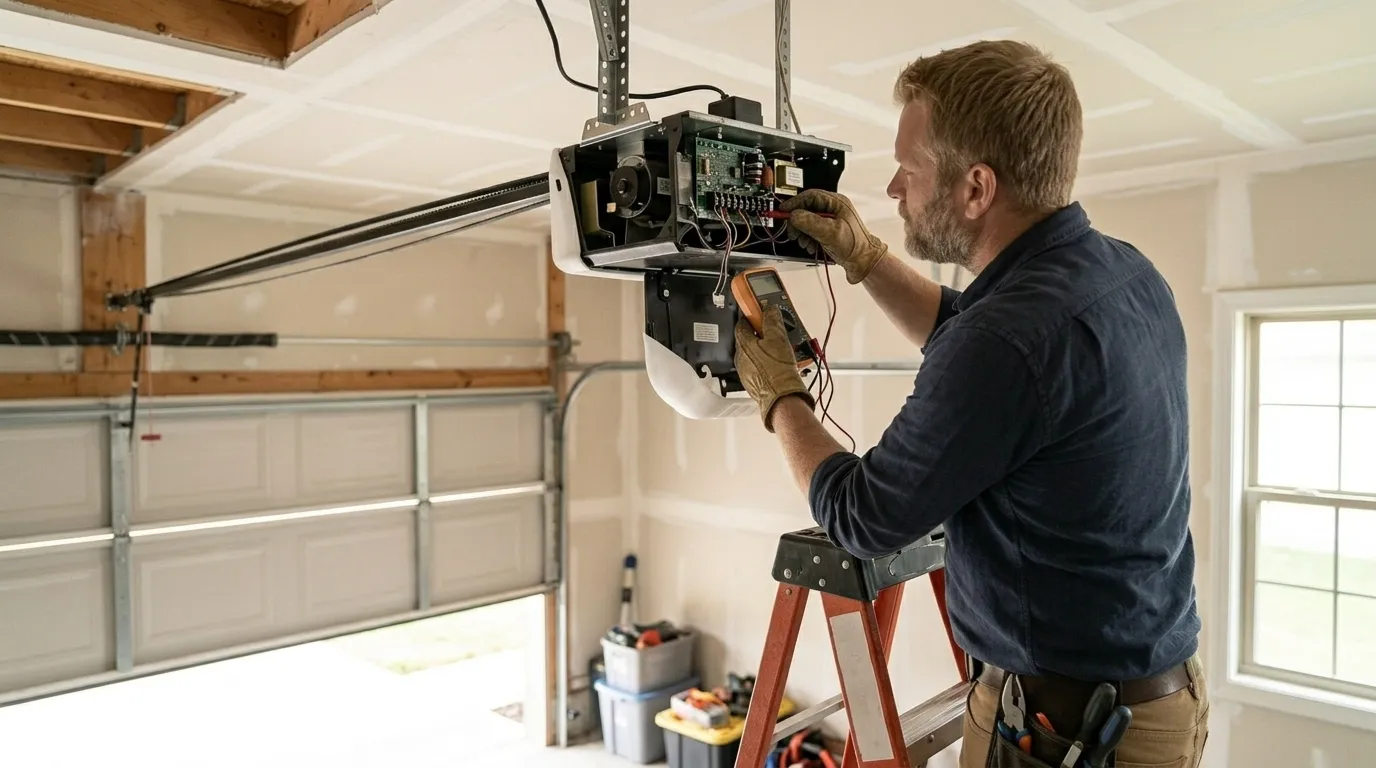
The job goes wrong most often when someone treats a bent track as a track problem alone and ignores why it bent. If a cable is frayed or a roller bearing has failed, straightening the track buys a few weeks before it happens again. We look at the whole run - track, rollers, cable, and the brackets anchoring it to the framing - before calling it fixed.
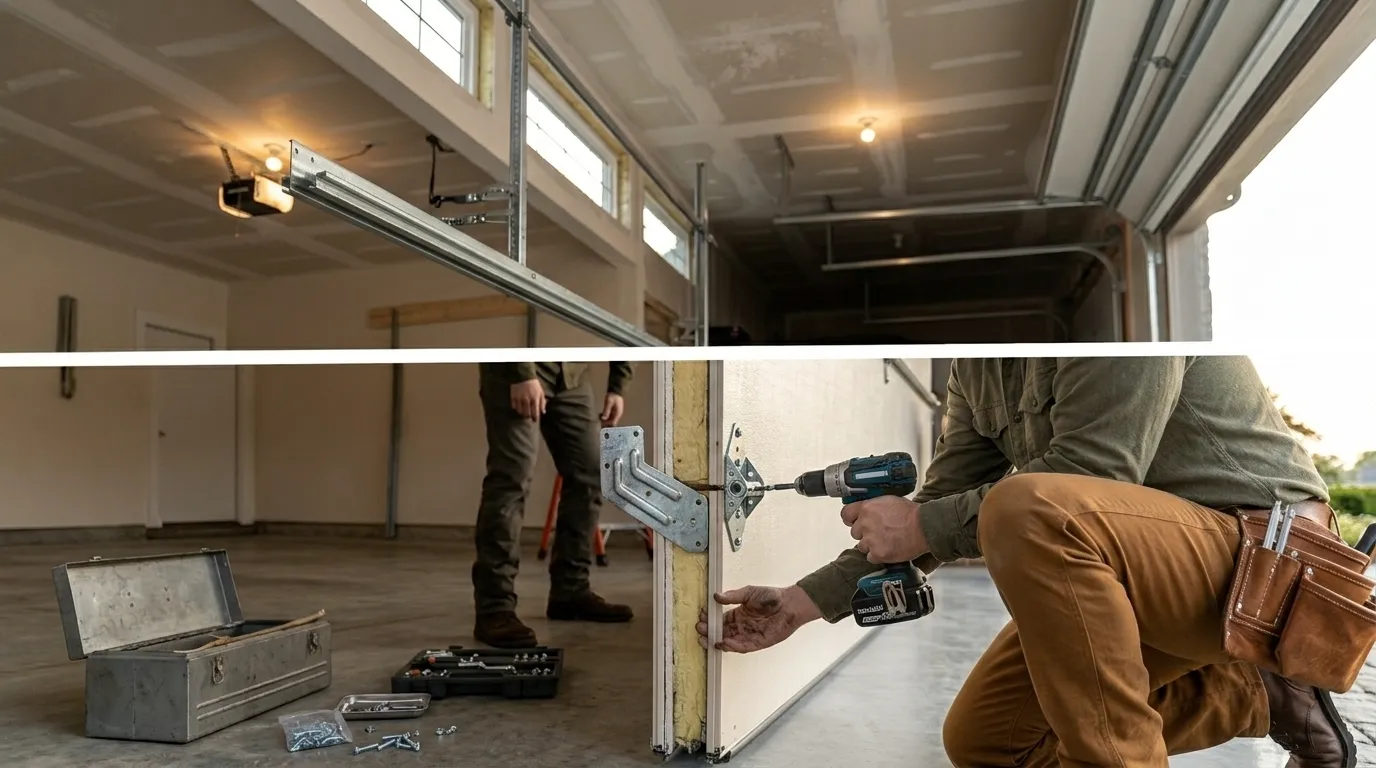
The other place it goes sideways is matching parts to a house this age. Original one-piece track sections from the 1960s and 70s aren't stocked new anymore, so a repair on an older door sometimes means replacing a longer run of track than the single bent section, just to get hardware that fits and holds. That's not us padding a bill - it's the honest tradeoff on a door this old, and it's worth knowing before the truck shows up so the quote doesn't surprise you.