Getting It Booked In
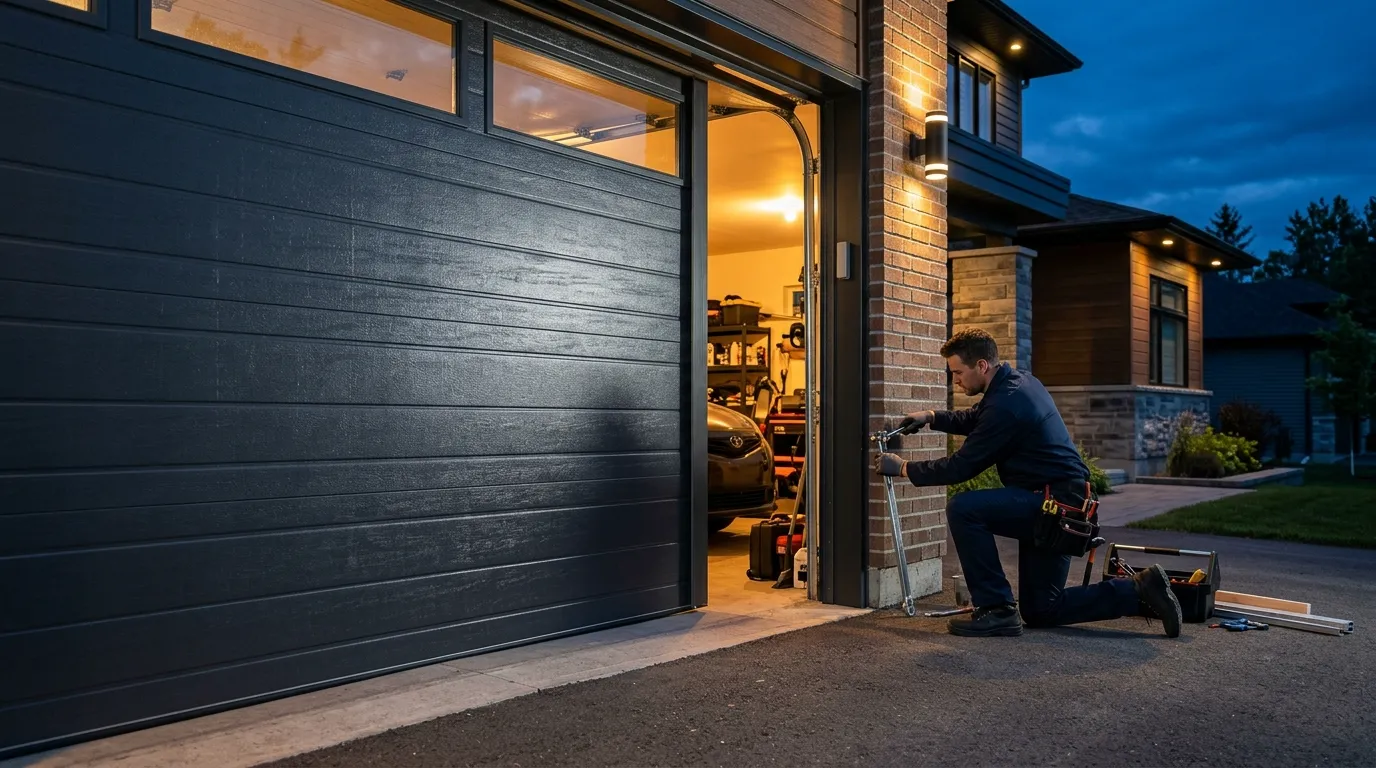
We run this job out of Northbrook, about 4 miles from Glencoe, so there's no separate branch or crew based in town - just a truck that comes over when you call. That distance matters less than what's waiting on the truck. Glencoe's housing stock centers on 1955, close to two decades ahead of the 1974 median for the wider service area we cover. A door built or replaced in that window usually runs on tracks and hinge spacing that don't match what shows up on a newer install across town.
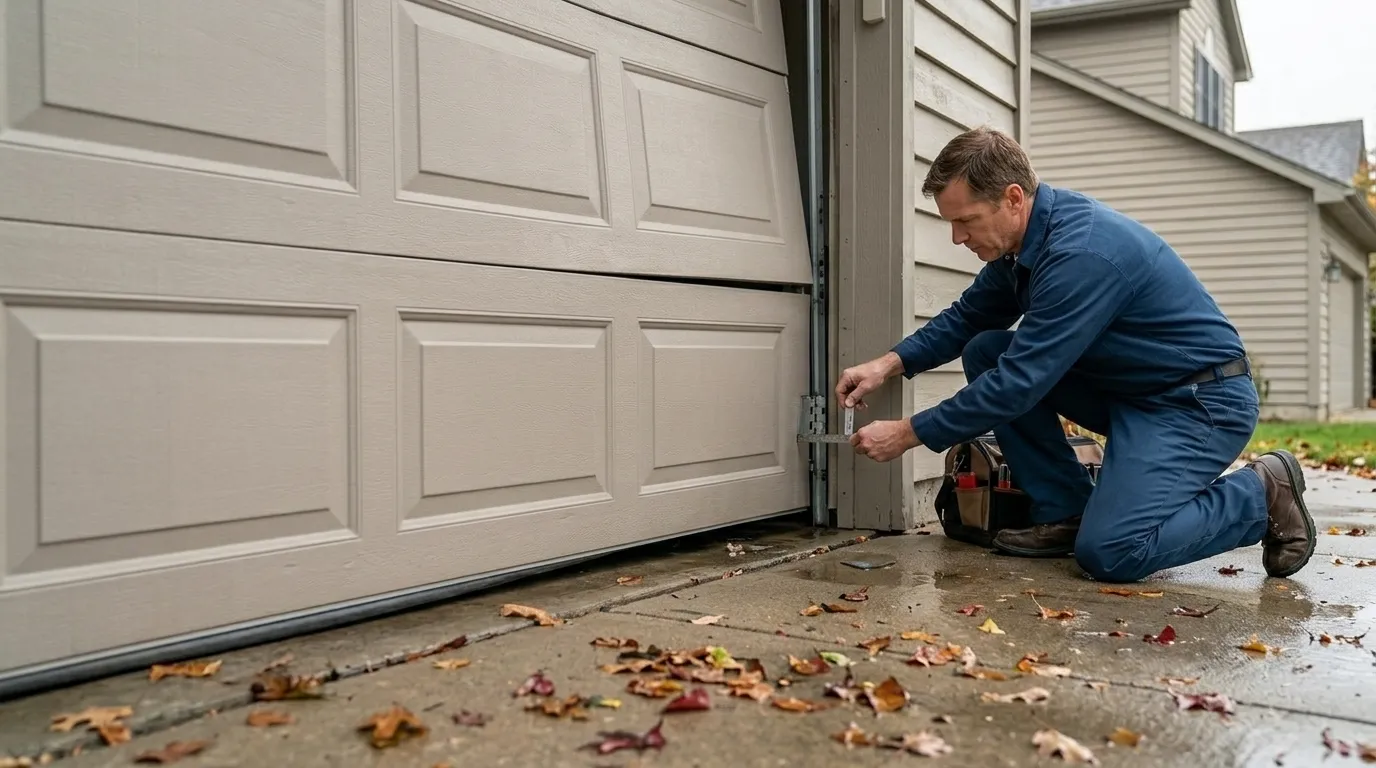
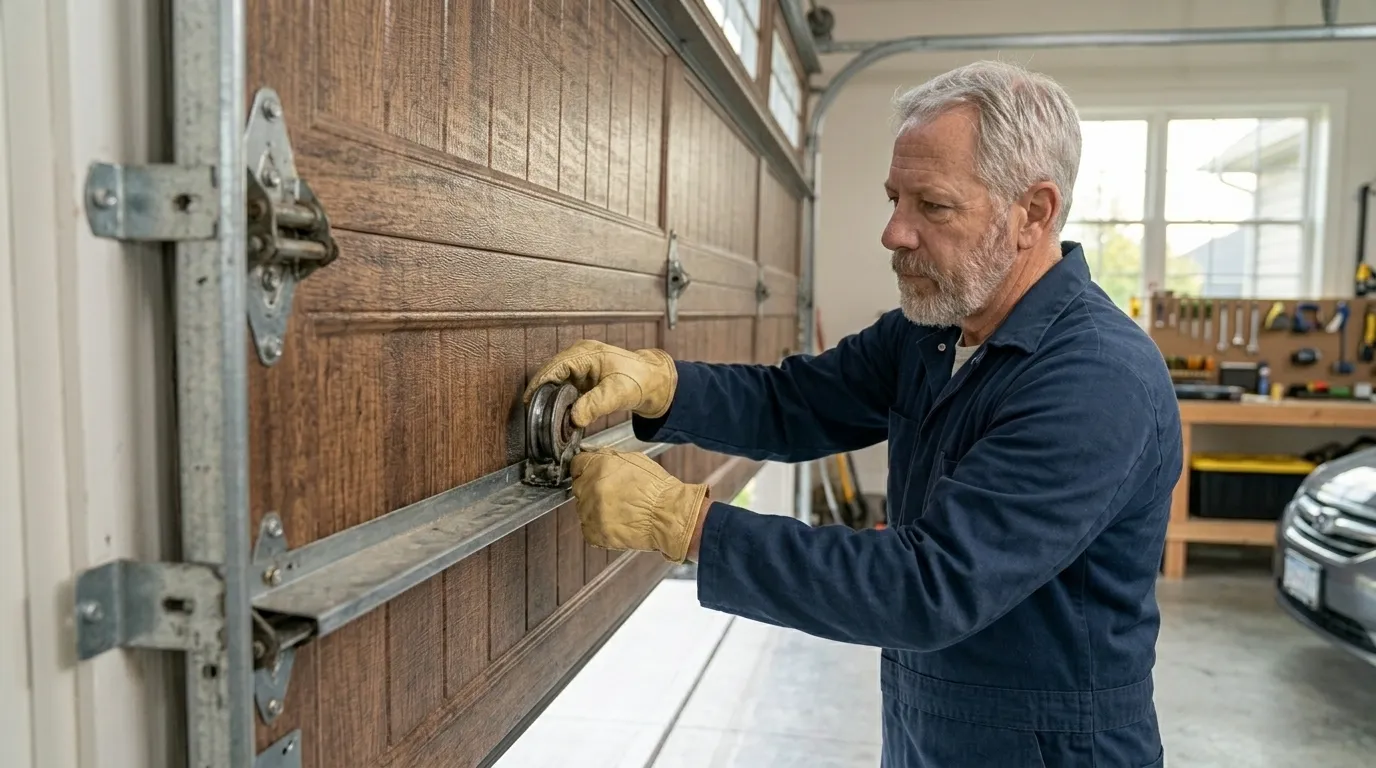
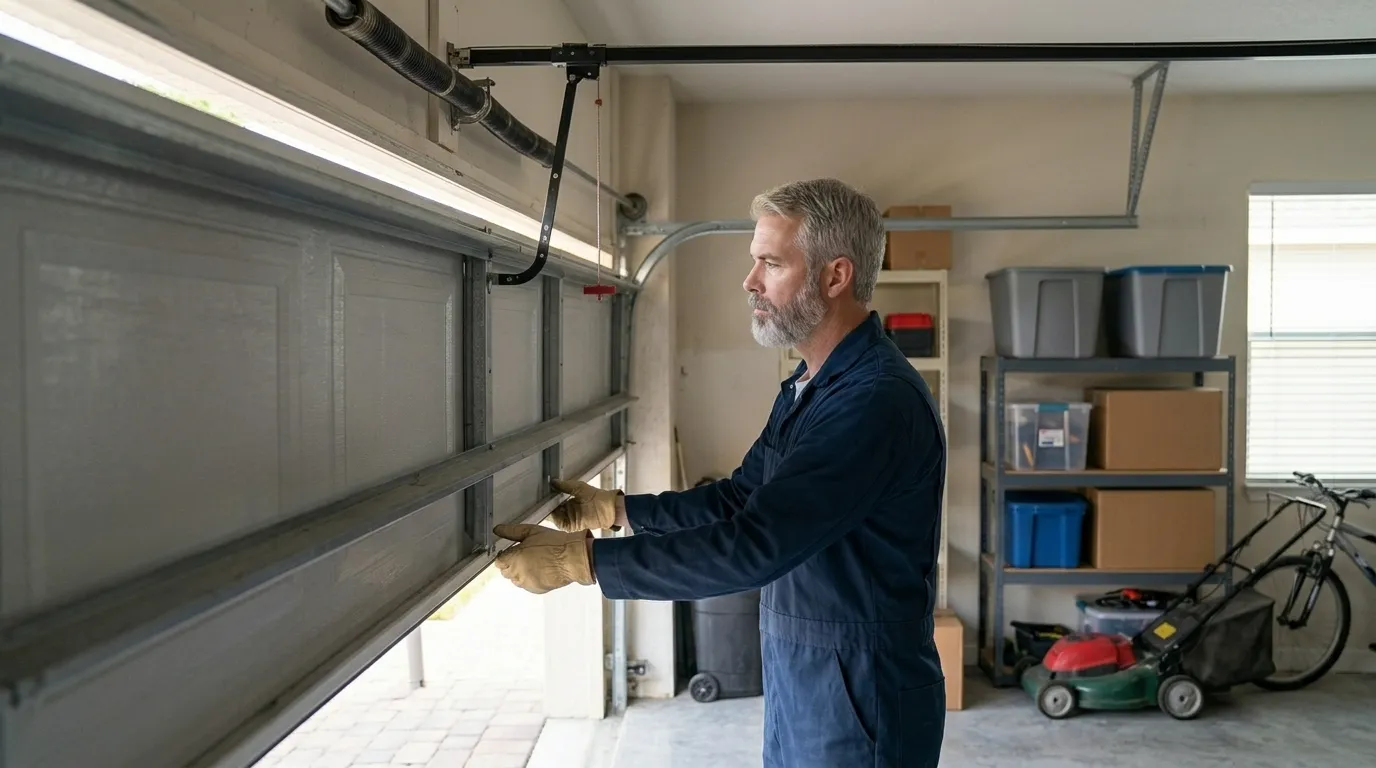
When you call, tell us the rough age of the house if you know it, or just the door's condition - grinding, one side dragging low, a roller you can see is chipped or flat-sided. That's usually enough for us to guess whether we're dealing with older steel rollers on a tighter radius track or a later retrofit. We'd rather ask the right question on the phone than show up guessing.
We don't keep a Glencoe-based crew on standby and we're not going to pretend otherwise. What we do is bring the roller stock that fits what a 1950s-era Glencoe garage is likely to have, based on what we see across this part of the service area, so the first trip is usually the only trip.
What You Pay
We don't have a published price list for roller replacement broken out by town, and we're not going to invent one for Glencoe just to fill this section. What we can tell you is how the job usually gets priced: by roller material (steel versus nylon versus sealed-bearing) and by how many need to change - often it's not all ten.
Glencoe's median household income sits above $250,000, well ahead of the roughly $103,500 median across the broader service area. In practice that shows up as more requests for the quieter, sealed-bearing nylon rollers instead of a straight steel-for-steel swap, even when steel would do the job. Neither choice is wrong. Steel rollers on a track in decent shape can run for years; nylon costs more up front and runs quieter, which matters more in a garage that sits close to living space.
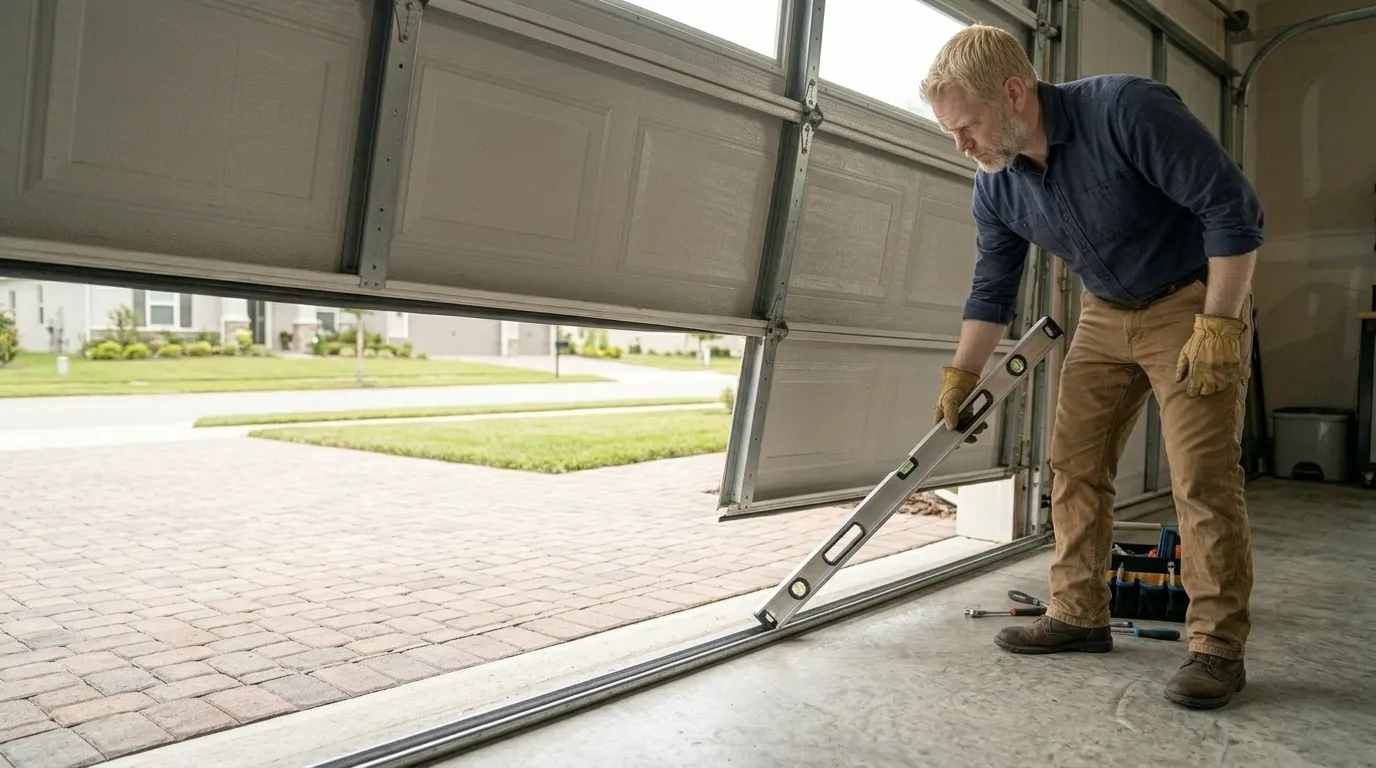
If your door is original steel and the track has any bow to it, replacing rollers alone won't fix a rattle - that's a track problem, not a roller problem, and we'll say so rather than sell you rollers that won't solve it.
Why It Happens Here
Glencoe's housing runs older than the service-area average - 1955 versus a 1974 median across the roughly 61 named communities we cover from Northbrook. Older doors mean more decades of use on the original hardware, and steel rollers wear unevenly: one side flat-spots while the other still turns fine, which is what causes the door to walk sideways in the track or bind partway up.
The cold winters here don't help. In a moderate-cold climate band, grease inside older roller bearings thickens up when the garage drops toward freezing, and a roller that was already worn will seize or chip rather than just turning stiff. That's a common reason a roller failure in this area shows up hardest on the first genuinely cold morning of the season, not gradually.
With around 3,033 households in Glencoe, this isn't one subdivision built off a single plan - it's a mix of build years clustered around that mid-1950s median, so the exact roller size and stem length still varies house to house. That's part of why we'd rather see the door than quote rollers over the phone.