The DIY Question
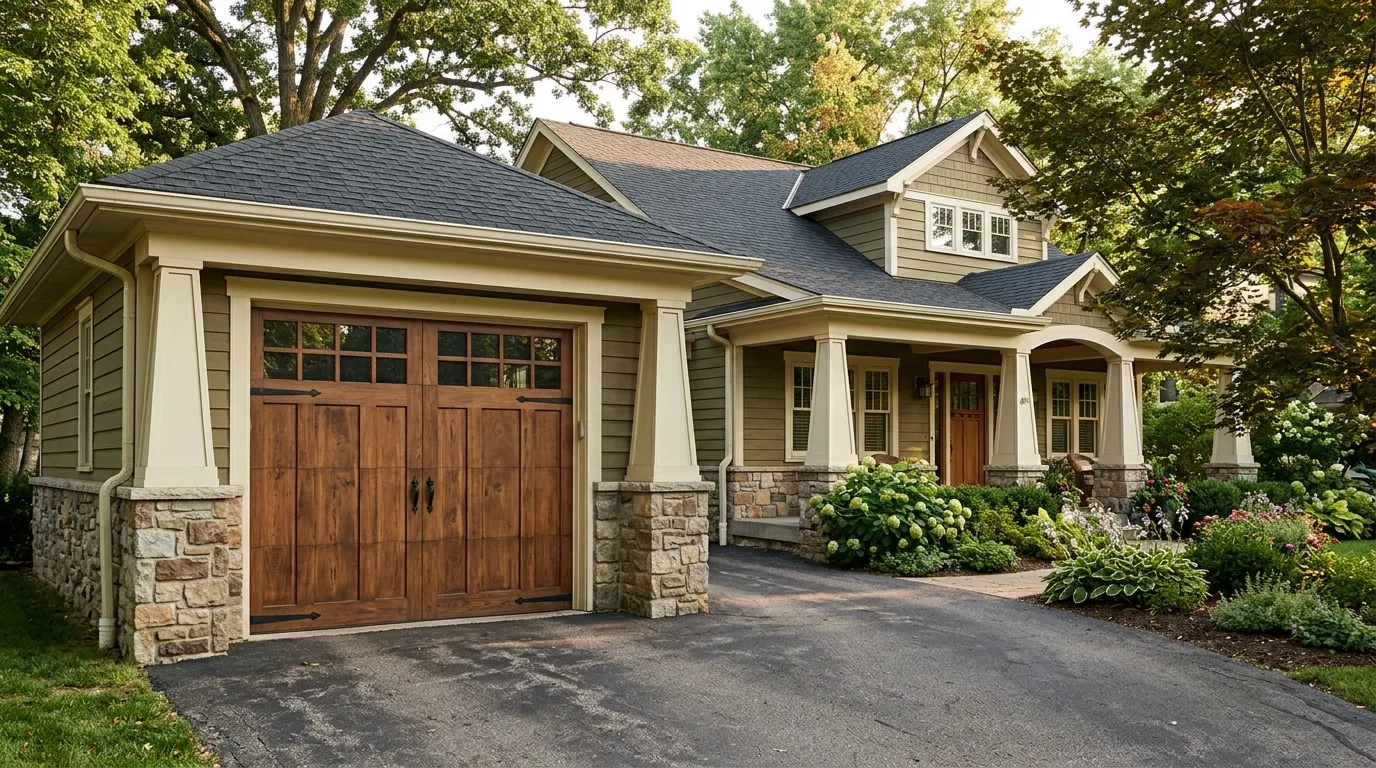
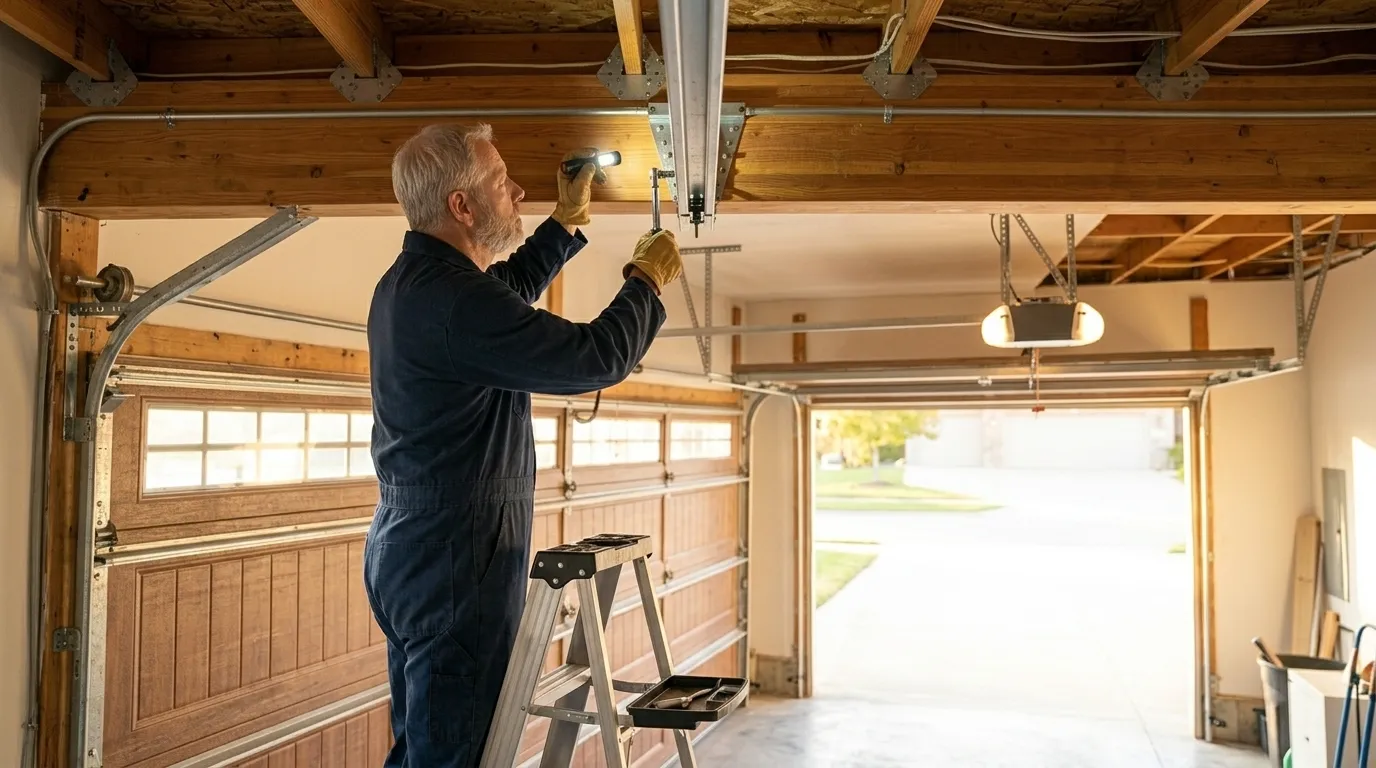
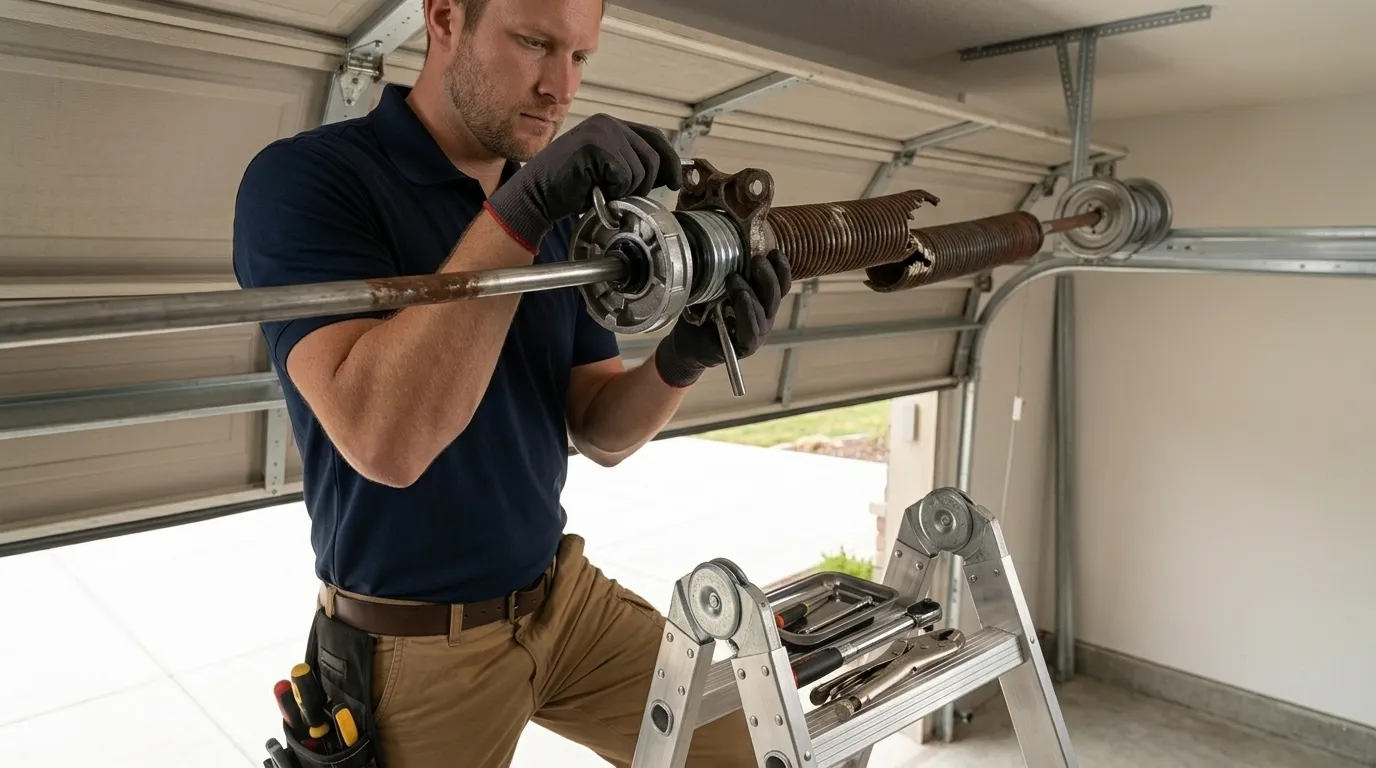
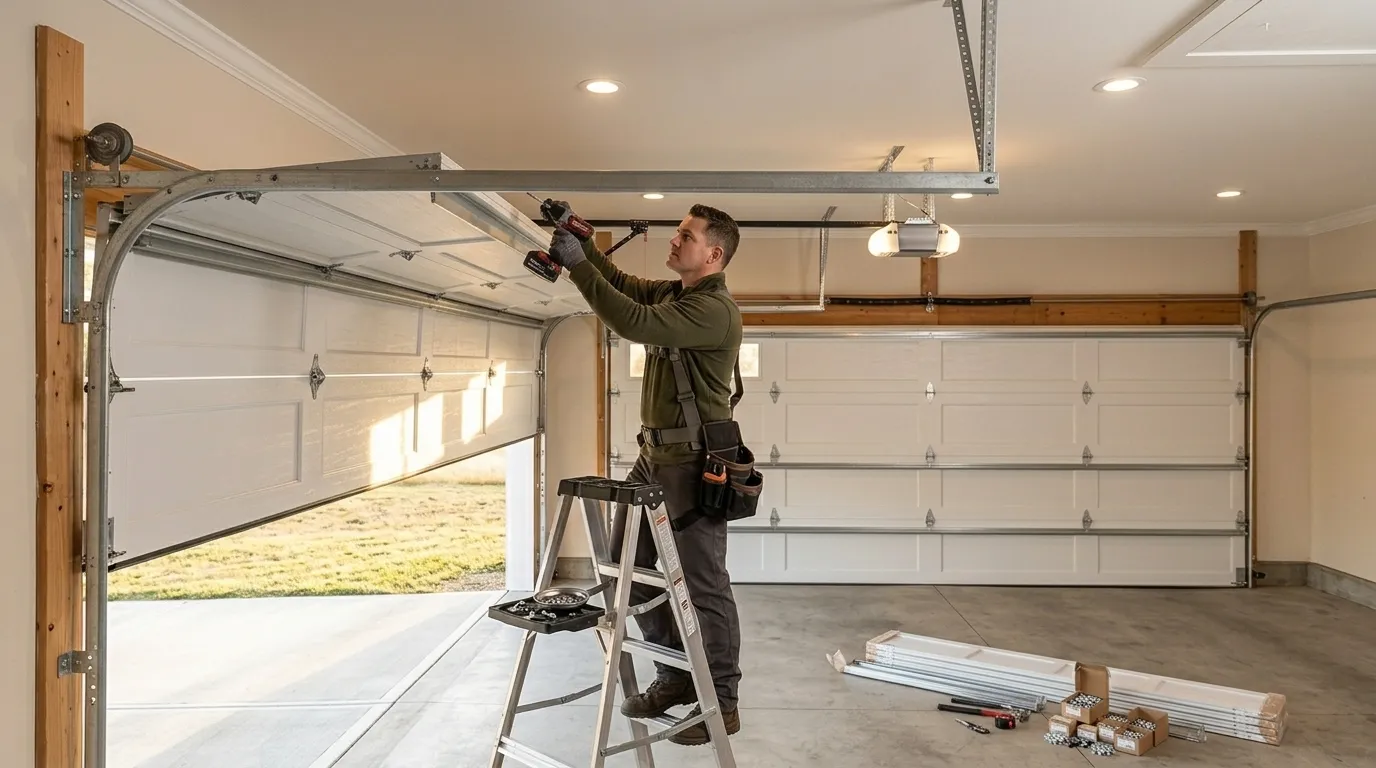
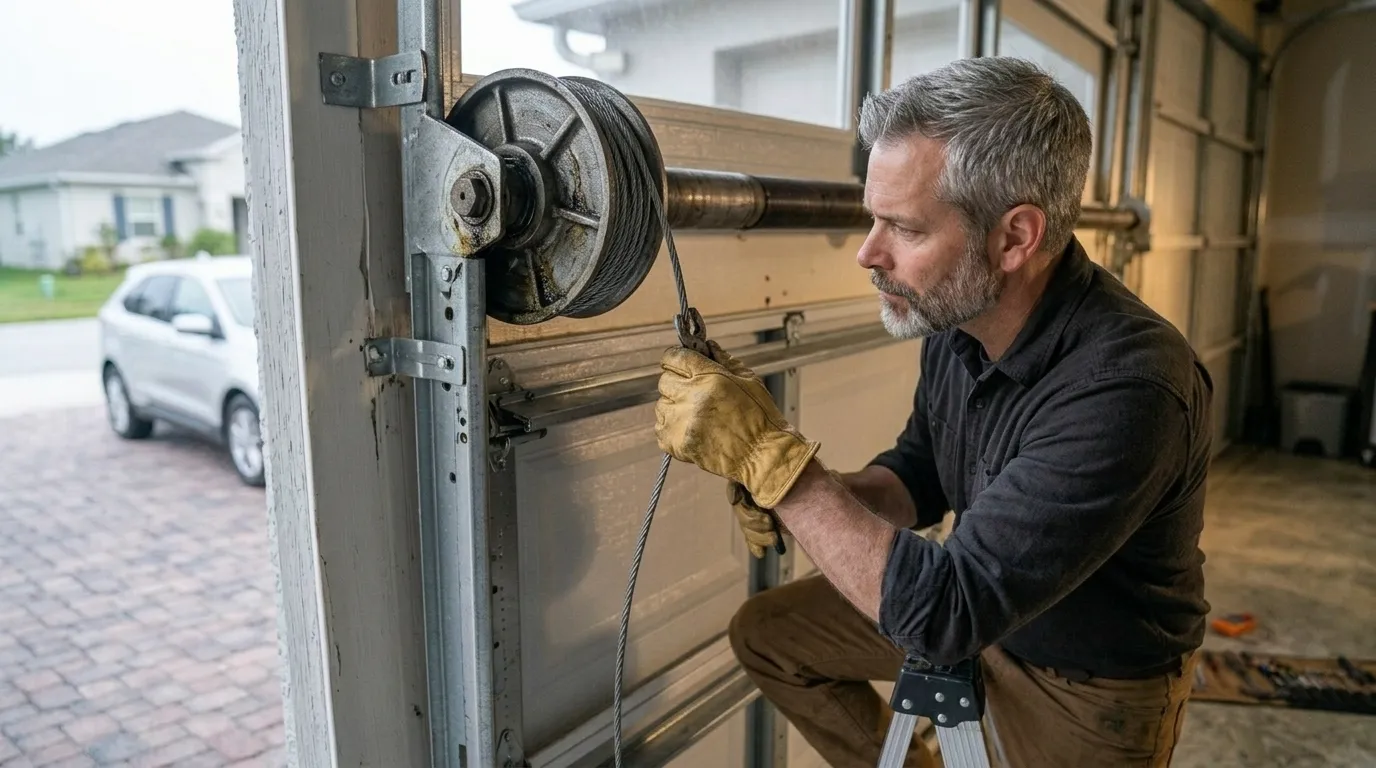
Most garages in Libertyville went up when the area's housing stock was running through its mid-1970s build wave, median year 1976. That means a two-car steel sectional door, wide enough to need real lifting force, hung on torsion hardware rather than the older extension-spring setup you'd find on a smaller single door. The cable itself is galvanized aircraft cable wound off a drum at each end of the torsion spring, and on a door this wide, both cables have to unwind evenly or the door racks sideways in the track.
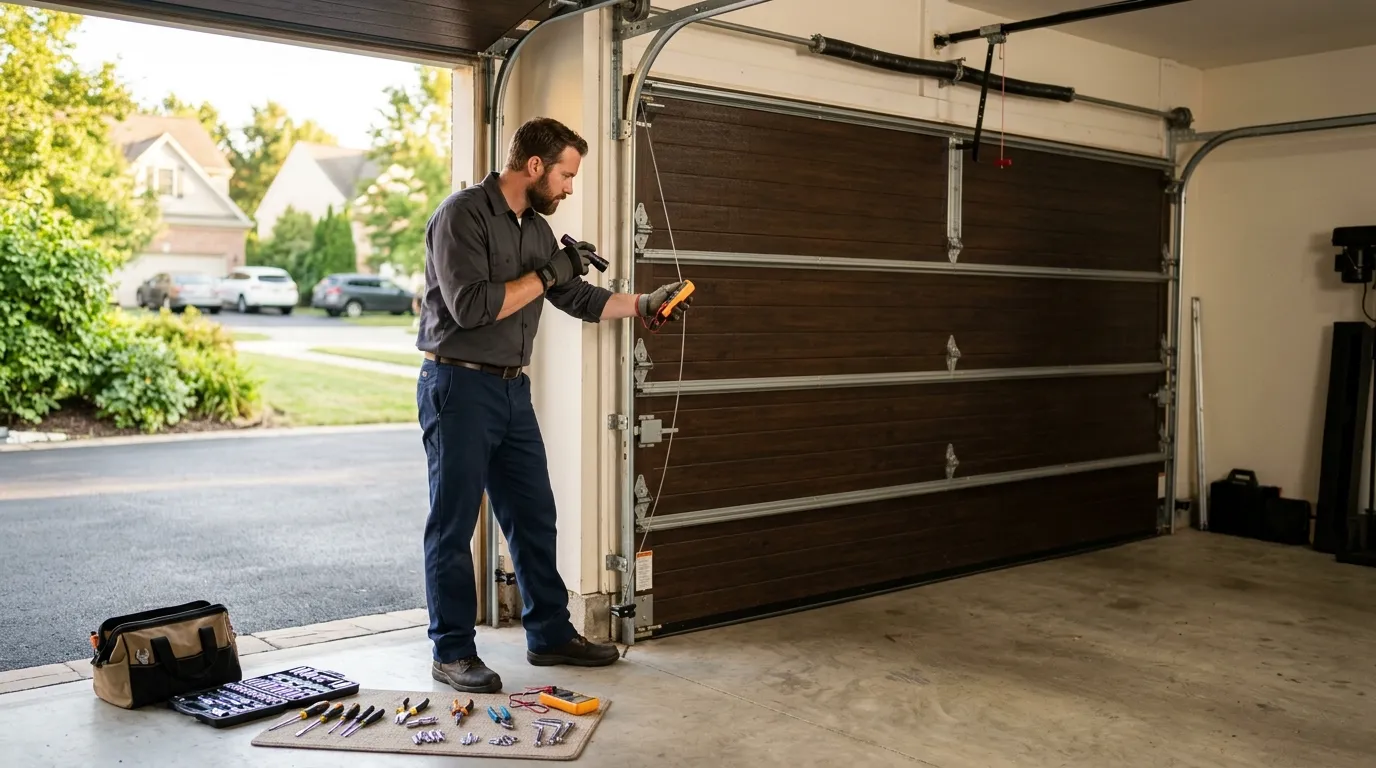
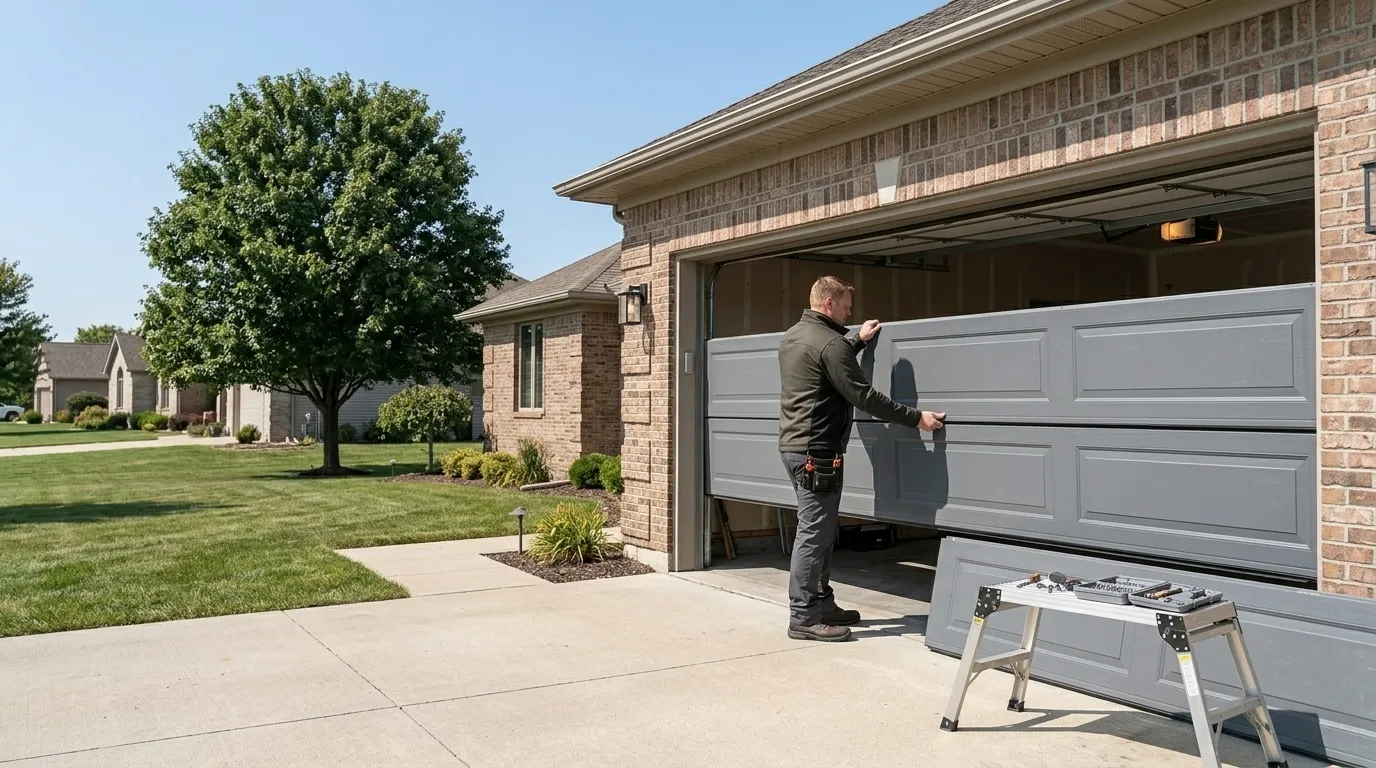
That's the part that makes this a bad DIY job. A torsion spring on a door this size is holding real tension, and the cable is what's keeping that tension from releasing all at once. If a cable has already snapped, the door is likely sitting crooked or jammed half-open, and the spring on the working side is still loaded. Winding bars and clamps exist for a reason - without them, the safe move is to leave the door where it is and call, not to start unwinding tension you can't see. We'll say this plainly: this is not a job we'd want a homeowner without the right tools attempting.
What You Pay
We don't post a flat number here because cable jobs vary by whether one cable snapped or both, whether the drums or track took damage on the way down, and whether the spring itself needs replacing at the same time - which it often does on a door built in the 1970s that's never had the hardware touched. What we can tell you is that this area sits well above the regional median household income, and most of what we quote in Libertyville reflects full hardware replacement rather than a patch job, because homeowners here tend to want it done once rather than revisited in two years.
We give a firm number after we've looked at the drums, the spring, and the track alignment in person - not over the phone, because a cable call that looks simple sometimes turns out to be a bent track underneath it.
Why It Happens Here
Northbrook Garage Door Pros' whole service area sits in a cold-moderate climate band, and Libertyville gets the same winter swing as everywhere else on the list - freeze overnight, thaw by afternoon, repeat for months. Cable failures cluster here for two reasons that trace straight back to that: rust working into the cable strands where moisture gets trapped against the drum, and the galvanized coating wearing thin faster on doors that have been cycling through decades of temperature swings since a house built in 1976 first went up.
Add in that a lot of this stock has never had the torsion hardware replaced once, and you get cable that's outlasted its coating and is running bare wire against a drum edge. That's the failure point we see most - not a dramatic snap out of nowhere, but strands going one at a time until the last one lets go.