The DIY Question
Libertyville's housing stock centers on 1976, which puts it toward the newer end of what we see across the wider service area (that stock runs 1938 to 1996, median 1974). A door from the mid-70s is old enough to have first-generation extension springs or an early torsion setup, but it's also old enough that a homeowner has probably had one repair done on it already, maybe two. That history matters when you're deciding whether to pull a panel yourself.
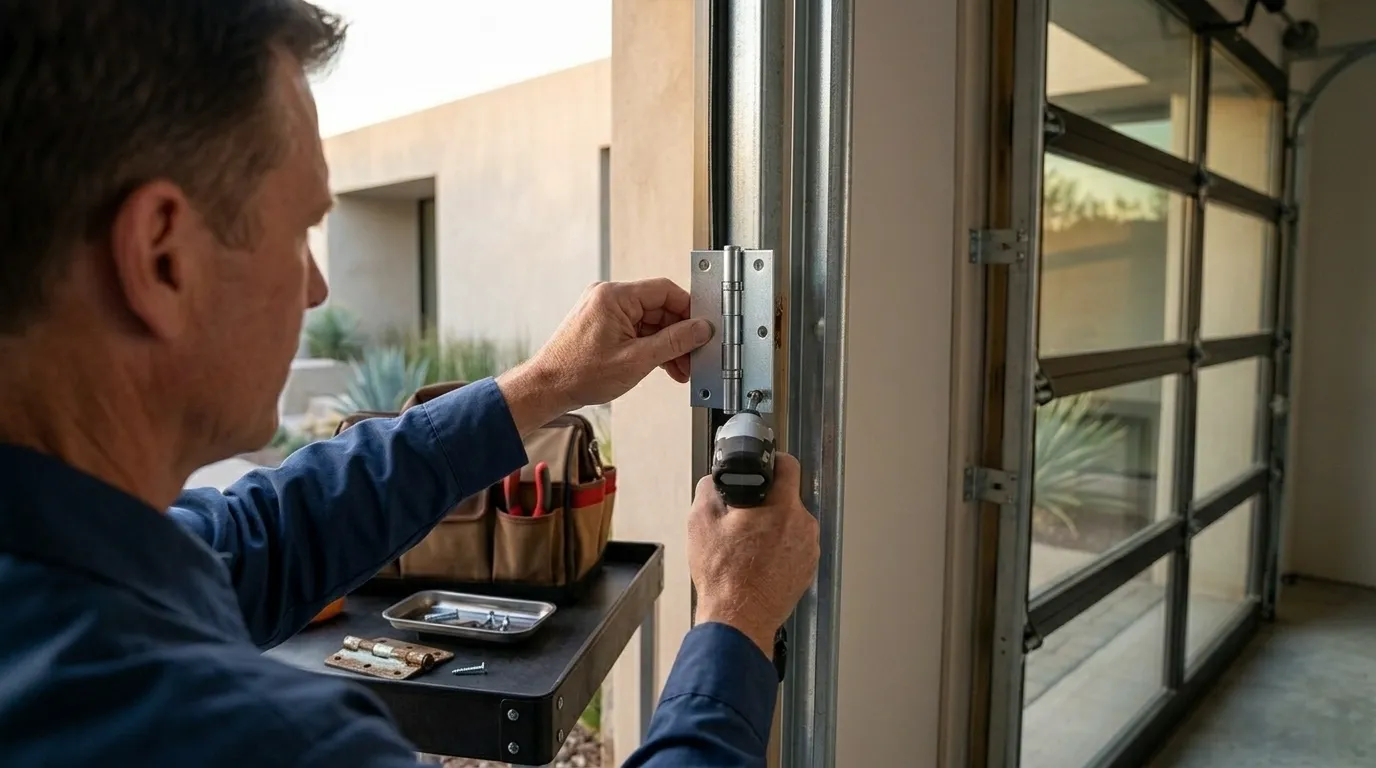
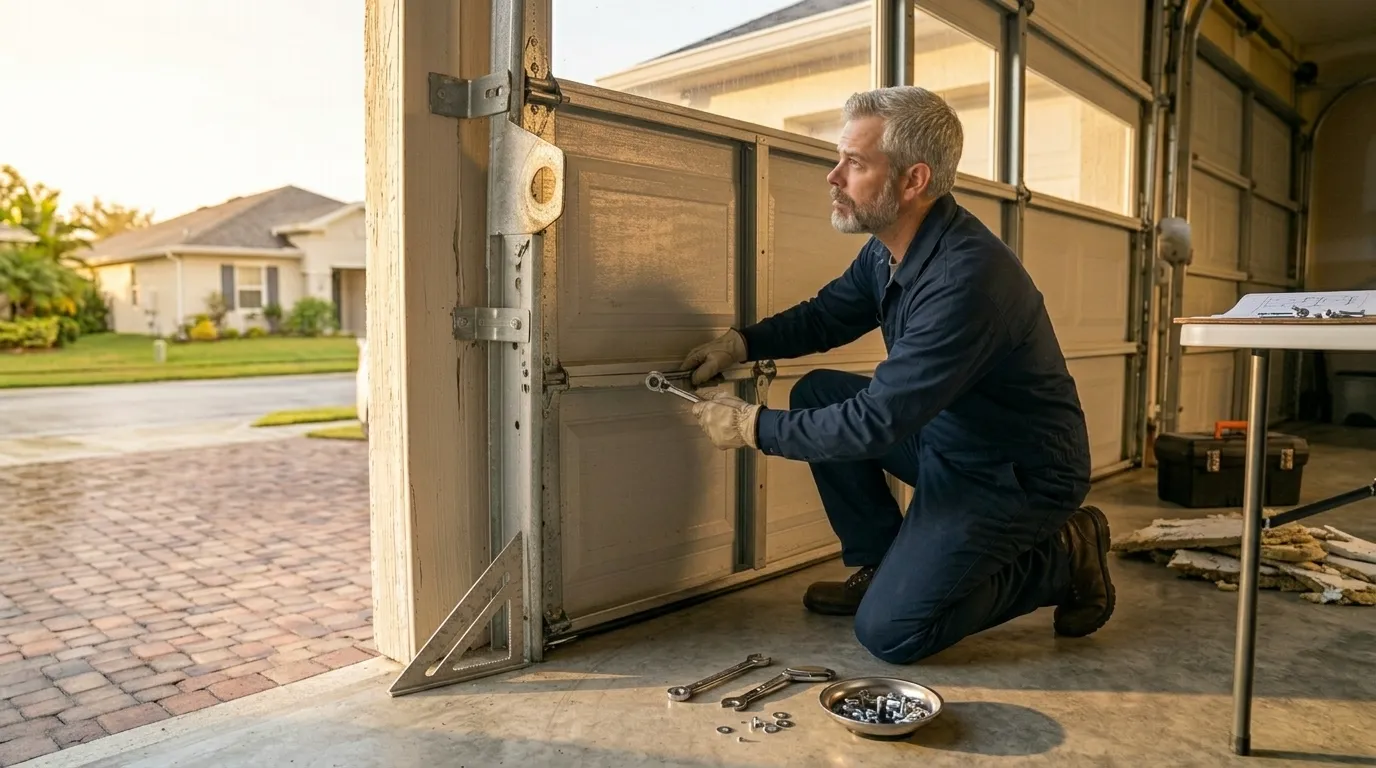
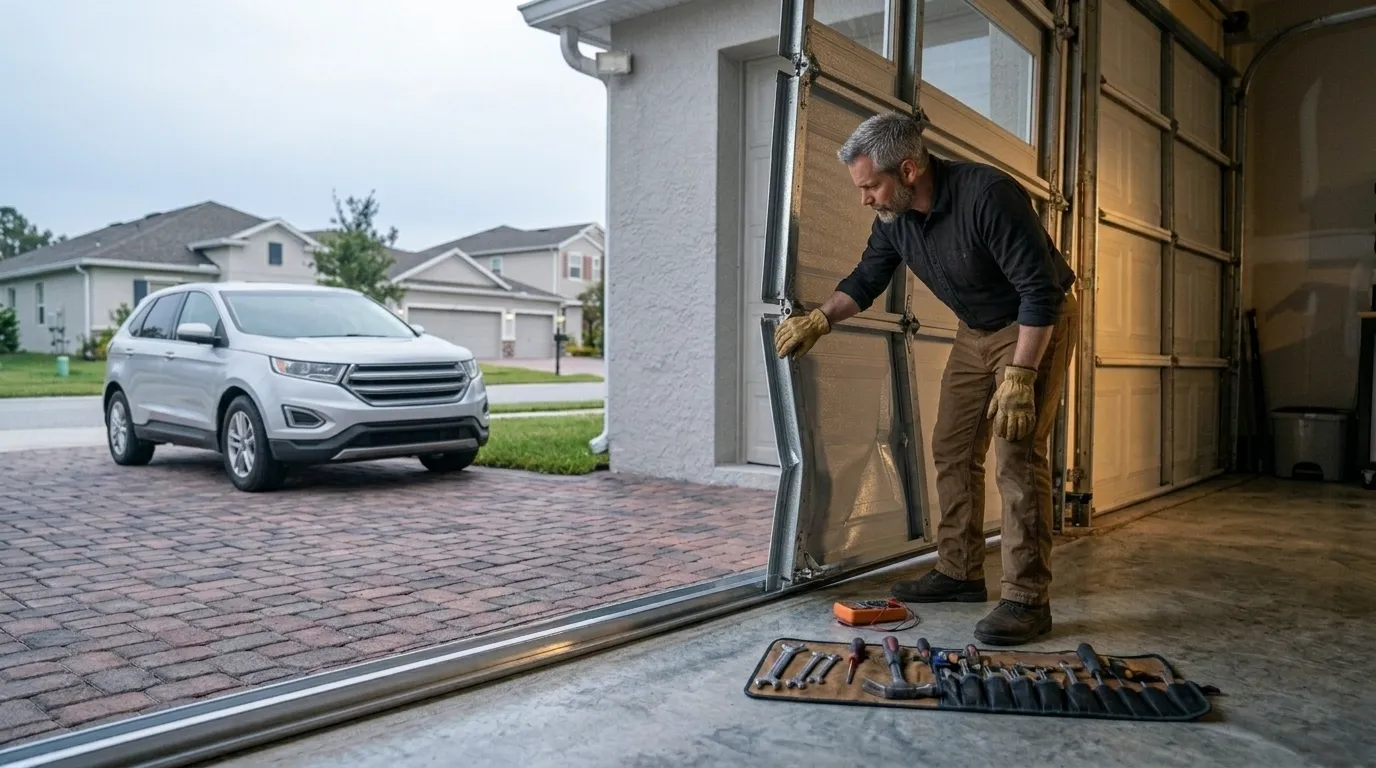
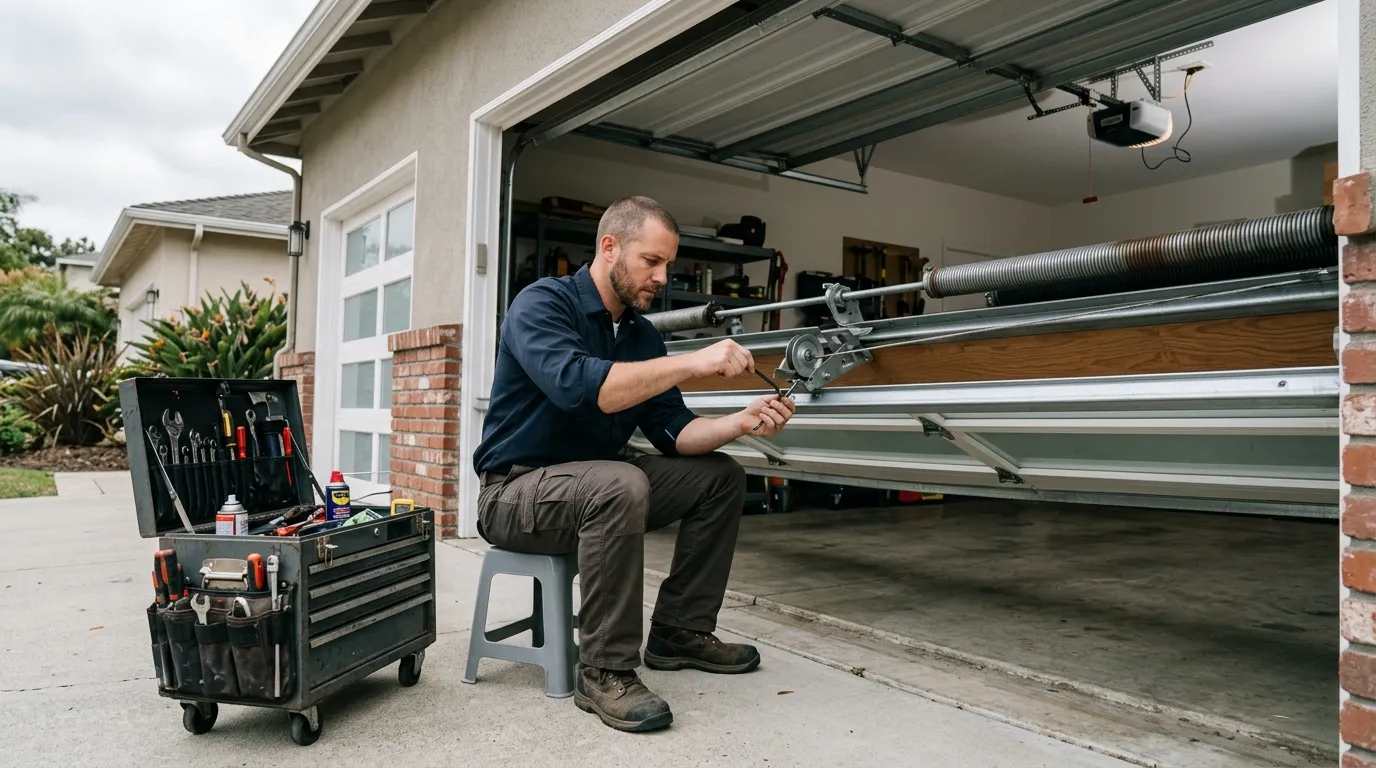
Winding a torsion spring is not a job to learn on your own garage. The bar under tension can put a socket wrench through a windshield, and we've seen the ER visits that come from someone treating it like a bike repair. If the fix is a bent track, a loose roller, or a sensor that's out of alignment, you can often handle that with a screwdriver and ten minutes. If it involves anything under spring tension or the opener's internal gearing, call it in.
We're honest that for some of these older systems, especially ones that have had patch repairs stacked on patch repairs over the decades, replacement ends up cheaper than a third service call. We'll tell you when we're at that point instead of running up a bill on a door that's done.
What You Pay
Libertyville's median household income runs $162,270, well above the $103,561 median across our broader coverage area of 275,099 households. That doesn't set our prices, which are the same whether the call comes from a higher-income block or not, but it does mean the jobs we run here skew toward full opener replacements and upgraded torsion systems rather than the cheapest possible patch. Homeowners here tend to ask for the better spring, not the bargain one.
We don't have a posted price list for this page, and we're not going to invent one. What a repair costs depends on whether it's a broken spring, a burnt-out opener motor, a cable off the drum, or a full panel replacement, and that's a conversation we have after we've looked at the door, not before.
One honest note: we run these jobs out of Northbrook, roughly 13 miles from Libertyville, so the travel is factored into scheduling, not into a separate line-item fee. We quote the repair itself over the phone once we know what's broken.
Why It Happens Here
This area sits in a cold-moderate climate band, and a garage door built around 1976 has now been through roughly five decades of Illinois freeze-thaw cycles. That cycle is what actually breaks hardware: steel springs lose temper faster in repeated cold snaps, nylon rollers crack when they go from a warm garage to single-digit mornings, and the grease in older opener gearboxes thickens up and strains the motor on the coldest days.
Across Libertyville's roughly 7,573 households, most sitting on housing stock from the 1976 era, we see a fairly consistent pattern: original torsion springs that have simply outlived their wind cycles, and openers from a first or second replacement round that are now old enough to fail on their own. It's not that Libertyville doors are unusual - it's that a door built in the mid-70s and run through forty-some Illinois winters is due for hardware fatigue on a predictable schedule, whether the spring finally lets go on a Tuesday morning or a holiday weekend.
We don't have block-level detail on which subdivisions lean older or newer within that range, so we're not going to guess at a street-by-street breakdown. The 1976 figure is the honest number we can point to.