The DIY Question
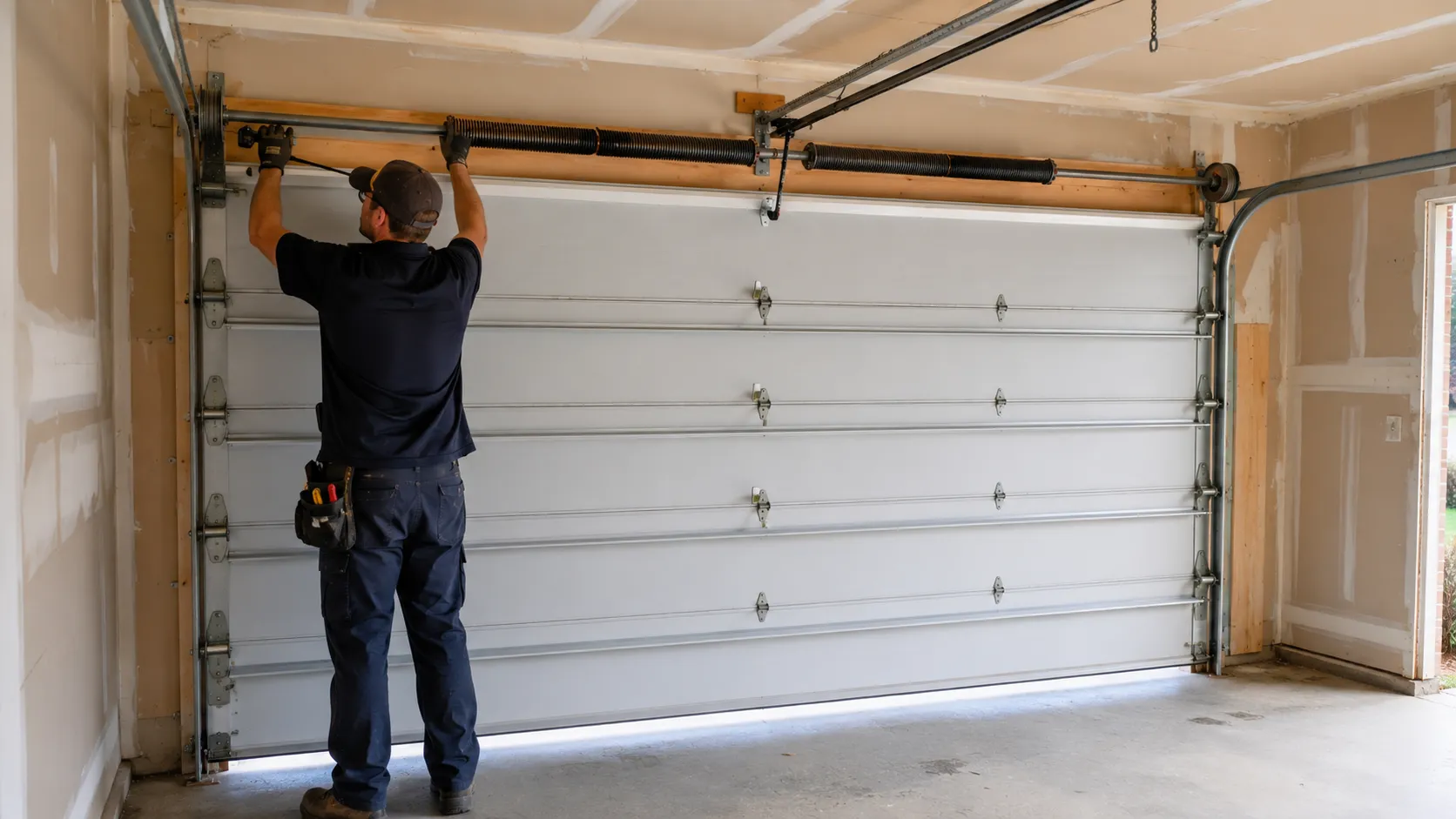
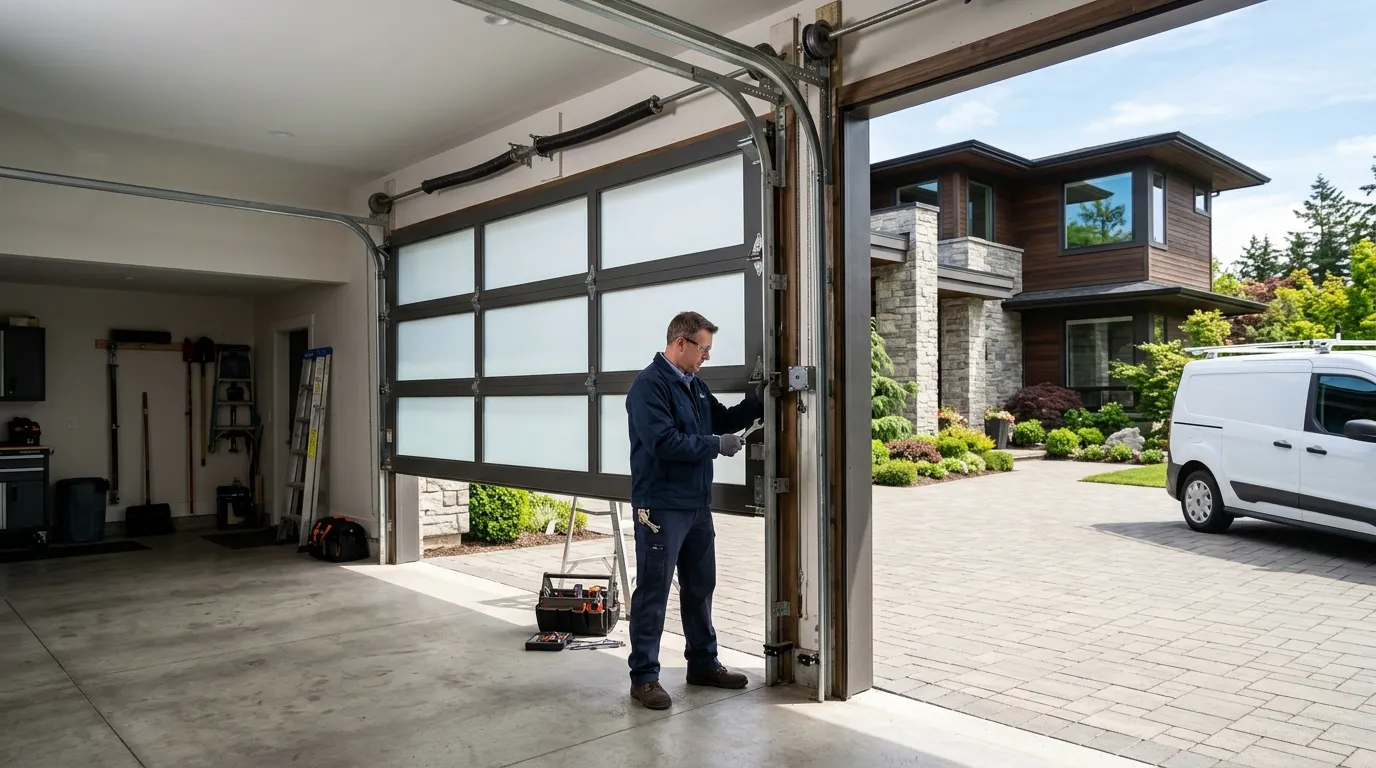
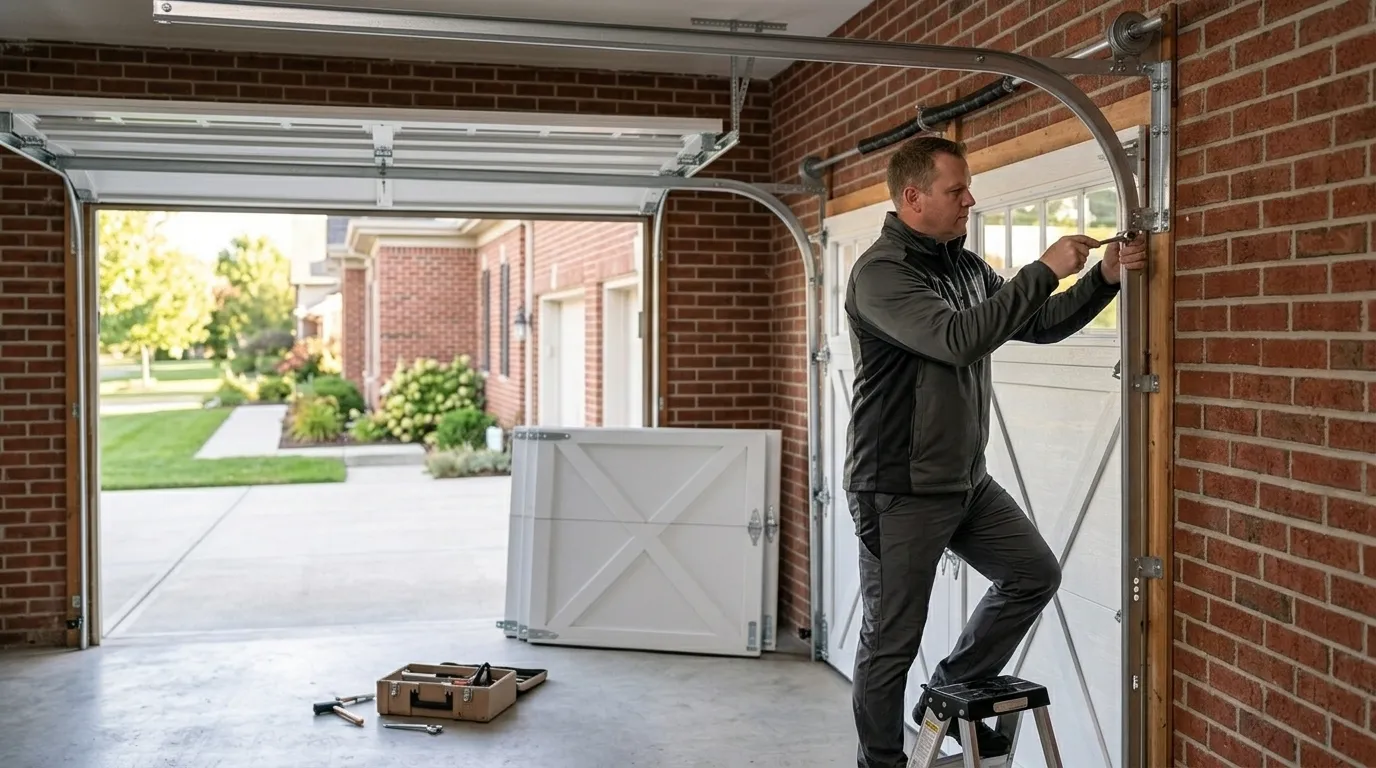
The fault we see most in Libertyville isn't a broken remote or a misaligned sensor - it's an extension spring system stretched along horizontal track, the kind that was standard when most of this town's houses went up around 1976. Torsion springs mounted on a shaft over the header didn't become the default until later, so a lot of these doors are still running the older setup, sometimes with a second spring added by hand years ago when the first one gave out.
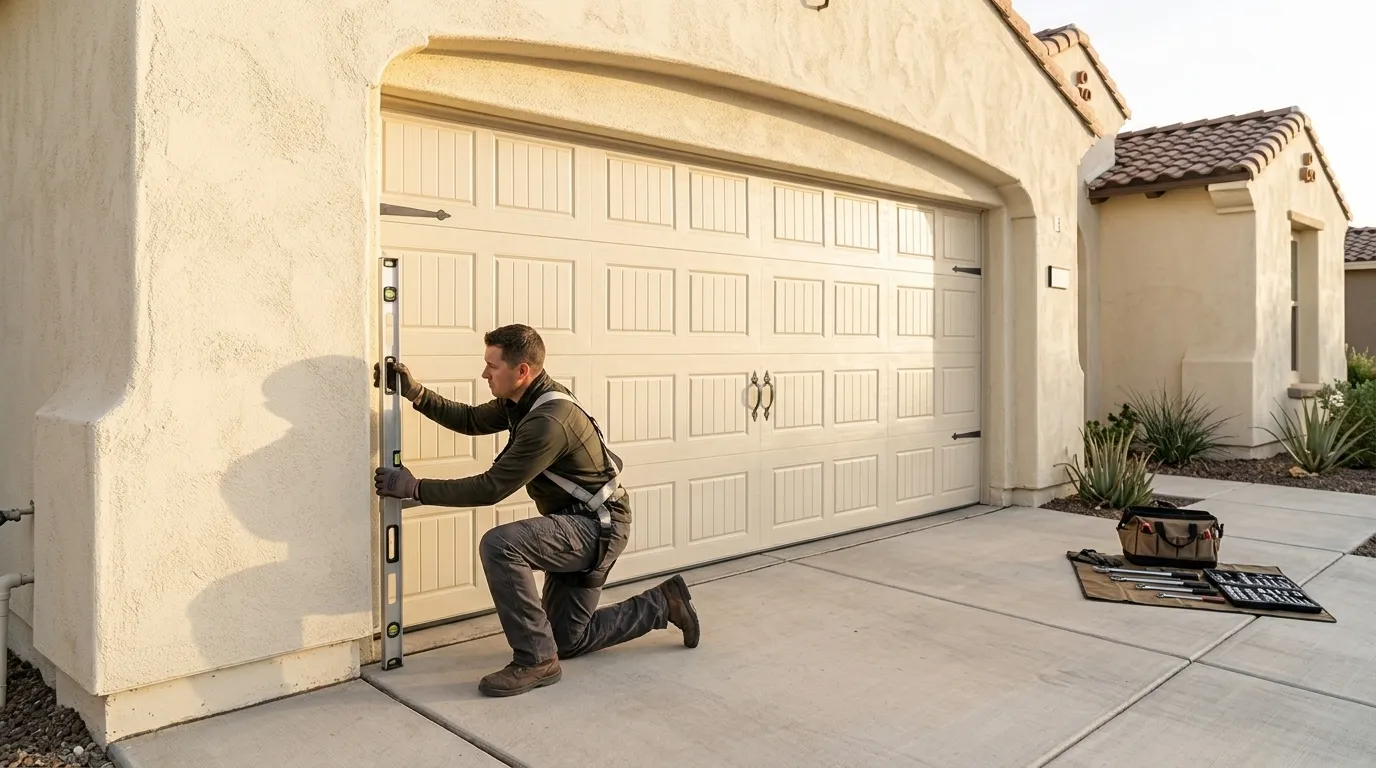
That's exactly the job you don't want to DIY. A stretched extension spring under tension can whip the length of the track if it lets go while you're working near it, and on a door this old the mounting brackets and cable pulleys are usually as tired as the spring itself. Swapping a bulb or resetting a photo-eye is fine to do yourself. Replacing spring hardware built into a house from this era isn't, and we'd rather tell you that upfront than have you find out the hard way.
What You Pay
We don't have a set price list to quote you here, and we're not going to make one up. What we can tell you is what tends to drive the cost on a Libertyville job specifically: age of the hardware, not the size of the door. Across the wider service area we cover, median household income sits at $103,561; Libertyville's own figure runs well above that, and it shows in the calls - homeowners here are more likely to ask for a full opener and track replacement rather than a patch job on 40-plus-year-old parts, because the difference in labor cost is small next to the difference in how long it lasts.
The honest limitation: if your springs, cables, and rollers are all original to a 1976 build, fixing one piece often means we're back for the next piece within a year or two. Past a certain point, replacing the whole assembly costs less over time than a string of one-off repairs, and we'll say so on-site rather than stack up small jobs.
Why It Happens Here
Put the build year and the climate together and you get the pattern. Libertyville's housing sits right around 1976, inside the broader 1938-1996 range across the towns we cover, and this region sits in a cold climate band - winters that stiffen old grease on a track and put extra load on a spring that's already lost some tension. A spring rated for a certain door weight in 1976 doesn't hold that rating forever, and cold makes the metal less forgiving right when it's under the most strain.
We also see more single-layer steel panels here than in newer construction, since insulated doors weren't standard when these houses were built. That's not a defect - it's just the era. It does mean a garage that shares a wall with living space runs colder than a homeowner might expect, and some Libertyville calls turn into a conversation about weatherstripping and panel insulation rather than a straight repair.