How It Shows Up
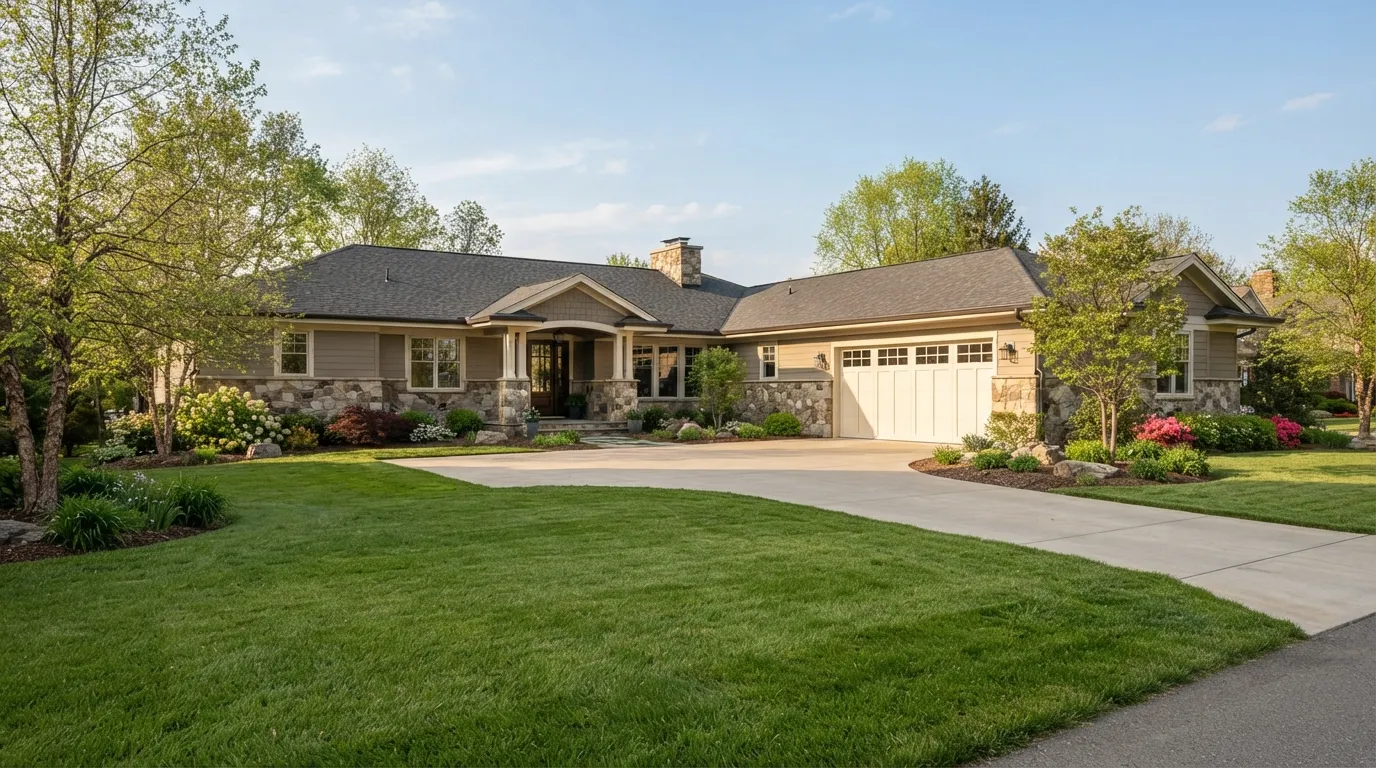
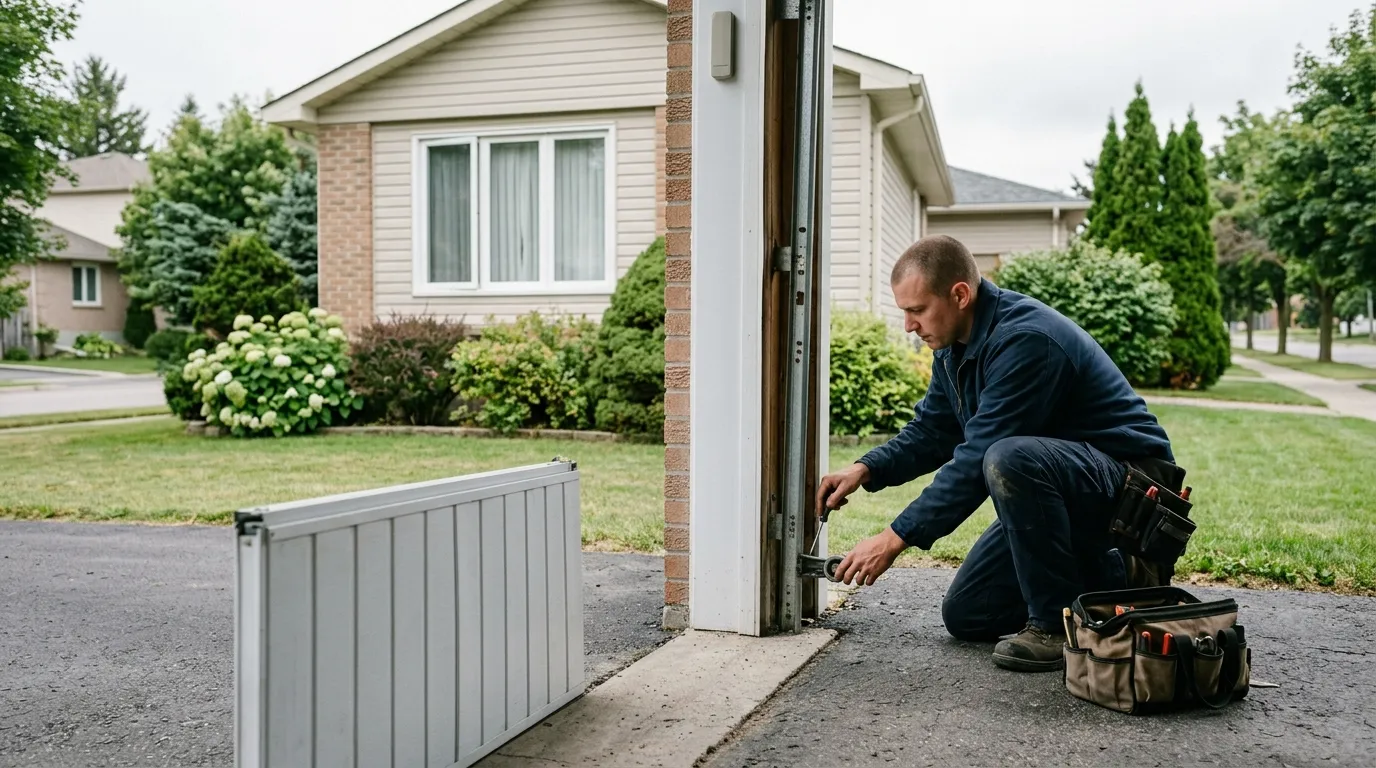
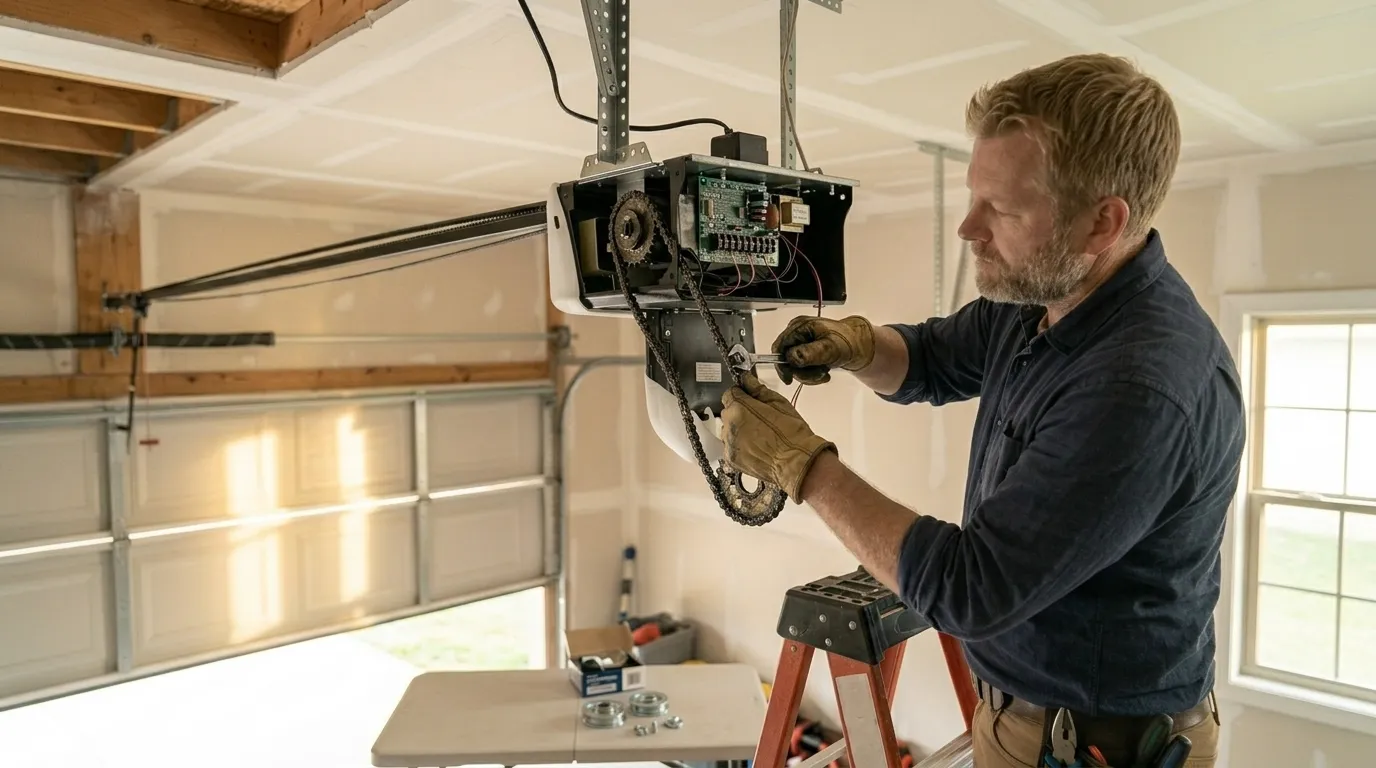
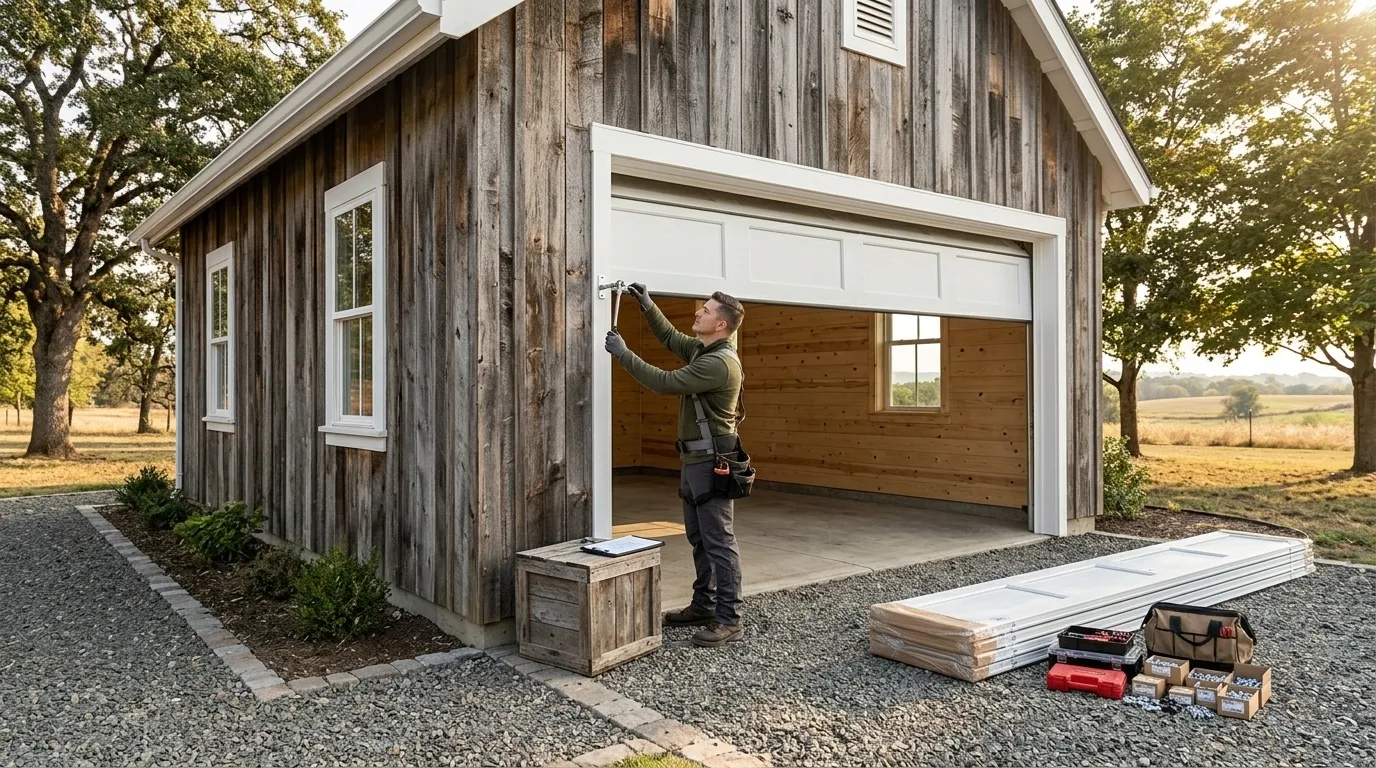
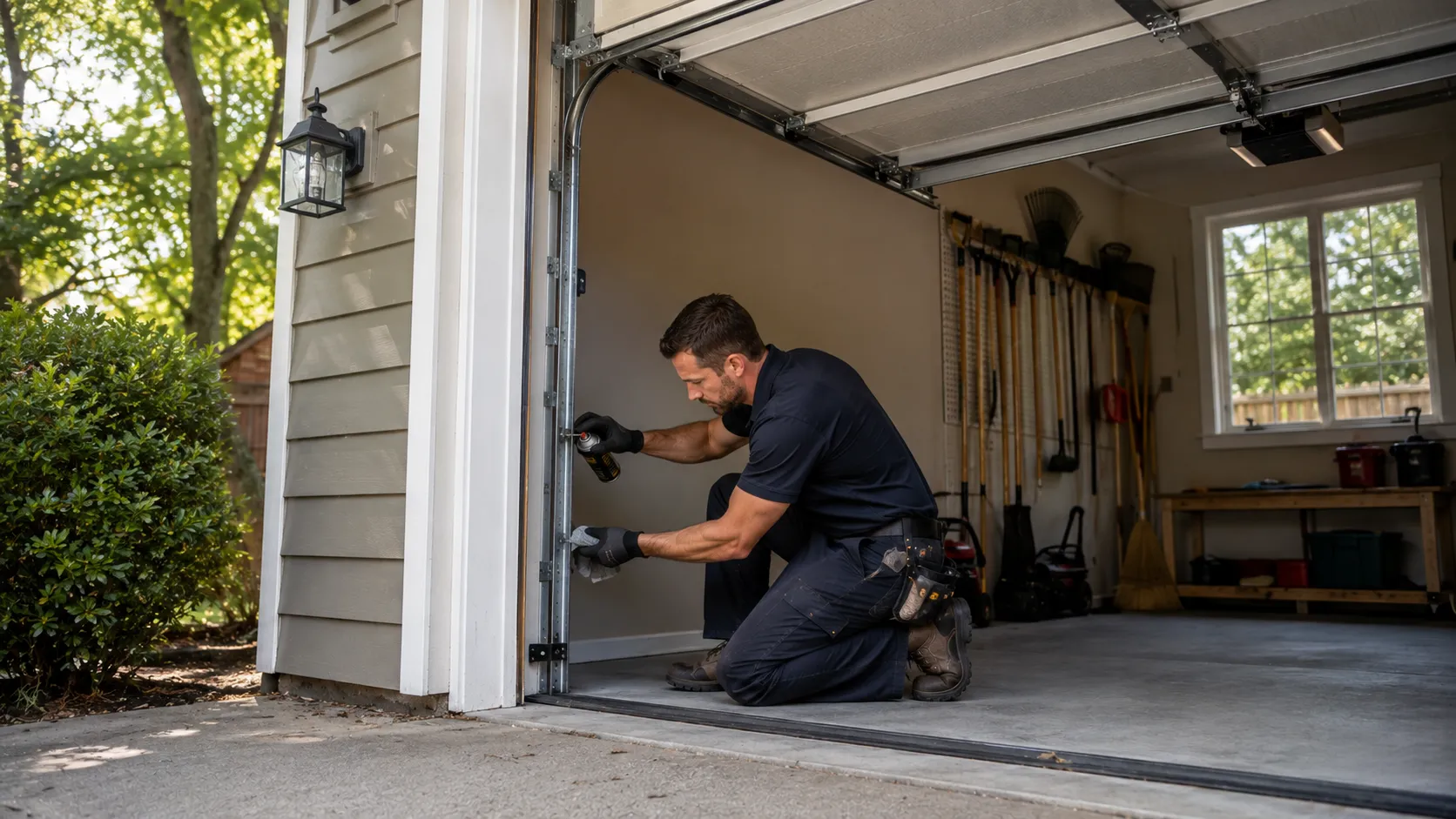
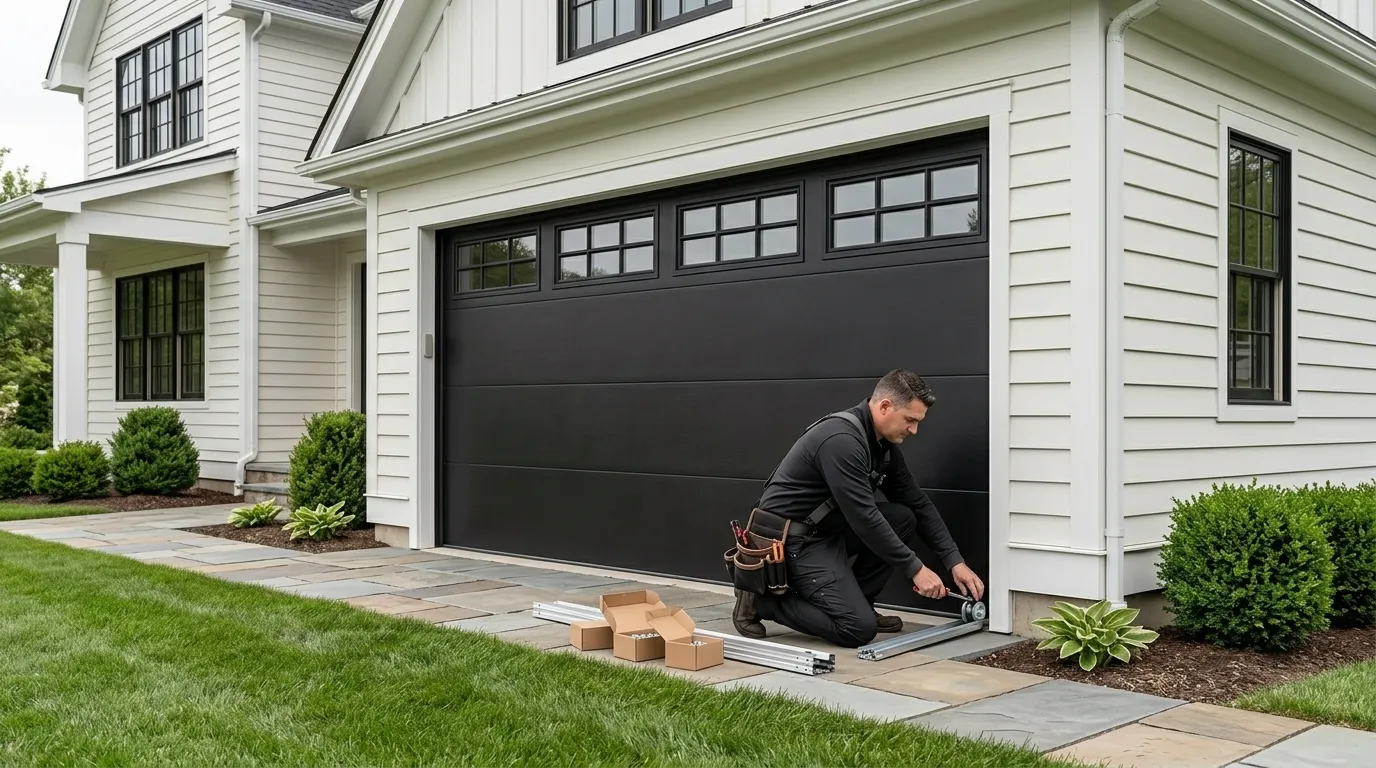
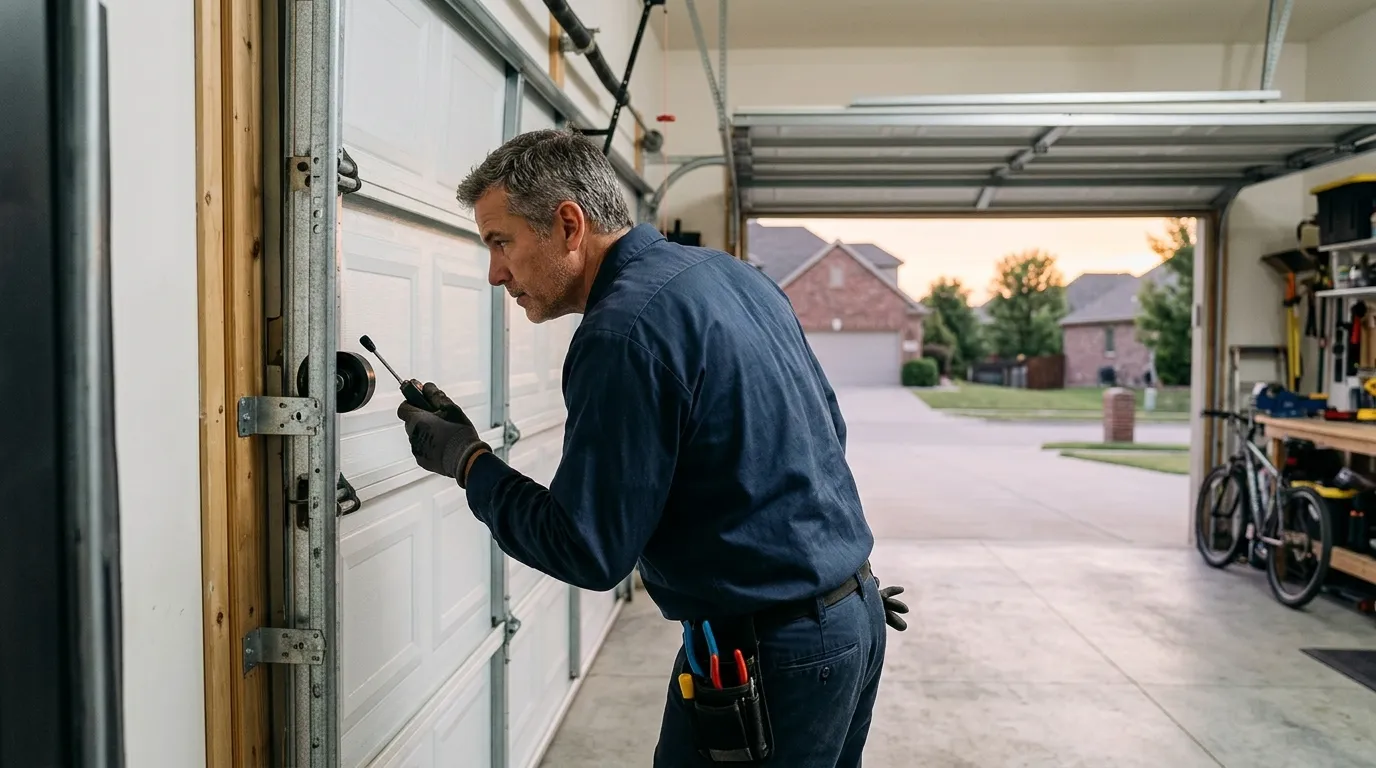
Most garages in Streamwood went up around 1981, well past the service area's median build year of 1974. By then builders had mostly moved off wood and onto steel sectional doors, hung on torsion springs mounted on a header bracket rather than the older side-mount extension setups you still find in the region's 1940s and 1950s pockets. That means the failures we see here run a certain way: a torsion spring that's done its 10,000-cycle life and snaps, a bottom bracket rusted through where the cable anchors, or rollers that have worn oval instead of round after four decades of the same steel track. On a double-wide door - common on these lots - the failure is usually one spring on a two-spring system, so the door drops crooked instead of stalling flat. You'll also see opener drive gears stripped on the older chain-drive units that came with these houses originally, since a worn spring makes the opener do work it was never sized for. None of this is exotic. It's what steel doors from this build era do once they've put in thirty-plus years of daily cycles.
How Long It Takes
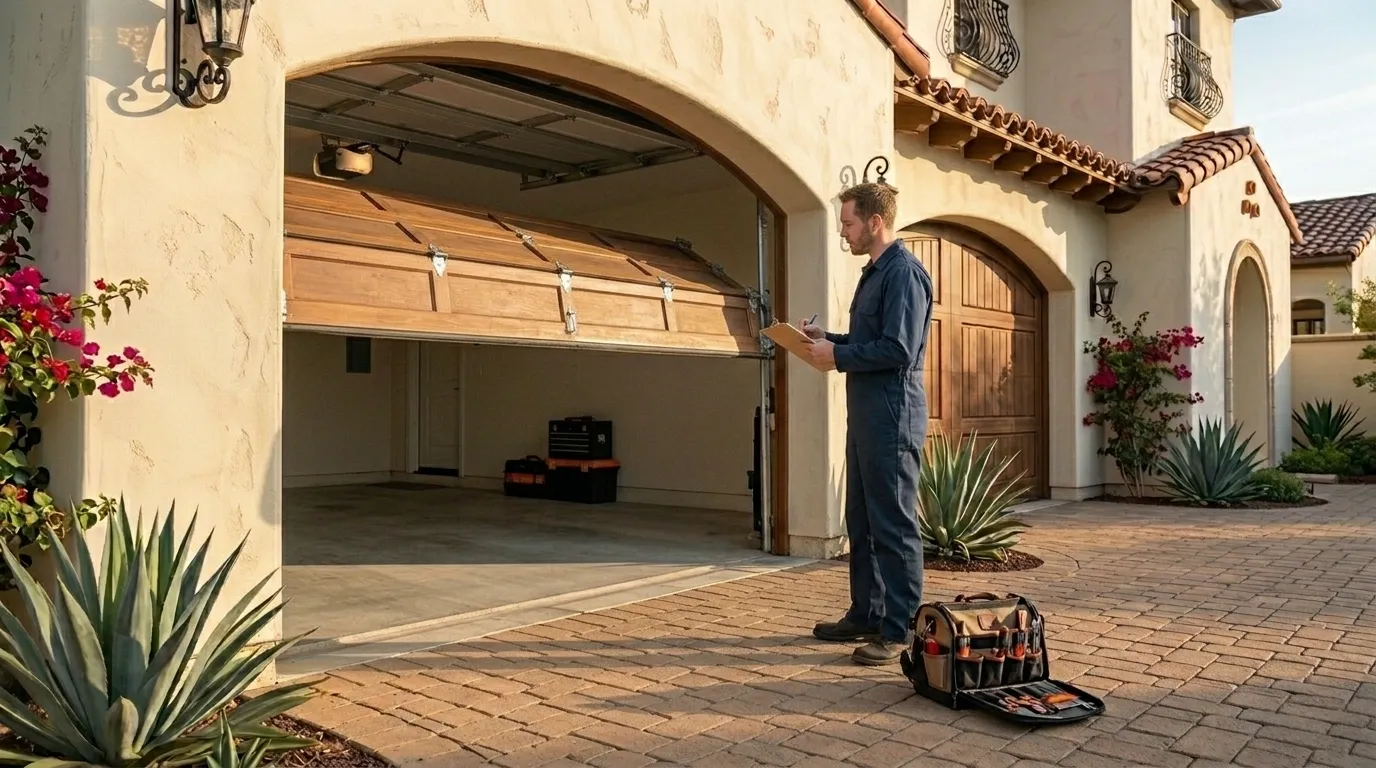
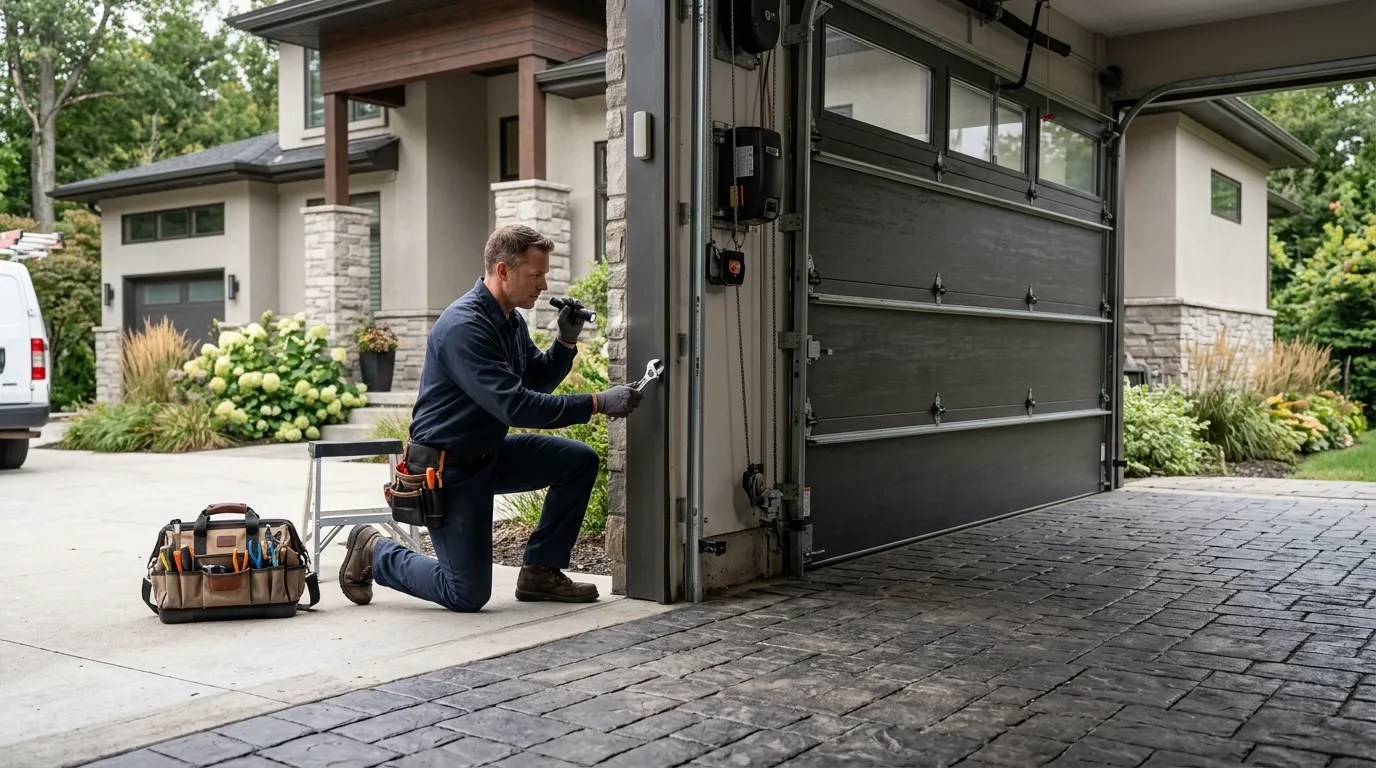
A torsion spring swap on a standard double door, once we're on site with the right size spring, is a same-visit job - an hour or two of hands-on work. What takes longer is anything involving a bent track or a section that's cracked, because those parts aren't something we carry for every door size and we may need to order the panel before we can finish the job. We drive out from Northbrook, about 19 miles each way, so we schedule the trip rather than treat it as a drop-in stop between closer jobs. If you call and the fix turns out to need a part we don't have on the truck, expect a second visit rather than a same-day finish. That's the honest version: most spring and cable repairs close out in one visit, but a full panel replacement on an older door usually doesn't.
Why It Happens Here
Streamwood sits inside the same cold-moderate climate band as the rest of the area we cover, and a door built in 1981 has had over forty winters to test whatever weatherstripping and hardware coating it shipped with. Steel springs lose temper faster in repeated cold-to-warm cycling than in a mild climate, which is part of why torsion springs on doors this age are closer to the end of their rated cycle life than a homeowner might guess from the outside. The household income here, $101,049, sits close to but under the wider service area's median of $103,561, which doesn't change the physics of a tired spring but does shape which repairs get put off versus done right away. With roughly 13,041 households in Streamwood against 275,099 across the whole area we serve, this is one of the smaller markets we drive to - which is exactly why we're upfront that we're coming from Northbrook, not sitting around the corner.
Where This Job Goes Sideways
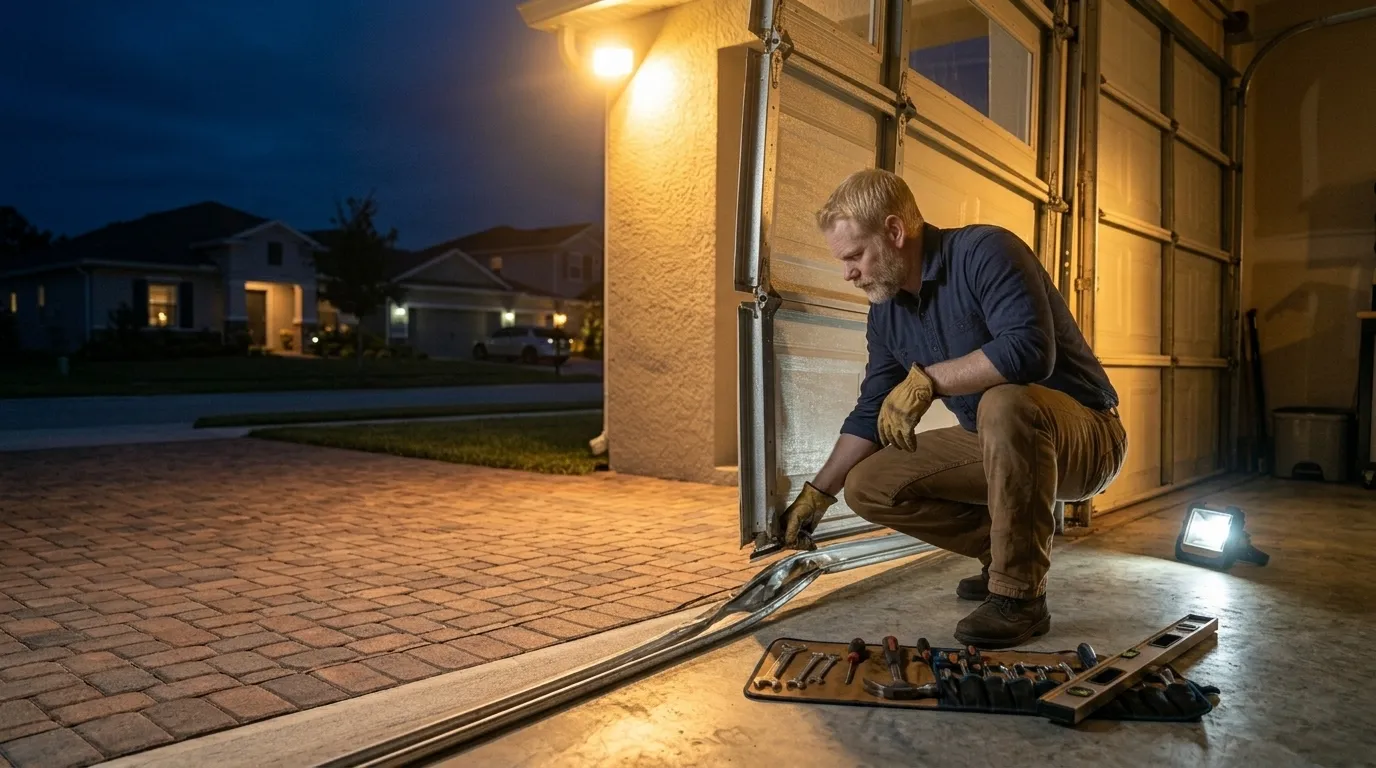
The mistake we see most is someone trying to force a door down or up after a spring breaks, which bends the track or cracks a bottom panel that would otherwise have been fine. The second mistake is replacing just one spring on a two-spring double door - the old spring, even if it hasn't broken yet, is the same age and cycle count as the one that just failed, and it's usually only a matter of months behind it. We'll tell you straight if a door's track or opener is far enough gone that a repair is throwing money at a door that's better off replaced outright; we'd rather say that up front than have you pay twice.