How It Shows Up
Streamwood's housing stock centers on 1981, which puts a lot of these garages a full decade past when the original hardware was ever touched. If your house went up around then, there's a real chance the rollers riding in your track right now are the same stamped-steel or early nylon rollers the builder installed - nobody's had a reason to open that section of track since. That's different from the wider service area, where the median build year runs closer to 1974: same basic problem, just a different clock.
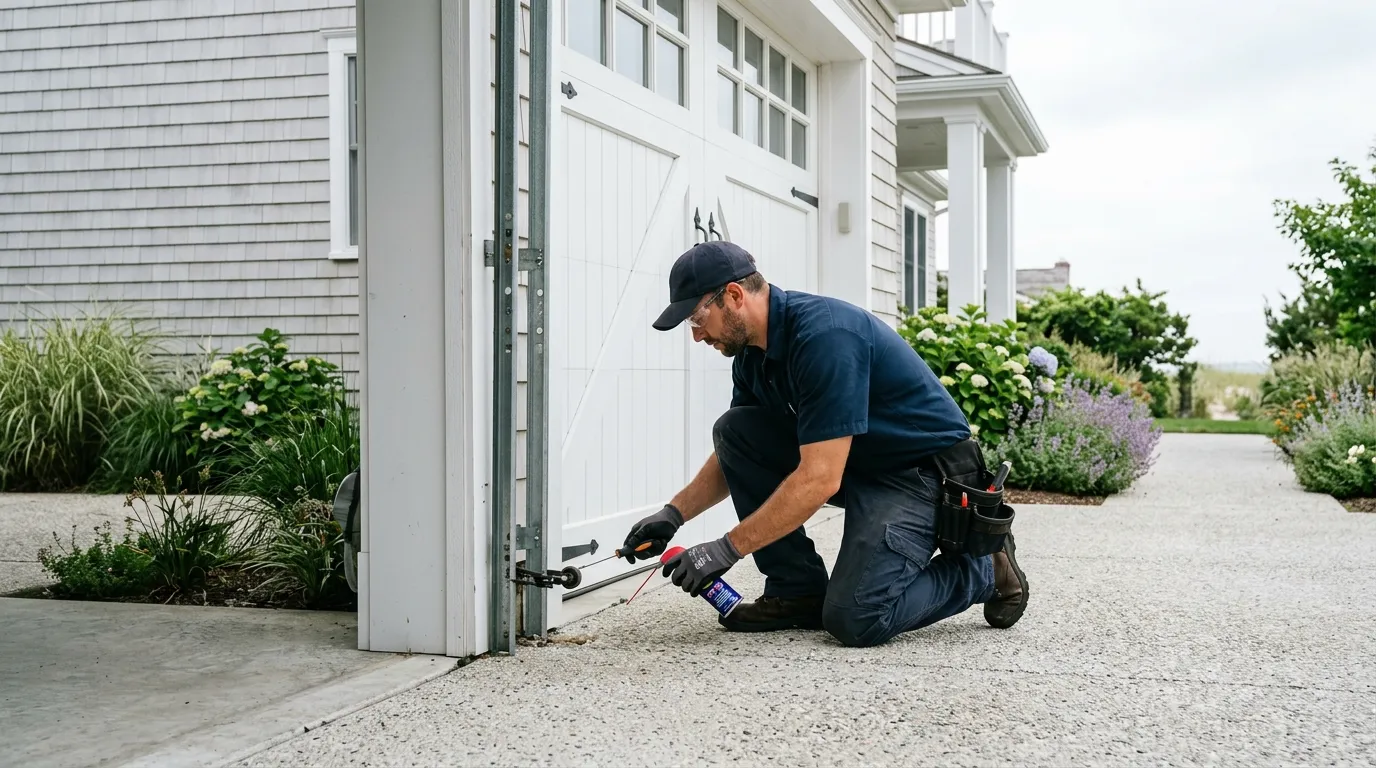
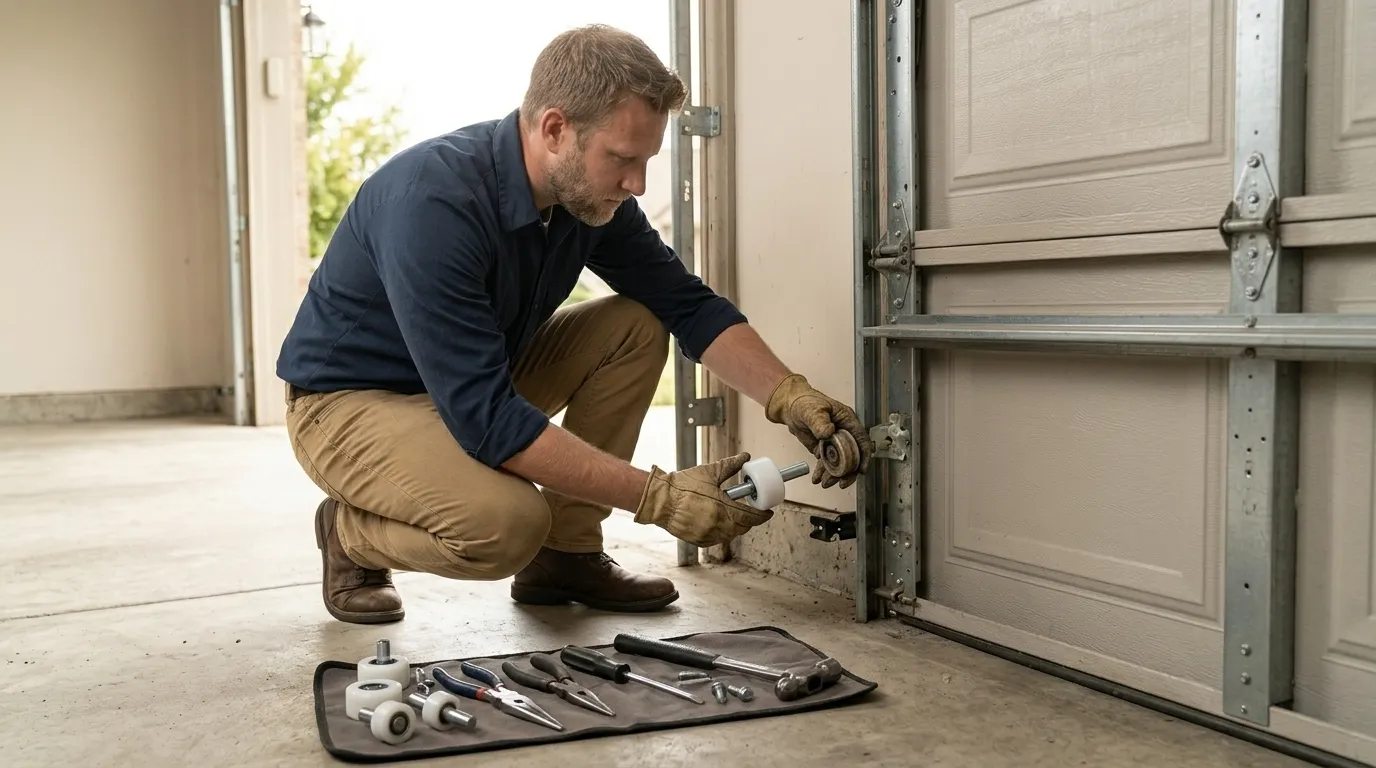
The symptoms are consistent once you know what you're looking at. A grinding or clacking sound as the door travels, worse at the top and bottom of the run where the roller takes the curve into the horizontal track. Flat spots you can feel if you run a hand along the roller wheel. Rust bloom on the stem where it meets the hinge, especially if the roller's plastic sheave has already cracked and let moisture sit against the metal. None of that means the opener is failing - it means the roller's done its job for longer than it was built to.
How Long It Takes
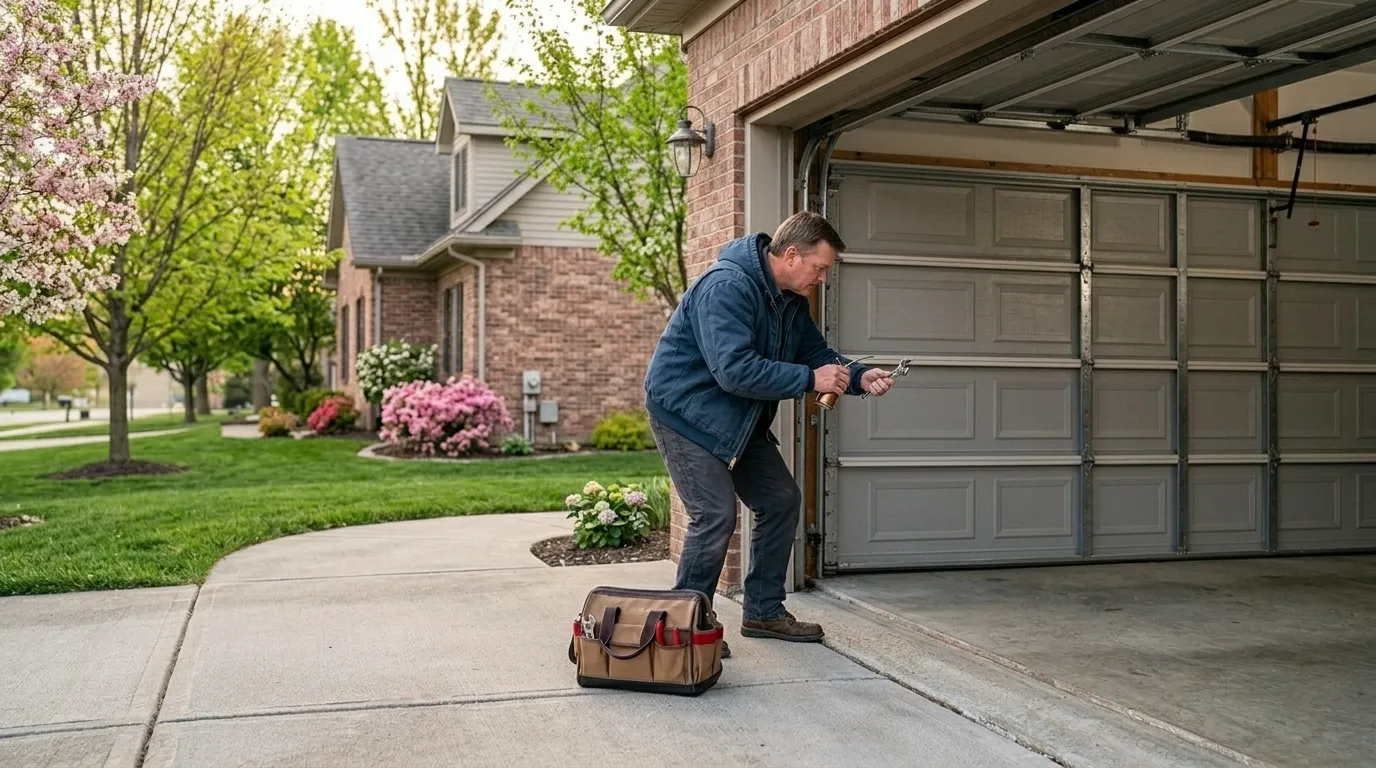
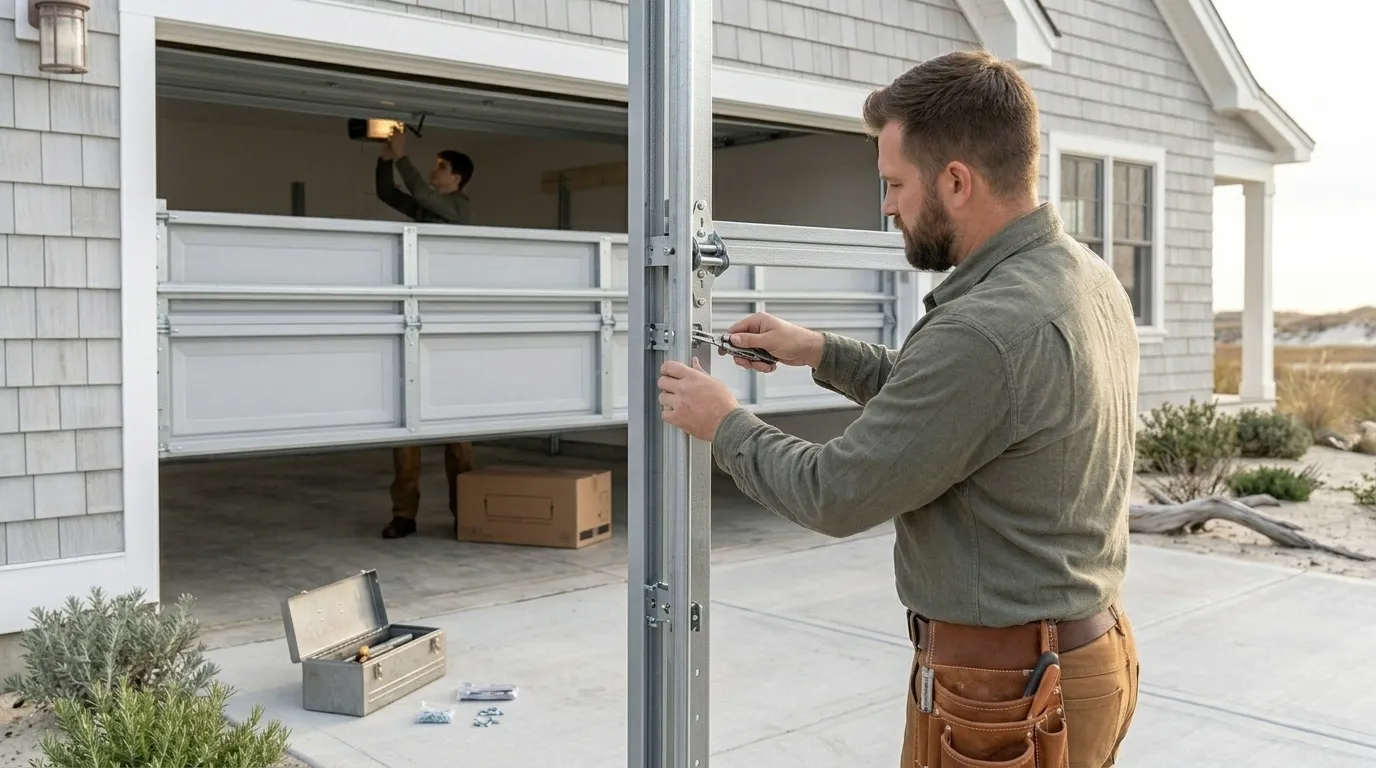
A straight roller swap on a double door, done once the tech is on site, is a same-visit job - this isn't a project that gets scheduled in phases. The time on site depends more on what the rollers reveal than on the rollers themselves. Pull an old roller and find a clean stem and a track that's still true, and it's quick work: back the hinges off, slide the new roller in, re-set the door on the track, done.
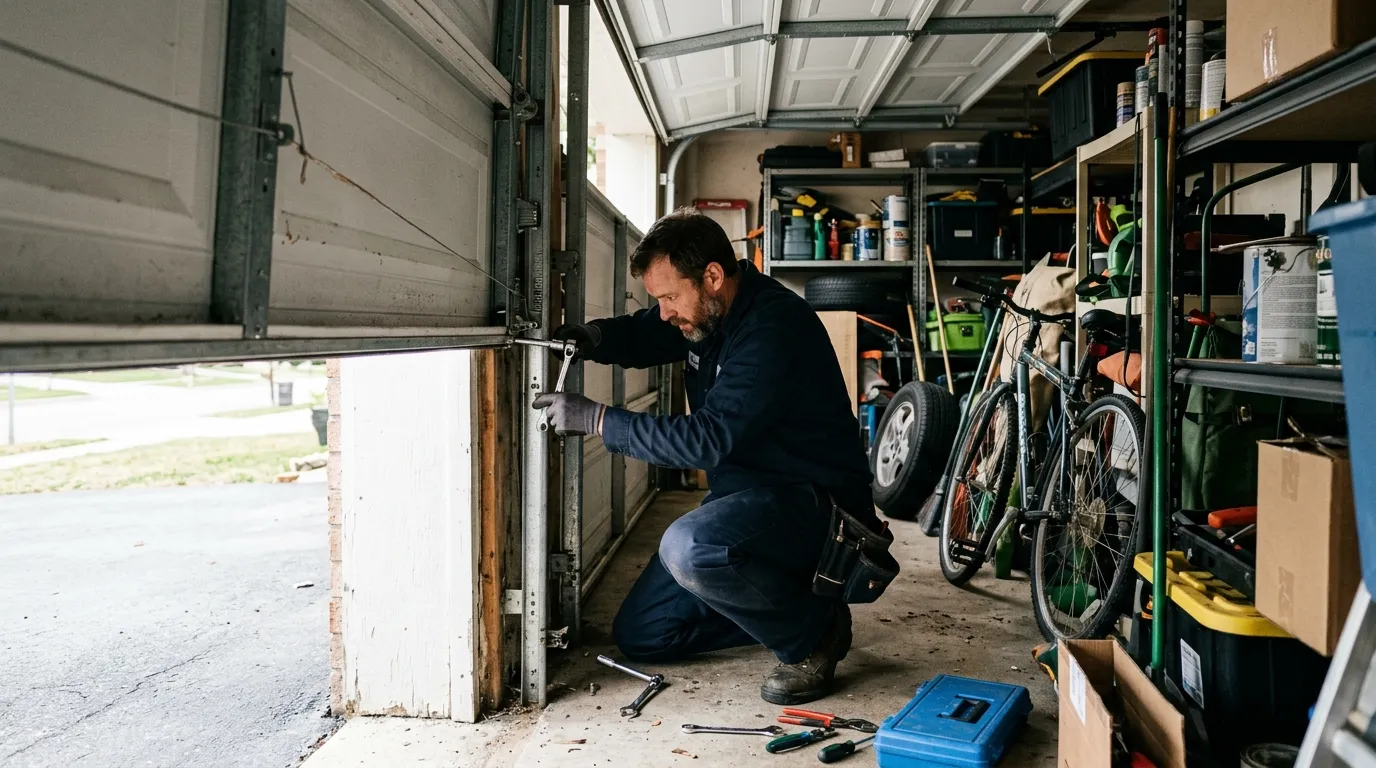
It runs longer when the roller's failure has already started chewing on something else. A roller that's been flat-spotted for months can wear a groove into the track wall, and at that point you're not swapping a part, you're correcting a track alignment too. On a house from the early 1980s, that's the more common finding than not - the roller usually isn't the only thing that's original.
Why It Happens Here
Two things stack against original rollers in this part of the service area. First is age: a 1981 median build date means the hardware has had roughly forty years to work, and roller bearings - sealed or not - have a working life measured in years, not decades. Second is climate. This is a cold-moderate band, and cold does two things to an old nylon roller: it makes the sheave brittle, so a flat spot that would just be noisy in July turns into a cracked wheel in January, and it thickens whatever grease is left in the bearing, which is usually why the door starts groaning before it starts grinding.
Streamwood's roughly 13,041 households sit on housing built mostly across that same late-'70s-to-'80s window, so this isn't a one-off - it's the pattern for the area's garages generally, not just yours.
Where This Job Goes Sideways
The most common misread on a job like this is treating a bent track as a roller problem. A roller that looks fine but keeps binding at the same spot on every cycle usually means the track's out of plumb, not that the roller's worn - and swapping rollers on a bent track just buys you a few quieter weeks before the same noise comes back.
The honest limitation here: if the door's cable, spring, or opener is also original to a 1981 build, a roller swap alone won't fix a door that's sagging or slow to respond. Rollers are a wear item, and replacing them is worth doing on schedule - but if three systems are all near end of life at once, it's worth saying so up front rather than doing one fix and having the homeowner call back in a month for the next one.