How It Shows Up
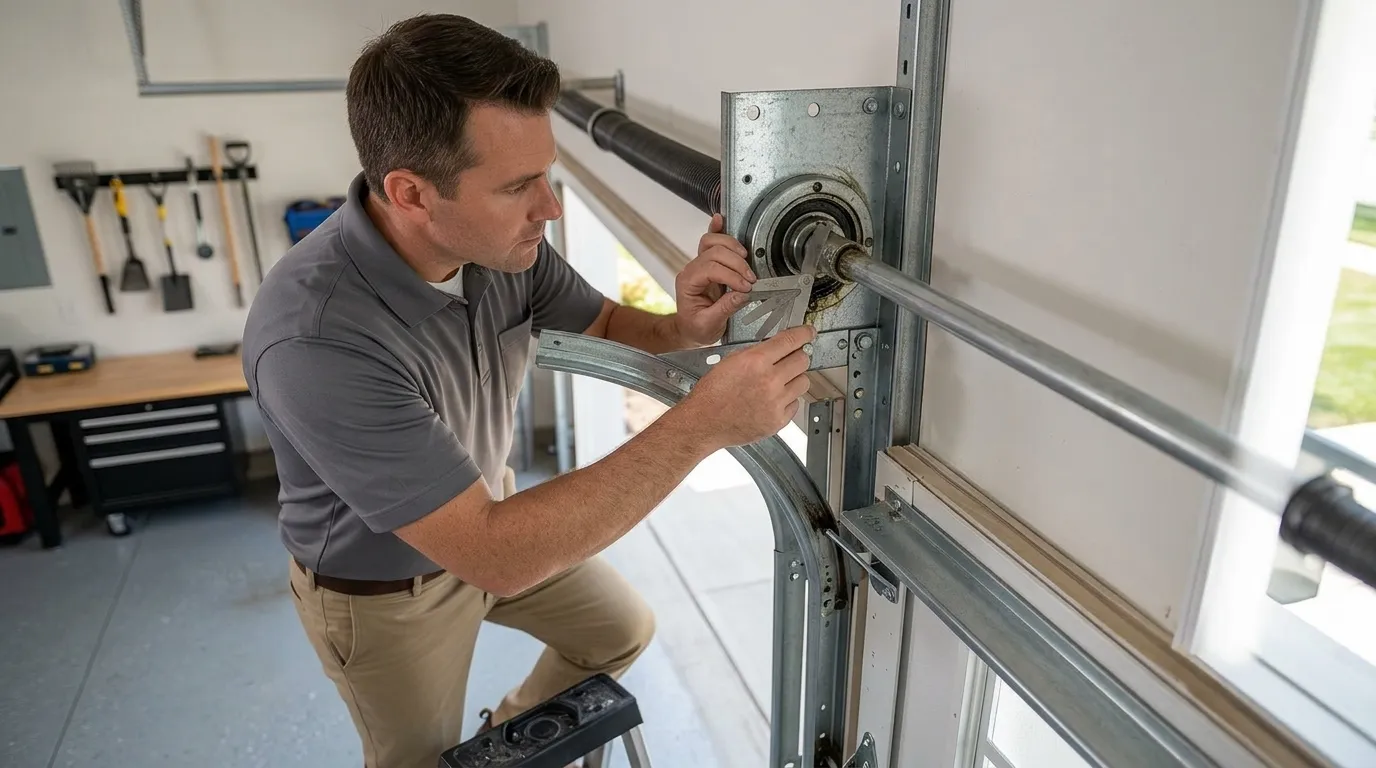
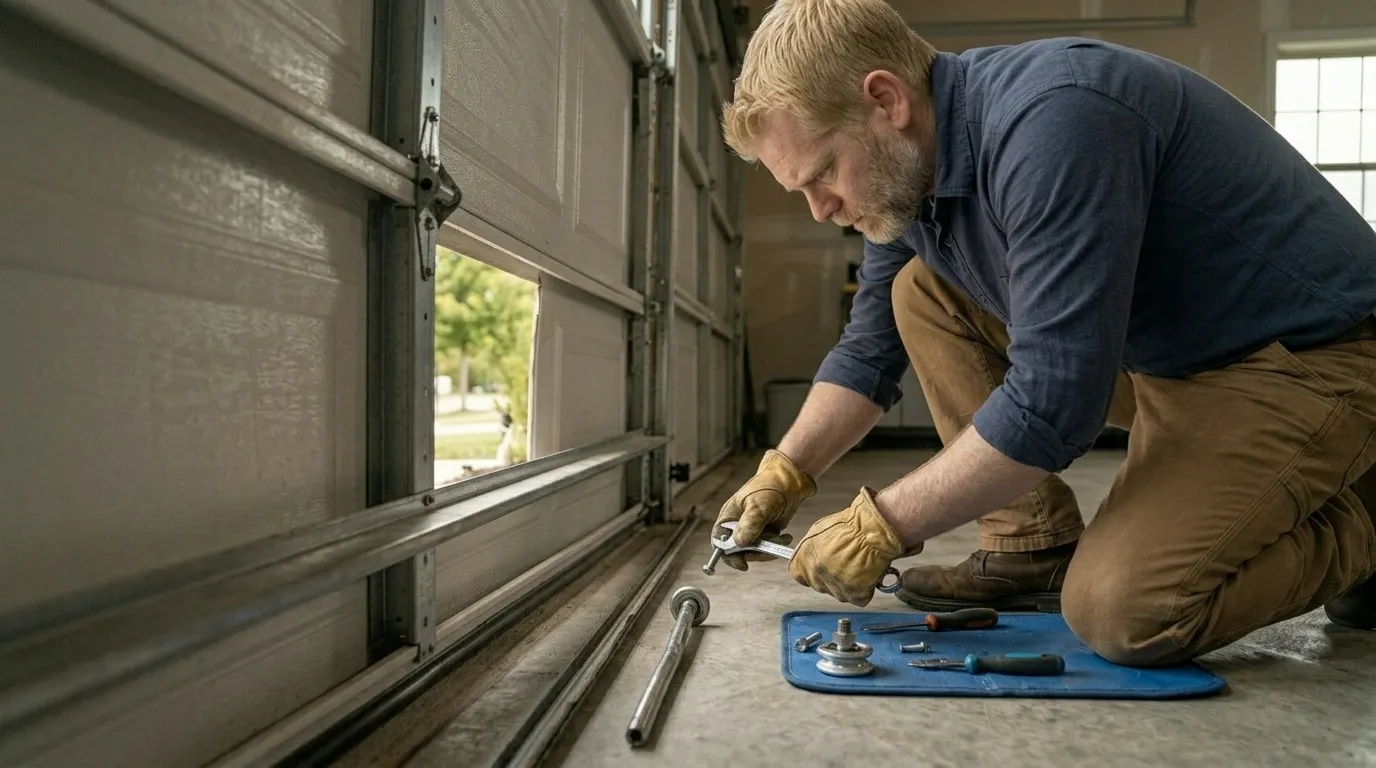
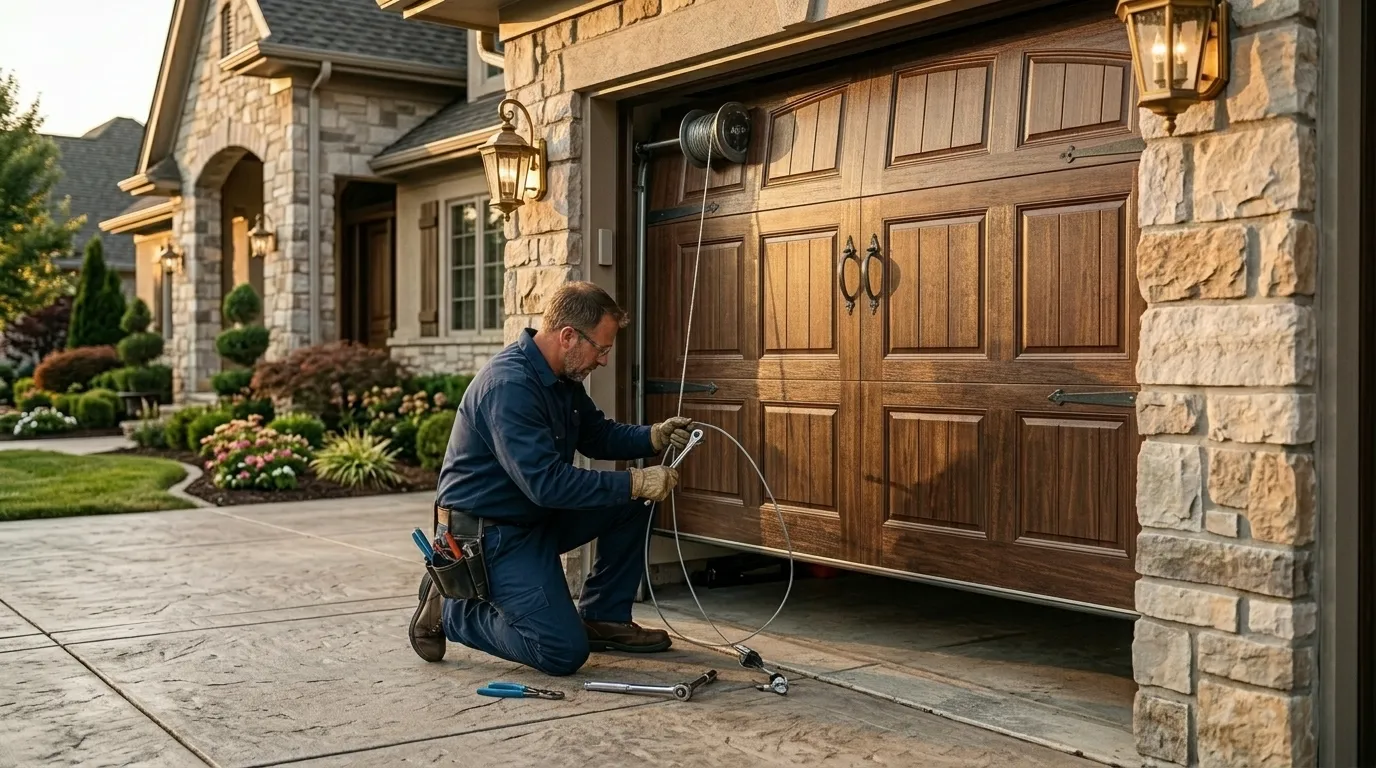
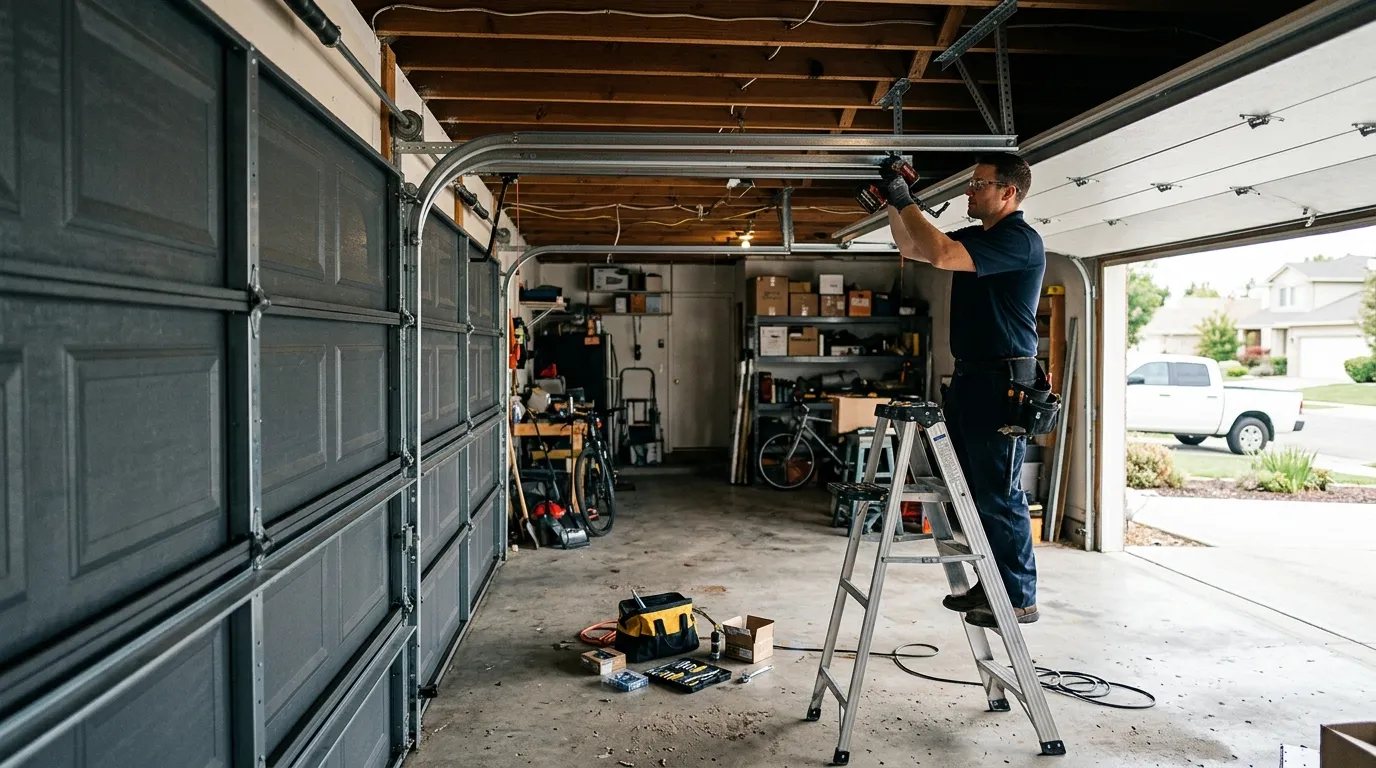
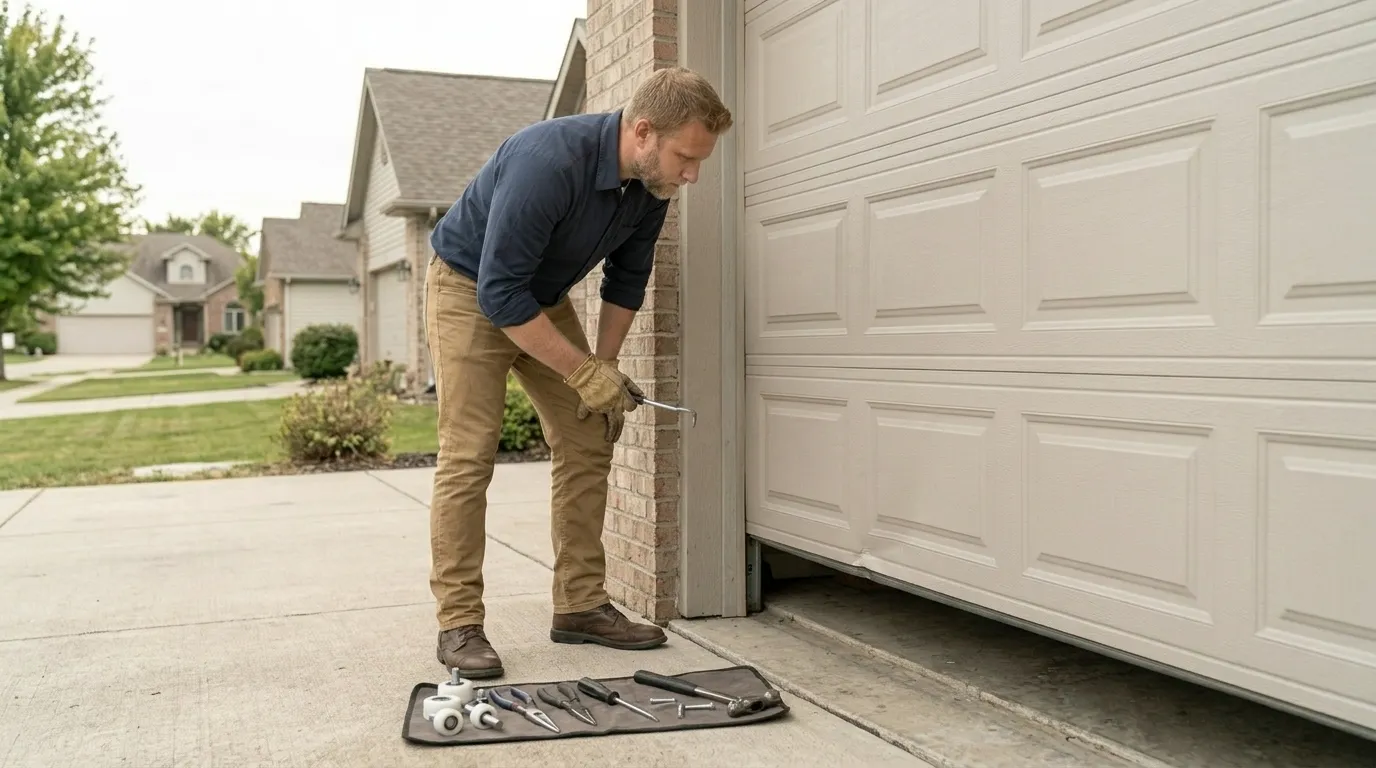
Northbrook's own housing stock runs older on average - median year built 1974, with plenty of doors going back to the late 1930s. Streamwood sits later, median year built 1981, which means most of the doors we see out here are second- or third-generation replacements on the original framing rather than the true original hardware you still find on Northbrook's oldest blocks. That matters for an off-track call. A door built or replaced in the early 1980s is more likely to be a sectional steel door on roller tracks with a torsion spring set overhead, not the older extension-spring, side-track setups still common on Northbrook's 1940s houses. When one of these comes off track, it's usually a bent track bracket or a broken roller that let the panel jump the rail, not the whole assembly failing at once. You'll see the door hang crooked, stop halfway, or grind against the track on one side. Sometimes a cable has slipped its drum instead of snapping outright, and the door will look off-track when the real problem is upstream of the track itself. Either way, don't force the opener past the point where it's binding - that's how a bent track becomes a torn track.
How Long It Takes
Most off-track jobs on a single-car or double door are a same-visit fix once a tech is on-site - realigning or replacing a track section, swapping bent rollers, reseating a cable on its drum. What extends the visit is finding out the track bent because a spring gave out first, which happens on doors already fifteen to twenty years past a 1980s-era install. We don't quote a fixed hour count here because we haven't diagnosed your door, but a straightforward track repair doesn't usually turn into a full-day job unless the opener or the panel itself took damage when the door left the rail.
Why It Happens Here
The service area sits in a cold climate zone with real winter swings, and track problems track the seasons - metal contracts in cold, brackets loosen, lubricant thickens, and a door that's been riding slightly out of alignment all summer finally jumps the rail on the first hard freeze. Streamwood's housing stock, concentrated around that 1981 median, means a big share of doors out here are approaching or past the point where original 1980s-era track hardware is worn thin rather than freshly installed. A track that's been flexing slightly for years under a heavier steel door is a lot more likely to let go once cold weather adds stiffness and shrinkage to the mix. It's not a Streamwood-specific defect - it's Streamwood-specific timing, because a large share of the doors here are all aging through the same window at once.
Where This Job Goes Sideways
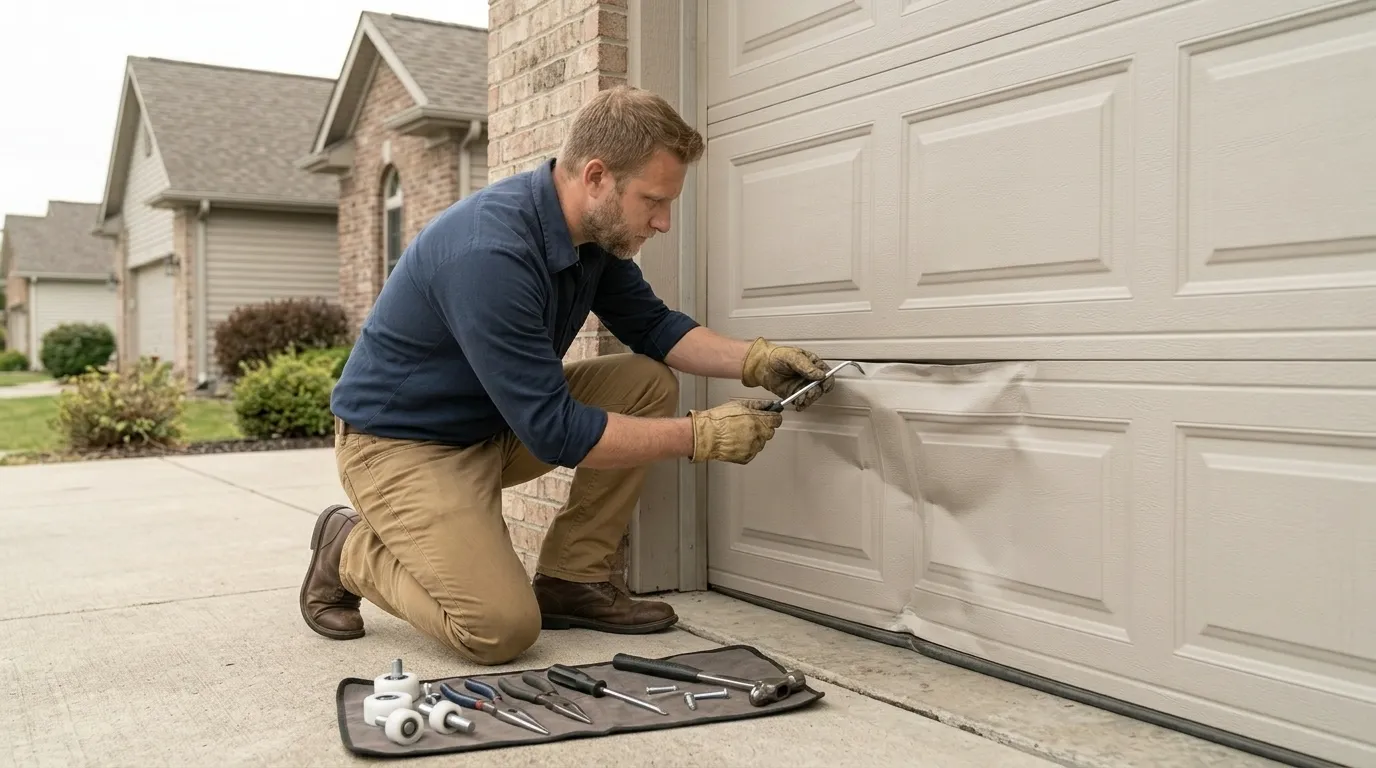
The mistake we see most is someone trying to walk the door back onto the track themselves, using the opener to force it. That's how a $150 bracket fix turns into a bent track that has to be replaced outright, or a panel that gets creased and now needs a partial section swap instead of a repair. The other place it goes sideways is when the track wasn't really the problem - a spring on one side gave out first, the cable slipped, and the door tipped enough to look off-track when the actual failure is the spring. Fixing the track without addressing that just sets up a repeat call. If your door is riding heavy on one side or the opener strains before it even reaches the top, tell the tech that up front - it changes what gets checked first.