How It Shows Up
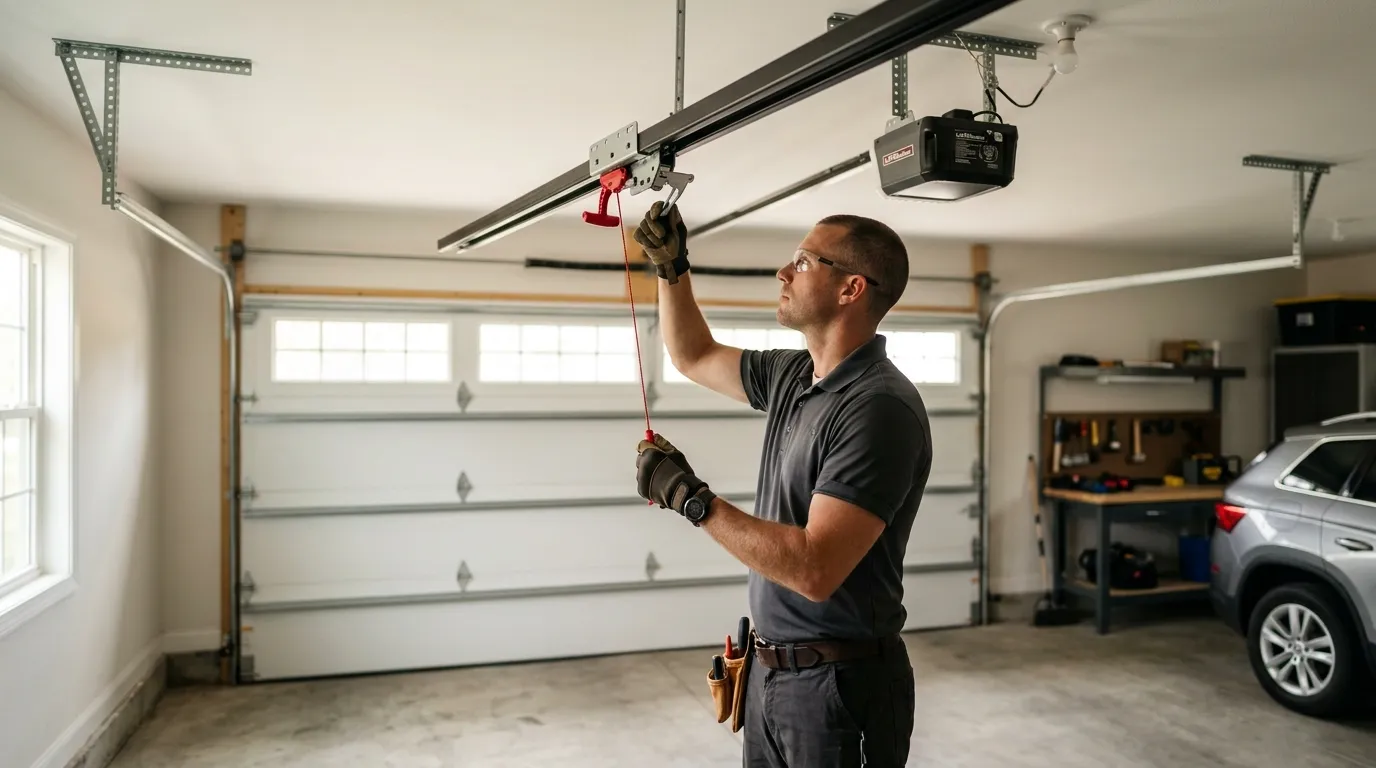
The call we get from Streamwood is almost never "my opener won't work." It's "it works sometimes" or "it grinds for a second and stops." That's the signature of a chain-drive unit that's been running since the house was built, with a circuit board that predates the rolling-code security standards most openers ship with now. The remote might still pair. The wall button might still work. The board just can't hold a signal the way it used to, or the drive gear inside the housing has worn down to plastic dust.
Streamwood's housing stock runs newer than much of the rest of the service area, with a median build year of 1981 versus the area's 1974 median. That gap matters for openers specifically: a lot of these garages got a builder-grade chain-drive unit as standard equipment rather than an add-on, which means the opener is original equipment, not a retrofit - and it's been carrying the door's full weight cycle after cycle for over forty years. When it fails, it usually fails the mechanism, not just the electronics.
How Long It Takes
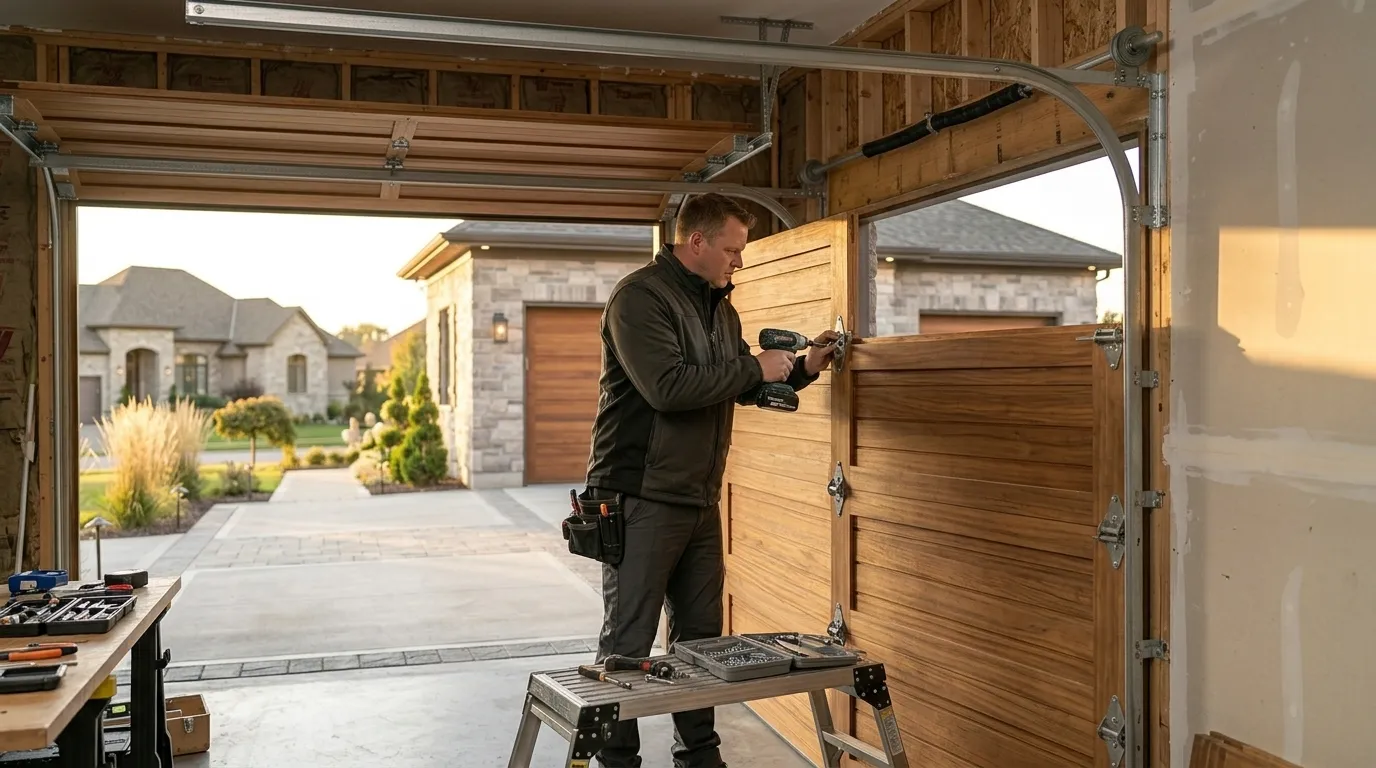
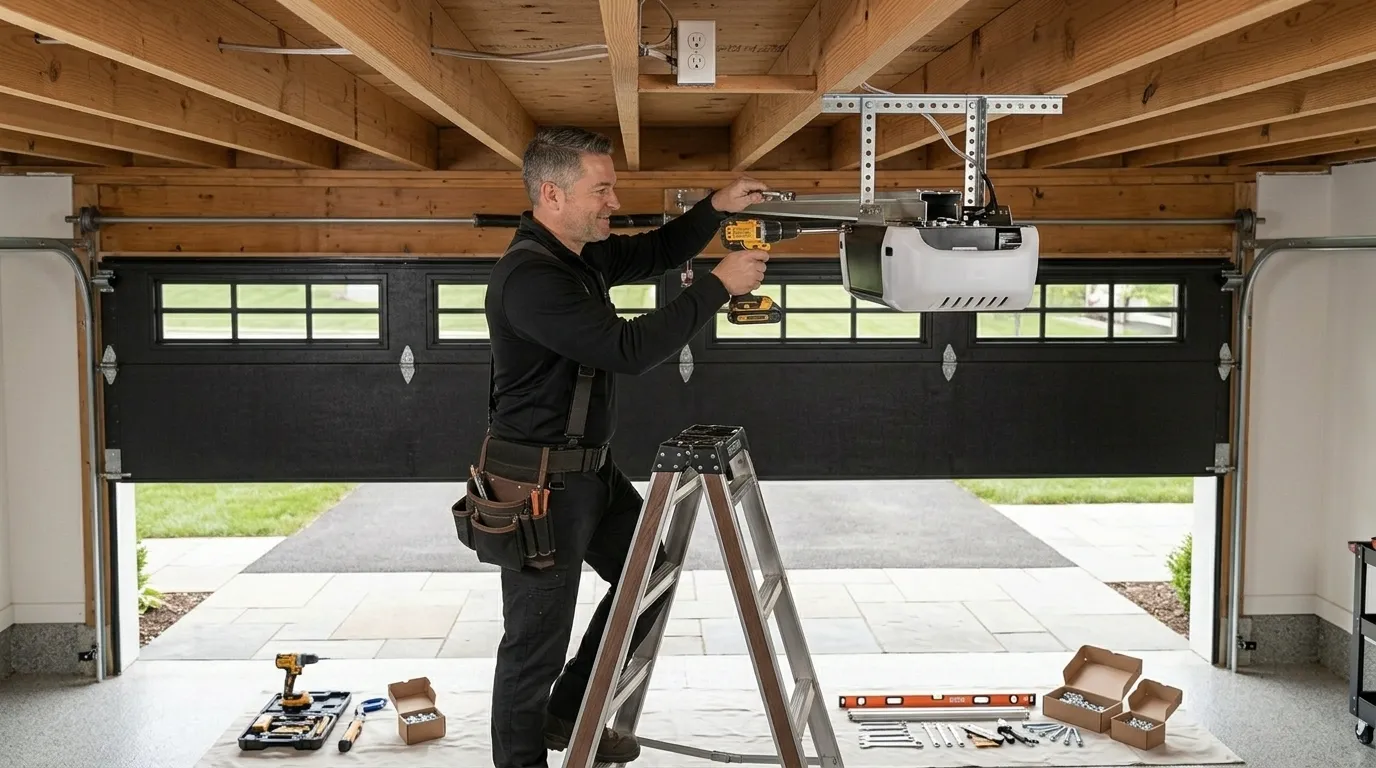
A straight swap - same header clearance, same door, no track work - is a half-day kind of job once we're on site. What stretches it is what's behind the old unit. Houses from this era sometimes have the opener wired straight into a junction box instead of a dedicated outlet, which means an electrician's call before we can finish, not something we do ourselves. We'll tell you that before we start, not after we've opened the housing.
If the door itself is original - heavier steel panels than what ships today - the new opener's force settings need adjusting on site rather than left at factory default, and we test the auto-reverse a few times before we call it done. That's not padding the job, it's the part that keeps a kid's bike or a car bumper from getting caught under a door that closes too hard.
Why It Happens Here
This part of the territory sits in a cold, moderate climate band, and that matters more for openers than most homeowners expect. It's not the door that struggles in a hard winter - it's the opener's circuit board and the sensor eyes mounted low on the track. Cold air pools at floor level in an unheated garage, and that's exactly where the safety reversal sensors sit. On houses built when Streamwood's stock went up, those sensors were often added as a retrofit rather than built into the original unit, since the federal reversal requirement postdates a lot of this housing. A retrofit sensor pair is more prone to drifting out of alignment as the bracket ages, and cold makes the plastic housing more brittle, which is why we see more sensor-related no-close calls here in January than in July.
Where This Job Goes Sideways
The job goes sideways when the door and the opener don't match anymore. If a heavier insulated door got swapped in at some point but the opener never got upgraded to match the new weight, the old unit is working past its rated capacity every single cycle - that shortens its life fast, and no amount of adjusting the force settings fixes it long-term. We'll flag that on the spot rather than install a new opener onto a mismatch and let it fail again in a year.
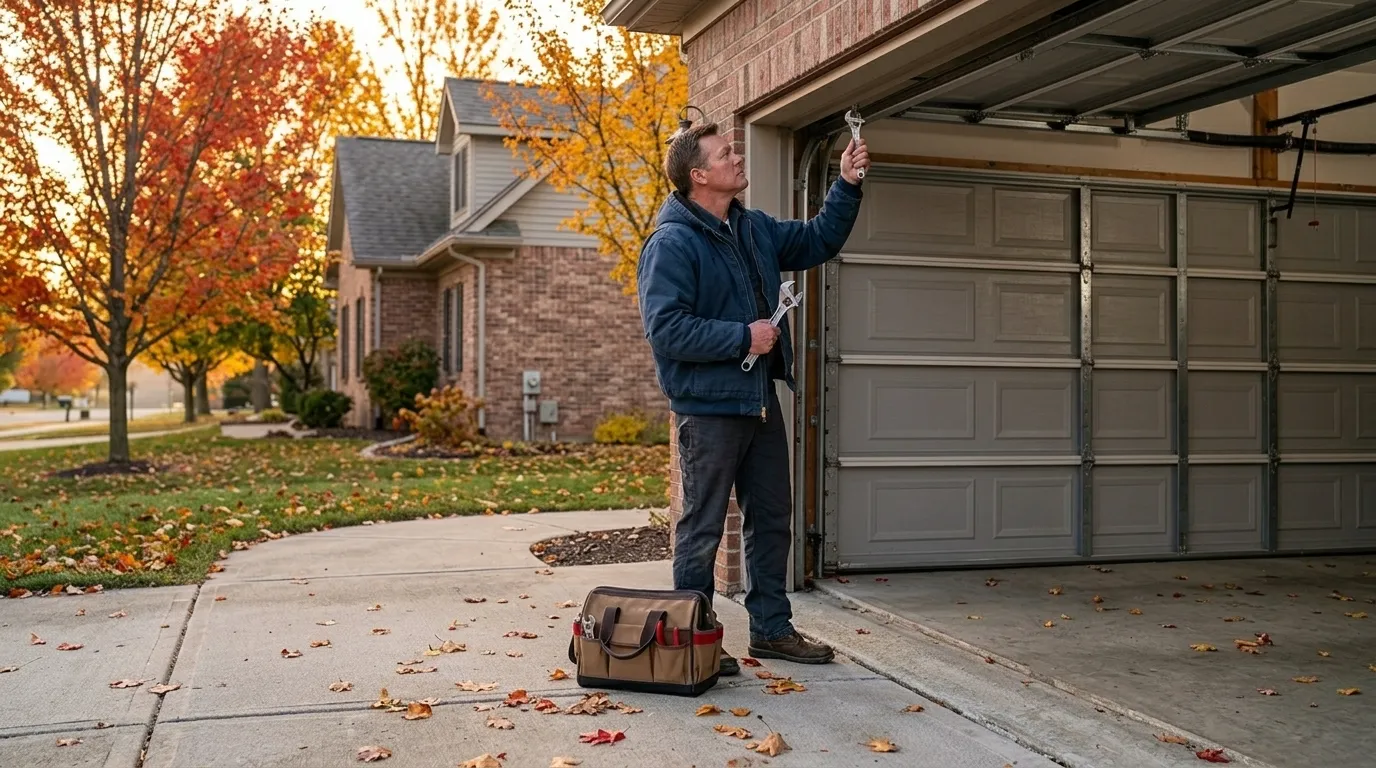
The other snag: houses in this range sometimes have non-standard header clearance from an old renovation, and a standard-mount opener won't clear it. That calls for a low-headroom kit, which isn't stock on every truck, so we may need to schedule the actual swap for a second visit once we've confirmed the clearance on the first.