The DIY Question
Before you pull a YouTube tutorial, look at what you're actually working on. Most garage doors in Westchester went up around 1957, and that means single-layer steel or wood doors sized for the narrower single-car and modest double-car openings builders used that decade - often 8 or 9 feet wide, not the 16-foot doubles that came standard later. The hardware on these is usually side-mounted torsion or extension springs bolted straight to wood jambs, not the newer center-mounted units with safety cables.
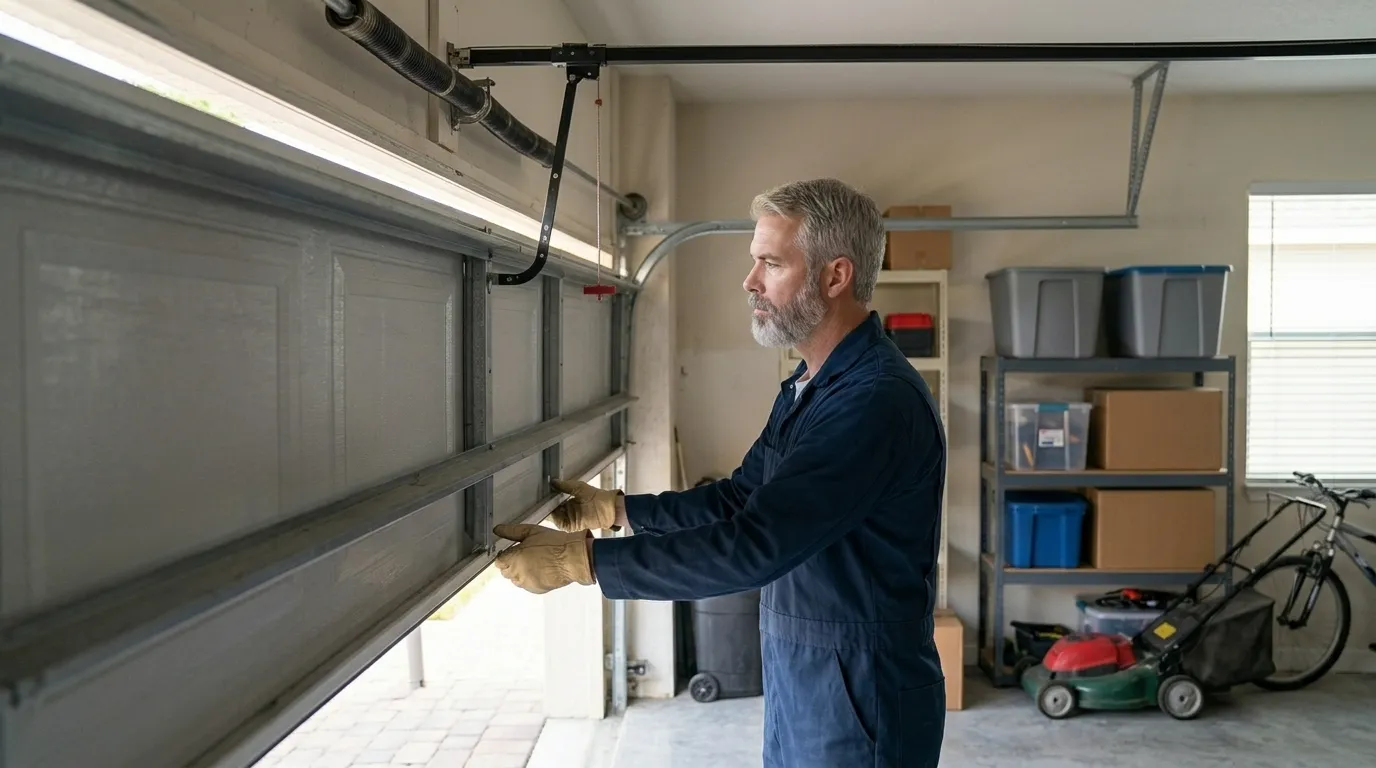
That's the part that makes DIY riskier here than it looks online. A wound torsion spring on a 1957-vintage door can carry serious tension, and the mounting hardware on original jambs has usually seen sixty-some years of freeze-thaw cycling. Swapping a cable or adjusting spring tension on a door like this isn't the same job as a video shot on a 2005-built door with modern brackets.
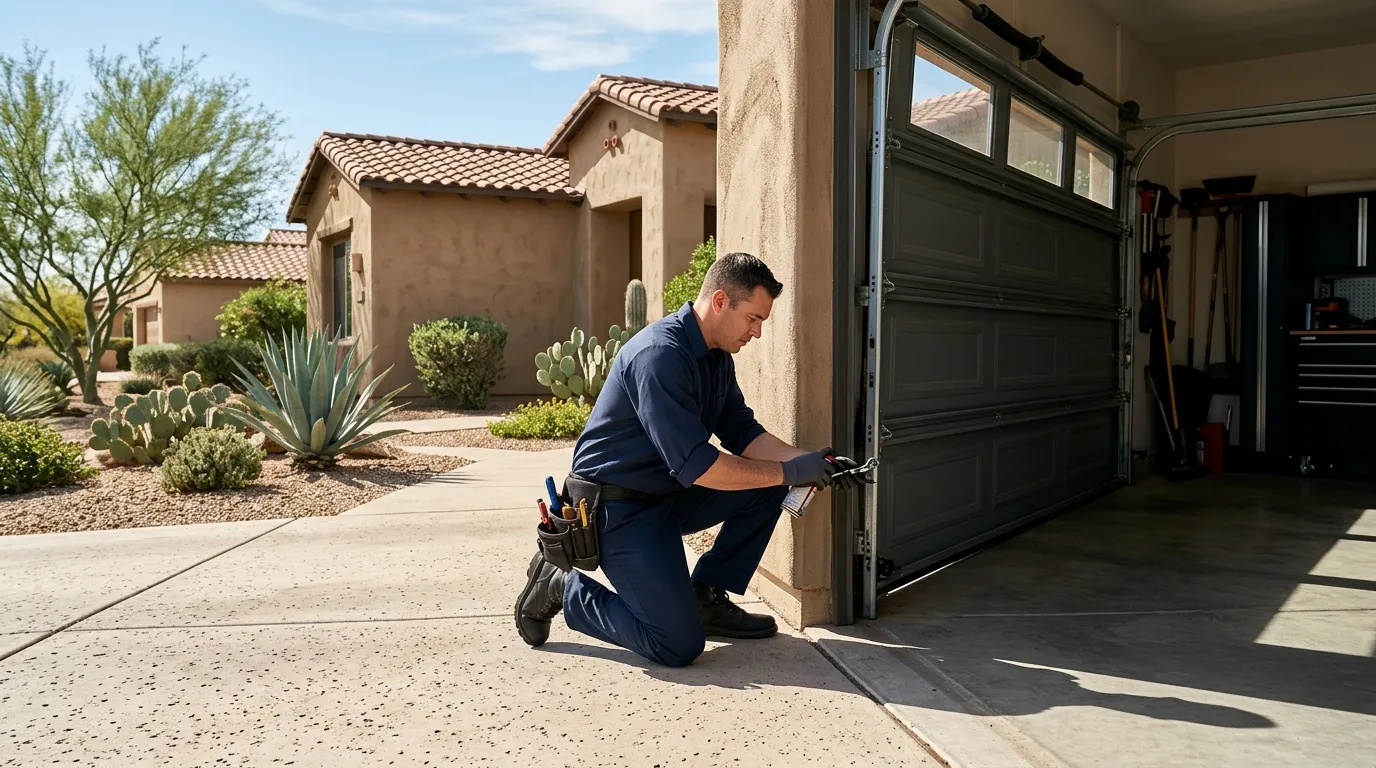
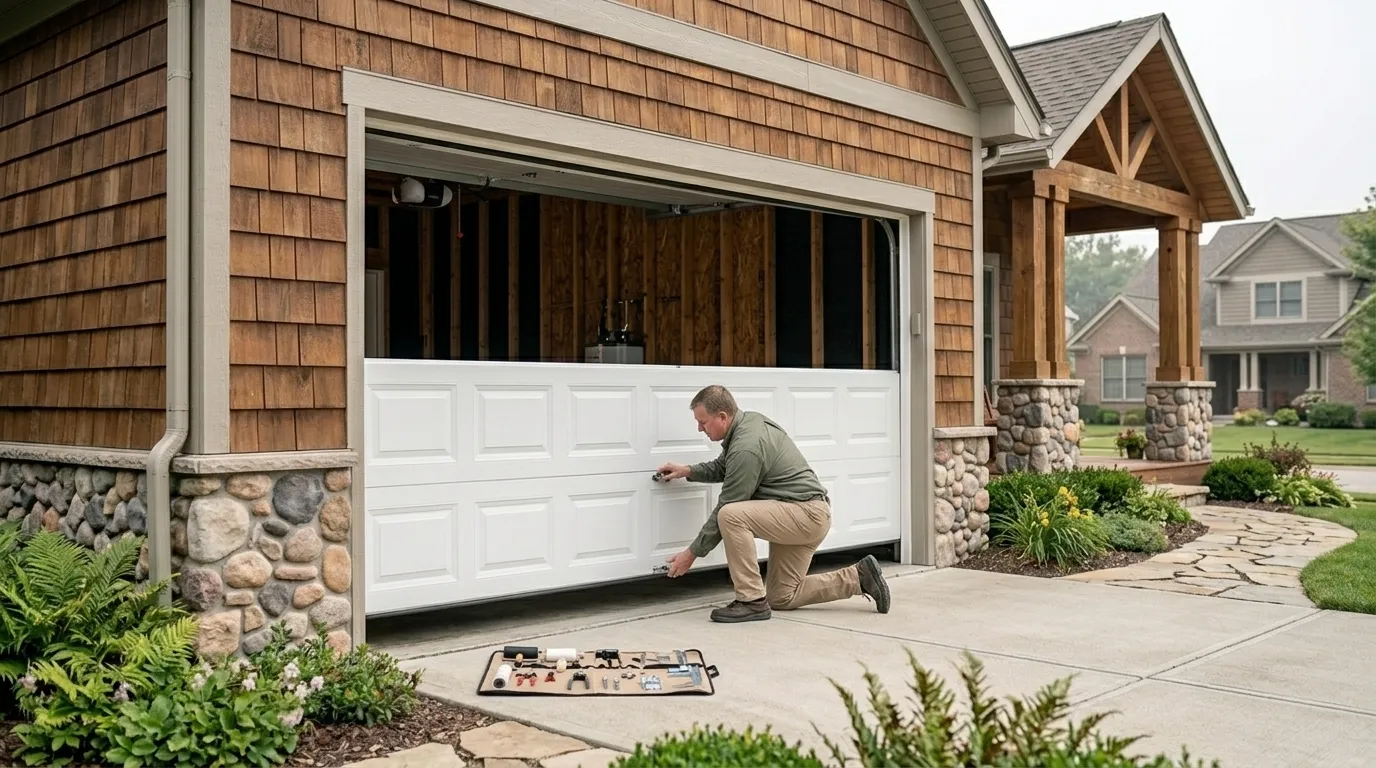
Some things are fine to handle yourself: lubricating rollers, tightening loose hinge bolts, clearing track debris. Springs, cables under tension, and anything touching the wood jamb anchoring on an older door - that's where we'd tell you to call rather than improvise.
Why It Happens Here
Westchester's housing stock centers on 1957, noticeably earlier than the 1974 median across the rest of the territory we cover from Northbrook. That gap matters for garage doors specifically because door width standards, spring wind direction, and track profiles all shifted over those years. A door and opener replaced in the 1980s or 90s on a 1957 house is often a retrofit onto original framing that was never squared for it, which is why we see more binding tracks and misaligned rollers on this stretch than on newer builds.
The climate plays a role too. This area sits in a cold-moderate band, and on original wood jambs that have shifted with six decades of frost heave, that seasonal swing shows up as doors that stick in January and rattle loose by summer. It's not dramatic, but it's steady wear that a newer, better-sealed jamb wouldn't show the same way.
We drive the twenty miles out from Northbrook for these calls, so we're not guessing at what a 1957 Westchester garage looks like when we show up - it's a known quantity, just an older one than what we see closer to home.
Parts We Carry
For a town built mostly in the 1957 window, the parts question is really a hardware-generation question. We stock standard torsion springs sized for the common openings from that era, steel rollers and hinges that fit older track profiles, and extension spring kits for the single-car garages that still run them. Cables and end bearing plates for side-mounted torsion setups are on the truck too, since that configuration shows up more here than it does on newer construction.
What we don't carry on the truck: replacement wood panels custom-matched to an original 1957 door. If a panel's split or rotted through, that's usually a special order, and we'll tell you the lead time before we commit you to it rather than promise a same-visit fix that isn't realistic.
Opener parts are more standardized regardless of the house's age, since most Westchester garages have had at least one opener swap since the original build, so drive gears, sensors, and remotes are stock items we bring on every call without needing to know the house's exact age first.
How It Shows Up
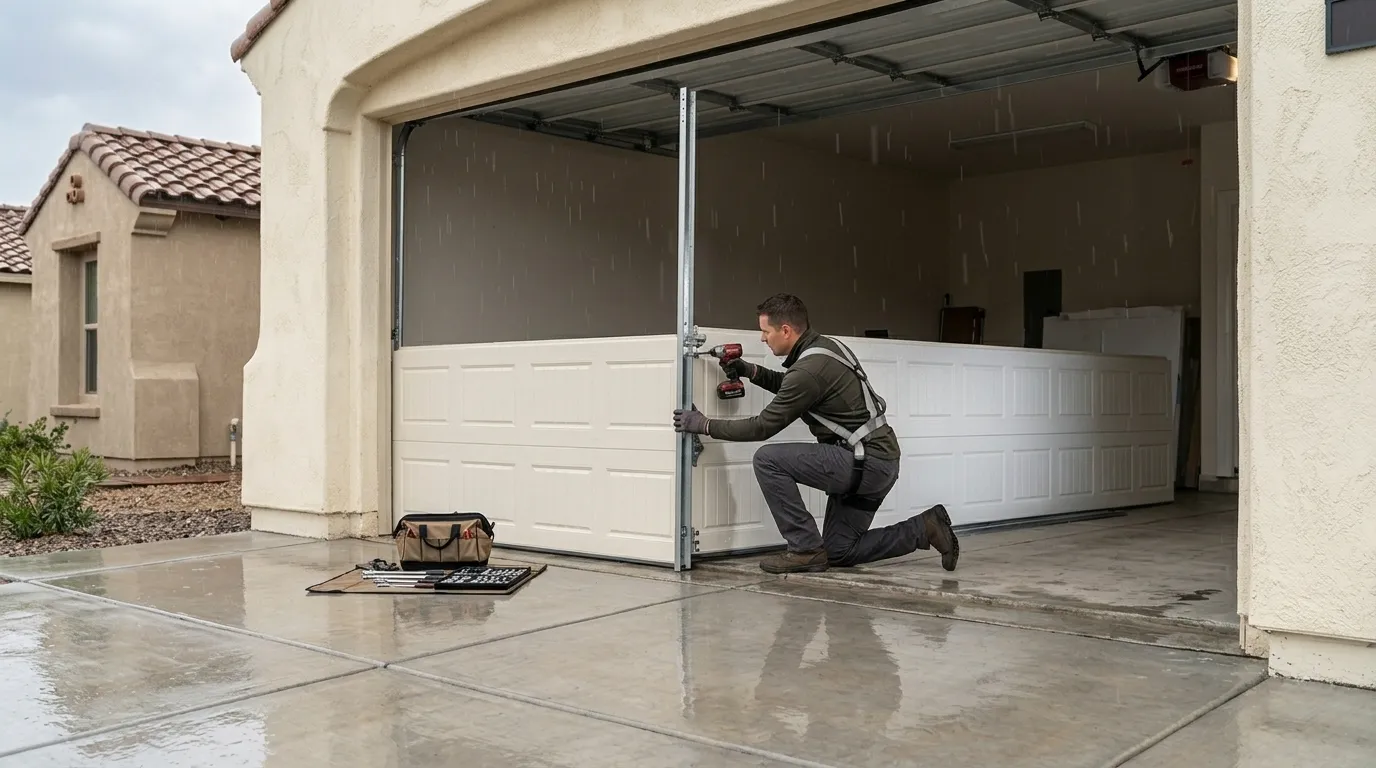
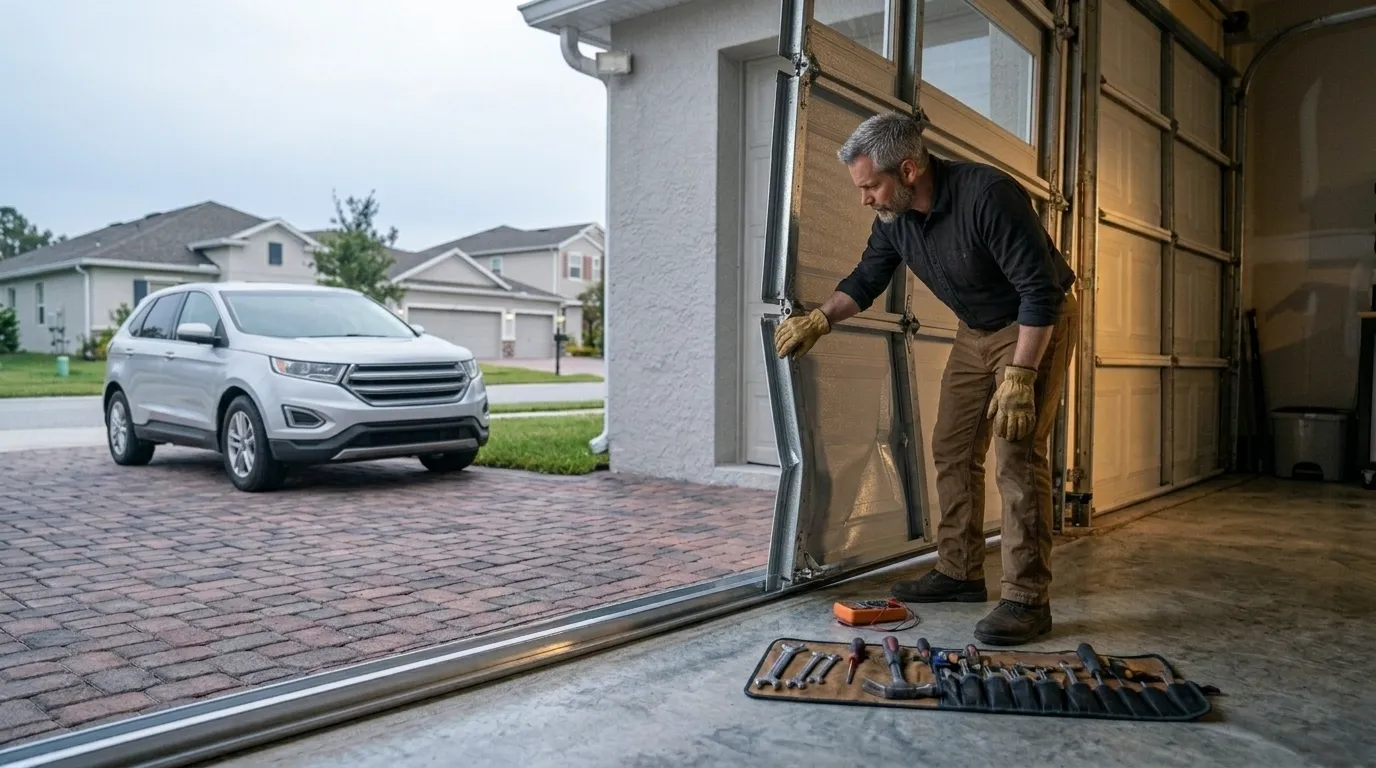
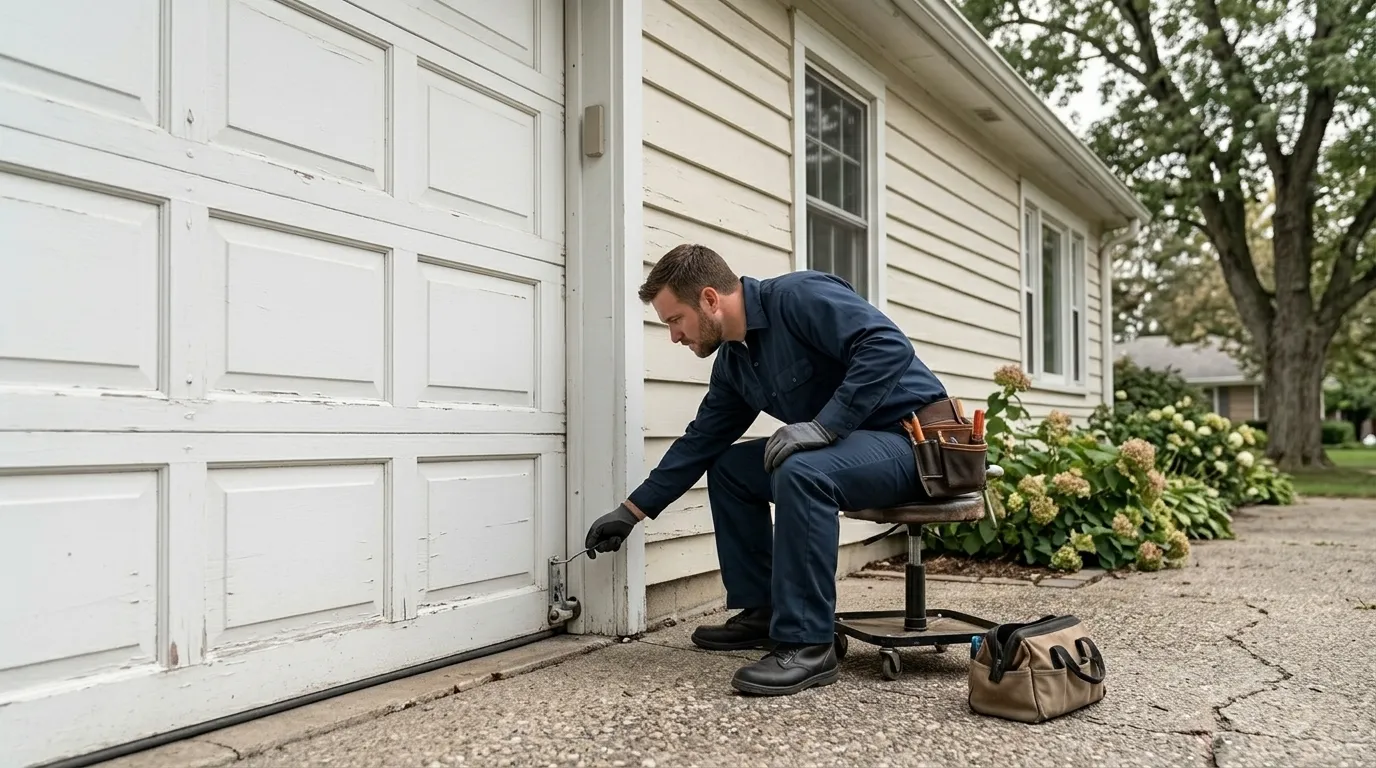
On a 1957-era door, the fault pattern is fairly consistent. Springs on original side-mount torsion hardware lose tension unevenly, so the door starts to hang crooked on one side before it fails outright - that's the first thing we check on an older Westchester call. Tracks that were never quite square to a shifted wood jamb show up as a roller popping out at the same spot every time, not a random jam.
Openers are usually the newest part of the system, since most houses here have had at least one swap, so when the door won't respond it's more often a sensor alignment or a logic board than the original mechanics. Cables fraying at the drum end are common on doors that have never had a full hardware replacement since the house was built.
None of this is unique to any one house - it's what sixty-plus years of freeze-thaw cycling and a few partial upgrades does to a door that started life in 1957. We see the same pattern often enough on this side of the territory that we know where to look first.