The DIY Question
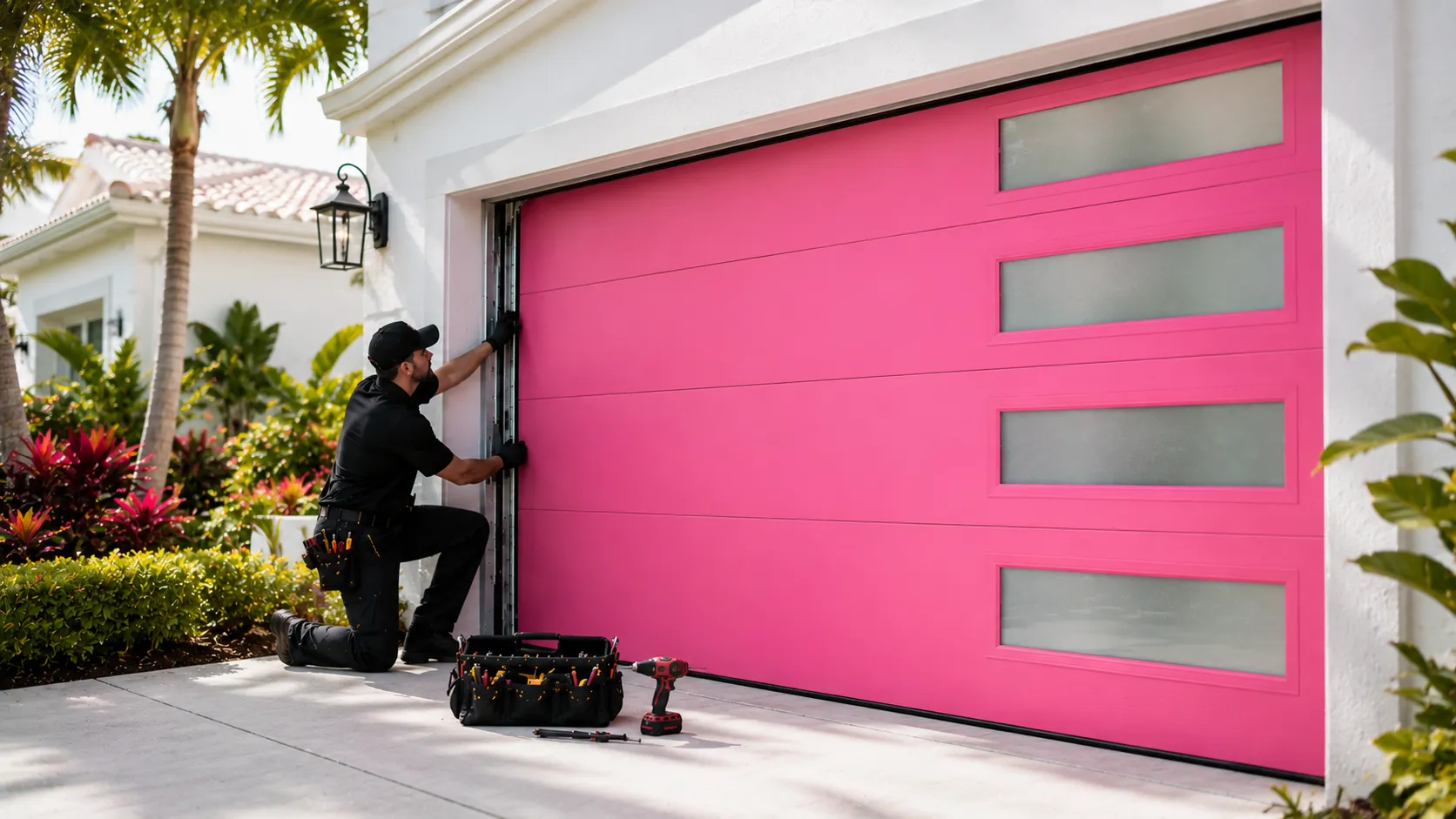
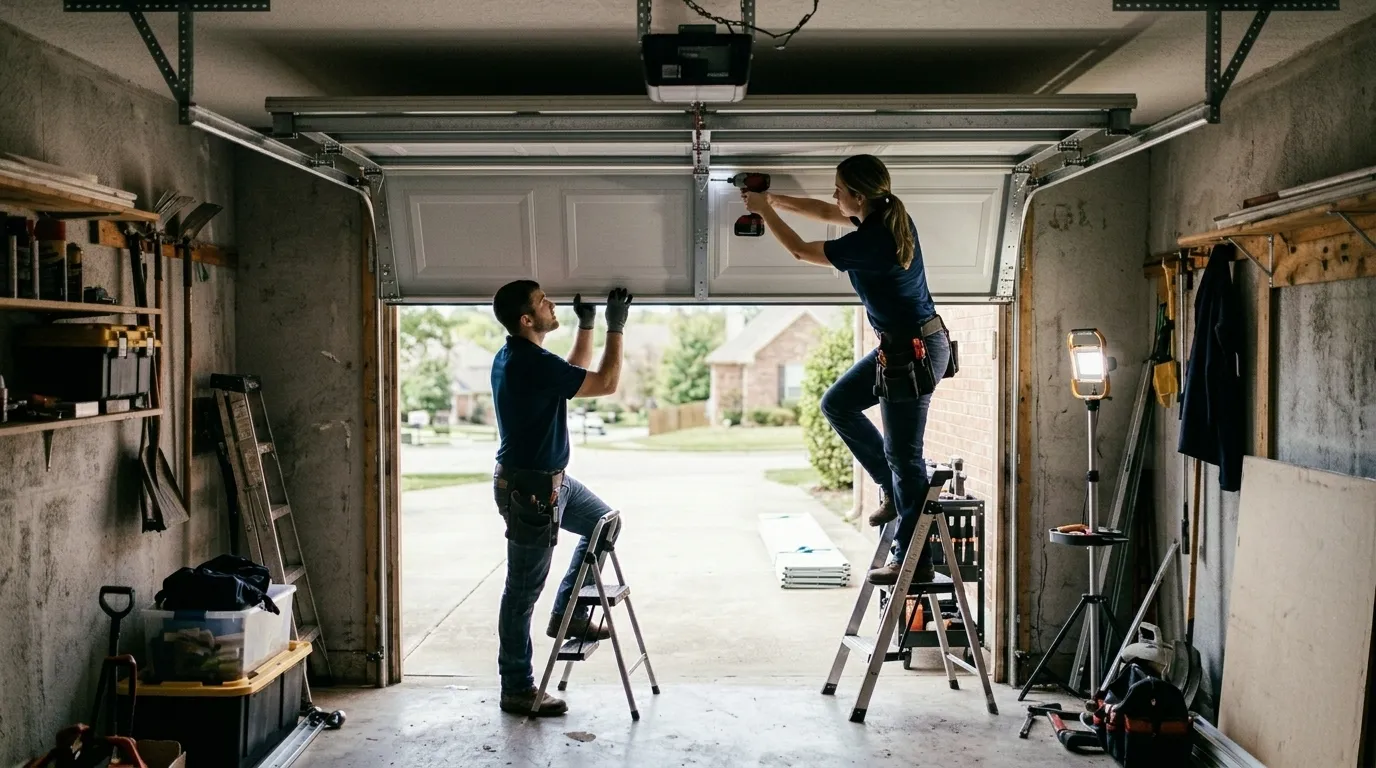
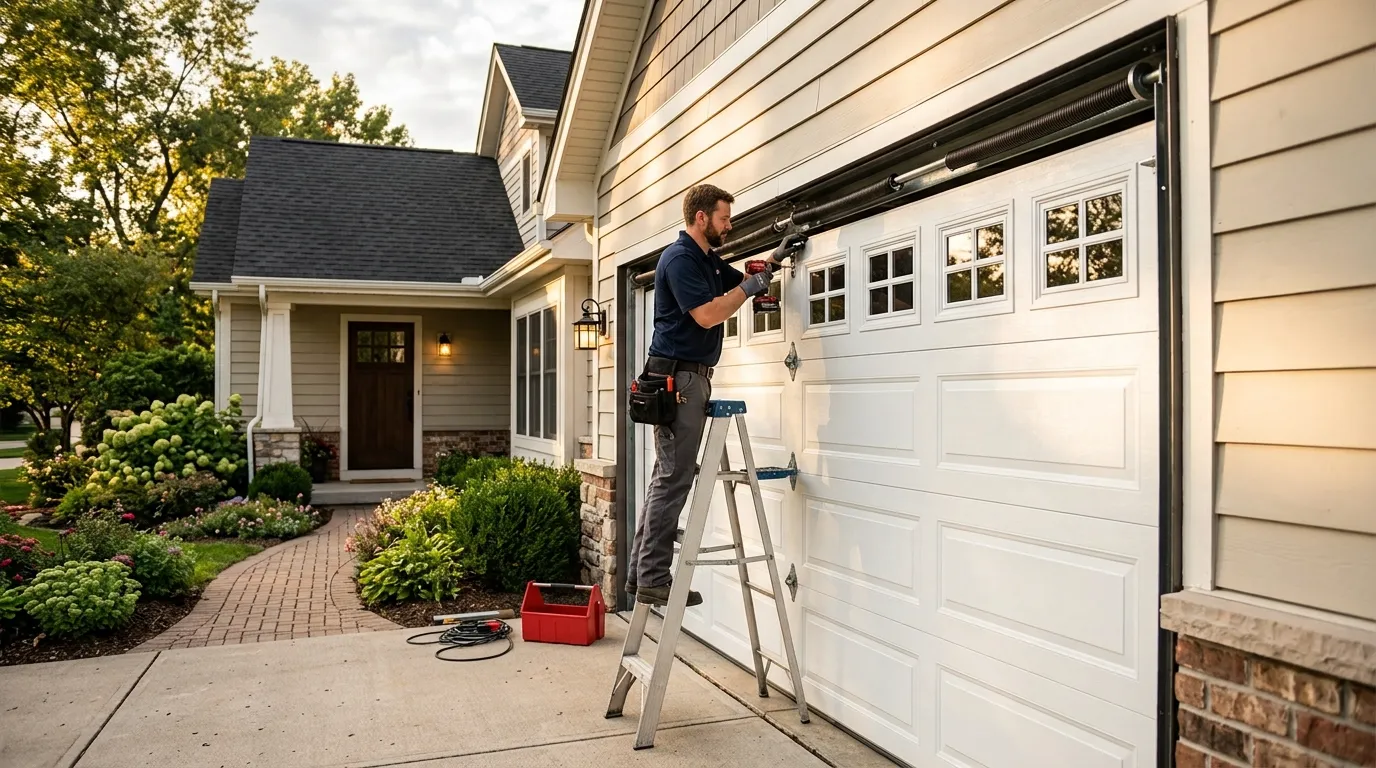
A roller that's worn down to the stub will still open the door, which is exactly why people put off dealing with it. You crank the opener, the door lurches sideways in the track for a second, and it clears. That's a roller shedding its nylon or its bearing race, not a spring problem and not an opener problem. Swapping a roller yourself is possible on a door with standard hardware, but on a lot of the doors we see out here, it isn't a ten-minute job.
Most houses in Westchester went up around 1957, a full seventeen years ahead of the service area's median build year of 1974, which is what put steel doors on wood tracks in so many of these garages. Original track brackets on houses that age are often lag-bolted into jamb wood that's shrunk and split over sixty-some years, not screwed into steel studs the way newer builds are. Pull the wrong roller on that setup and the track section comes with it. If your rollers are original steel, not the sealed-bearing nylon kind, we'd rather look at the track alignment first than have you pull a bracket loose in your driveway.
Why It Happens Here
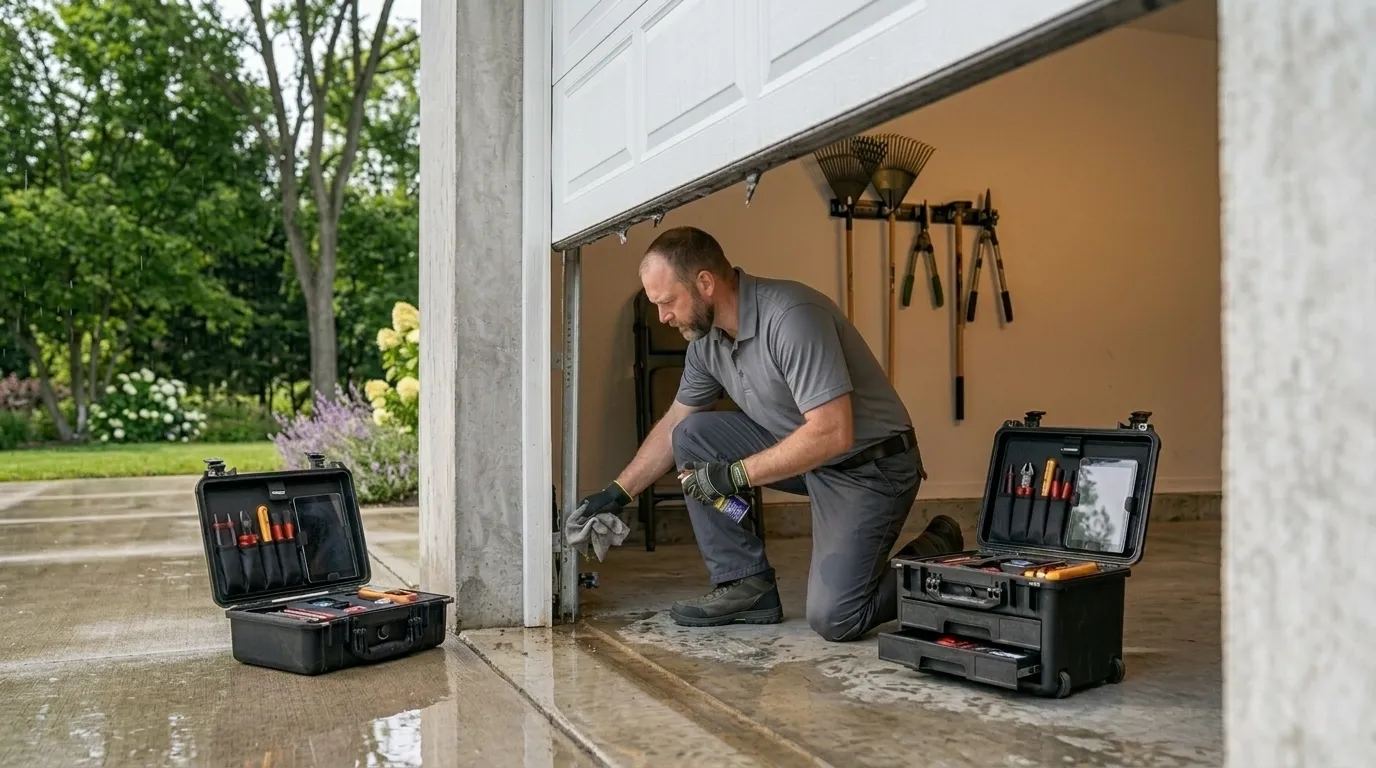
Steel rollers on hardened grease do fine for years, then stiffen up the first hard cold snap and start binding instead of turning. That's a cold-climate problem, and this service area sits in a cold, moderate climate band, so it shows up every winter, not just in a bad one. The roller stops spinning freely, drags against the track wall, and wears a flat spot. Once it's flat, every open and close hammers that flat spot against the track, and the noise gets worse fast.
With about 7,084 households in Westchester, a good share of them still running the steel rollers that shipped on 1957-era doors, we see more roller failures than opener failures on this route. It's the age of the hardware, not the brand of opener, driving the call. Track rust plays a part too - an unheated garage on an older slab holds moisture longer than a newer, better-sealed one, and rust on the track surface chews through a roller edge faster than clean galvanized steel would.
Parts We Carry
The truck carries both 7-inch and 10-inch stem rollers, in steel and sealed nylon, because a door this age can have either depending on when it was last serviced. We also carry standard track brackets for the sizes that fit most sectional doors from this era. What we don't carry is a match for every custom track profile - some of the older one-piece and odd-width doors around here used hardware nobody stocks anymore, and if we hit one of those, we'll tell you honestly rather than force a part that doesn't fit.
At 20 miles from our Northbrook shop, a same-day roller swap here means we load every roller size before we leave, not after we see your track. That's the only way the visit works without a second trip.
How It Shows Up
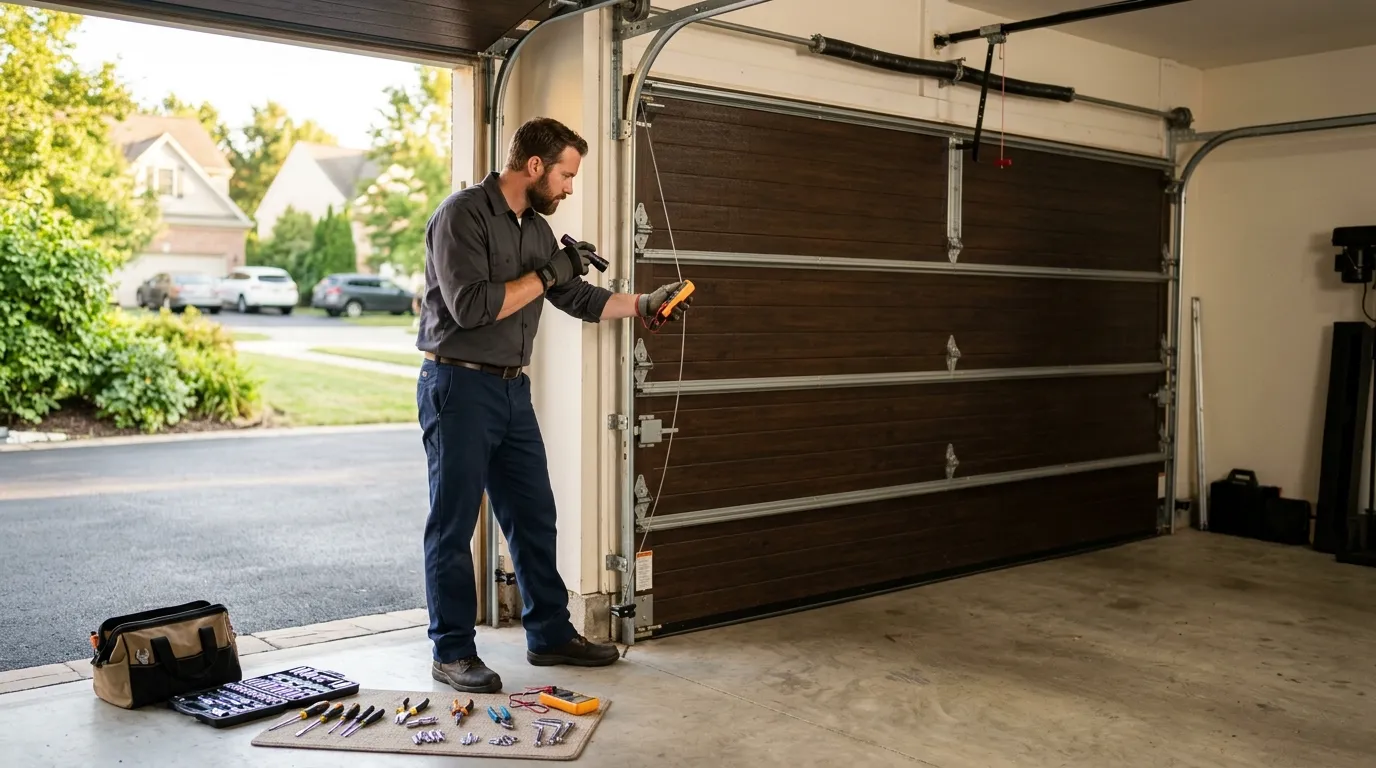
The first sign is usually a grinding or scraping sound right as the door passes the bend where the vertical track meets the horizontal - that's where a flat-spotted roller hits hardest. Next comes visible wobble: the bottom panel rocks side to side instead of tracking straight. If you can see daylight between the roller and the track wall when the door's halfway up, the roller's worn past the point of adjustment.
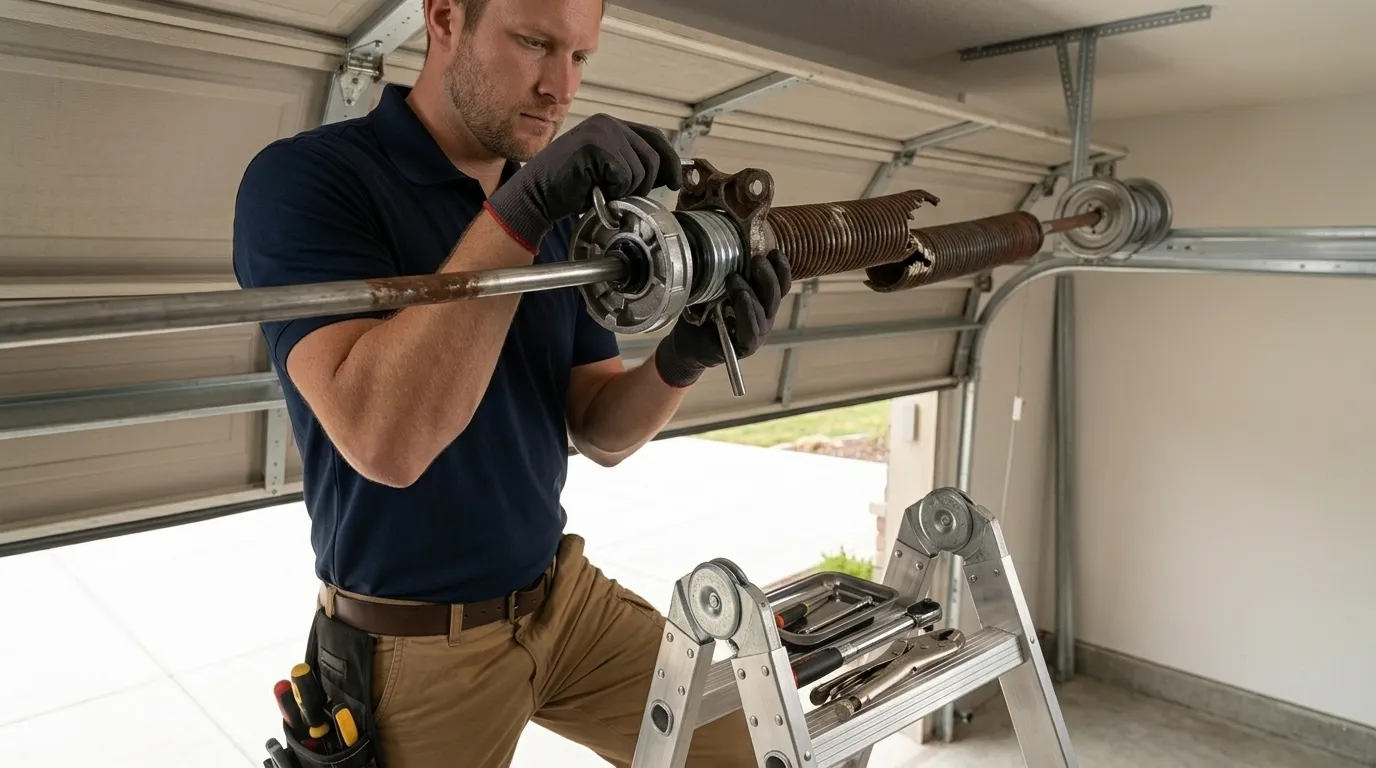
Left alone, a bad roller doesn't just stay noisy. It puts uneven load on the cable drums and can walk a cable off its drum, which turns a $20 part into a stuck door and a bigger repair. If your door is jumping or binding on one side more than the other, that's worth a call before it gets to that point.