The DIY Question
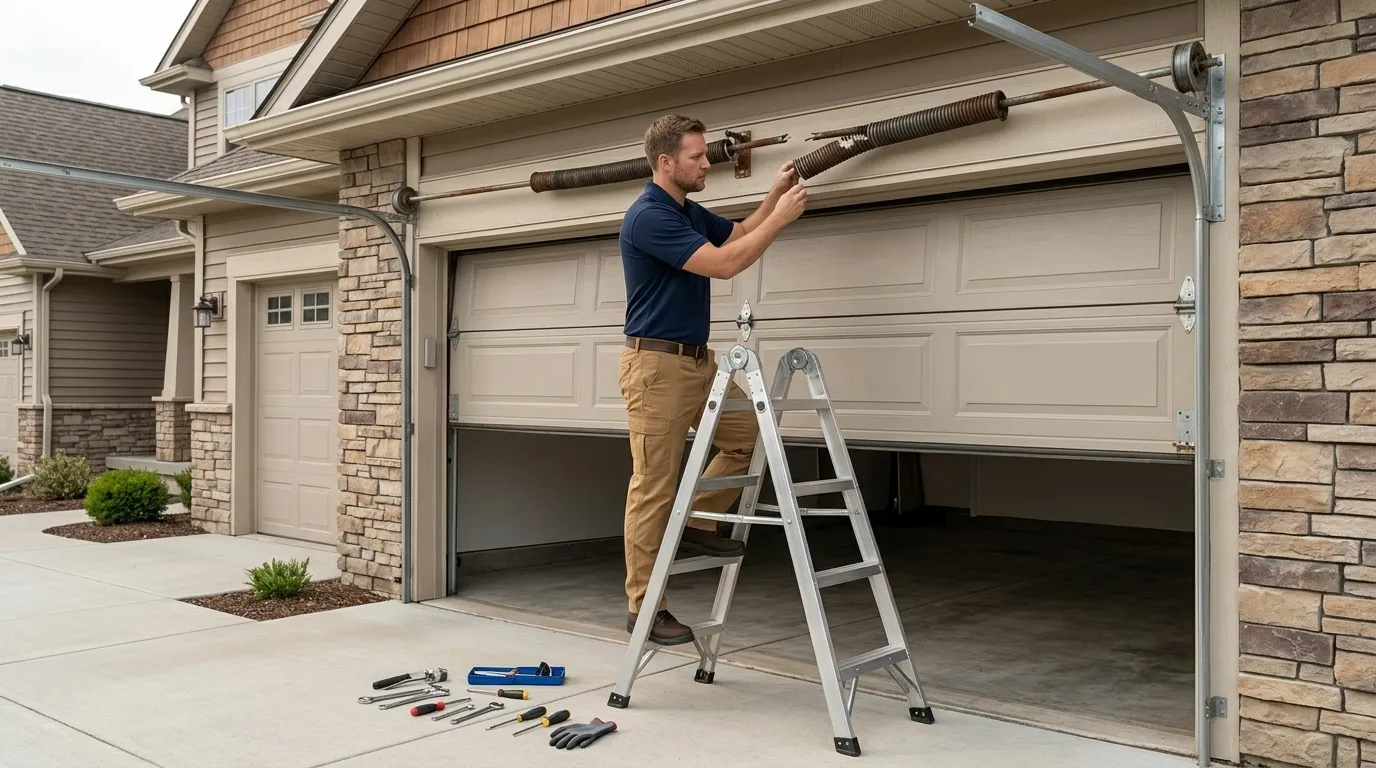
Most of Westchester went up around 1957, which puts a lot of these garages right at the point where builders were still hanging single-layer steel or wood doors on extension springs mounted along the horizontal track, not the torsion setup you'd find on anything built after the 70s. That matters for the DIY question because a kit door from a home center is sized for modern jamb widths and modern spring drums. Drop one into a 1957 opening without checking header height and track radius, and you end up shimming a door that never sits square. We're not saying don't try it - some owners handle the trim work fine. What we'd steer you away from is guessing at spring weight on an old jamb, or reusing hardware that was never rated for the door you're putting up. If the opening is original, the header framing and the track clearance are the two things worth measuring before you order anything, and that's easier to get right with someone standing in the garage than off a tape-measure guess.
Why It Happens Here
A door built to a mid-century opening carries different stress than a door built for a 1990s tract house, and Westchester's stock skews older than a lot of the towns around it. The panels on these doors are often narrower, the header clearance tighter, and the track radius smaller than what current door lines assume as standard. That's not a defect, it's just what 1957 construction gives you. Add the cold-moderate climate this whole area sits in, and steel panels on older frames flex more at the seams during hard freezes than a newer insulated door would. None of that means the door is failing - it means the install has to account for an opening that predates the products being sold to fit it. A door that goes in without measuring the original jamb and header first usually shows daylight gaps or drags on one side within a season.
Parts We Carry
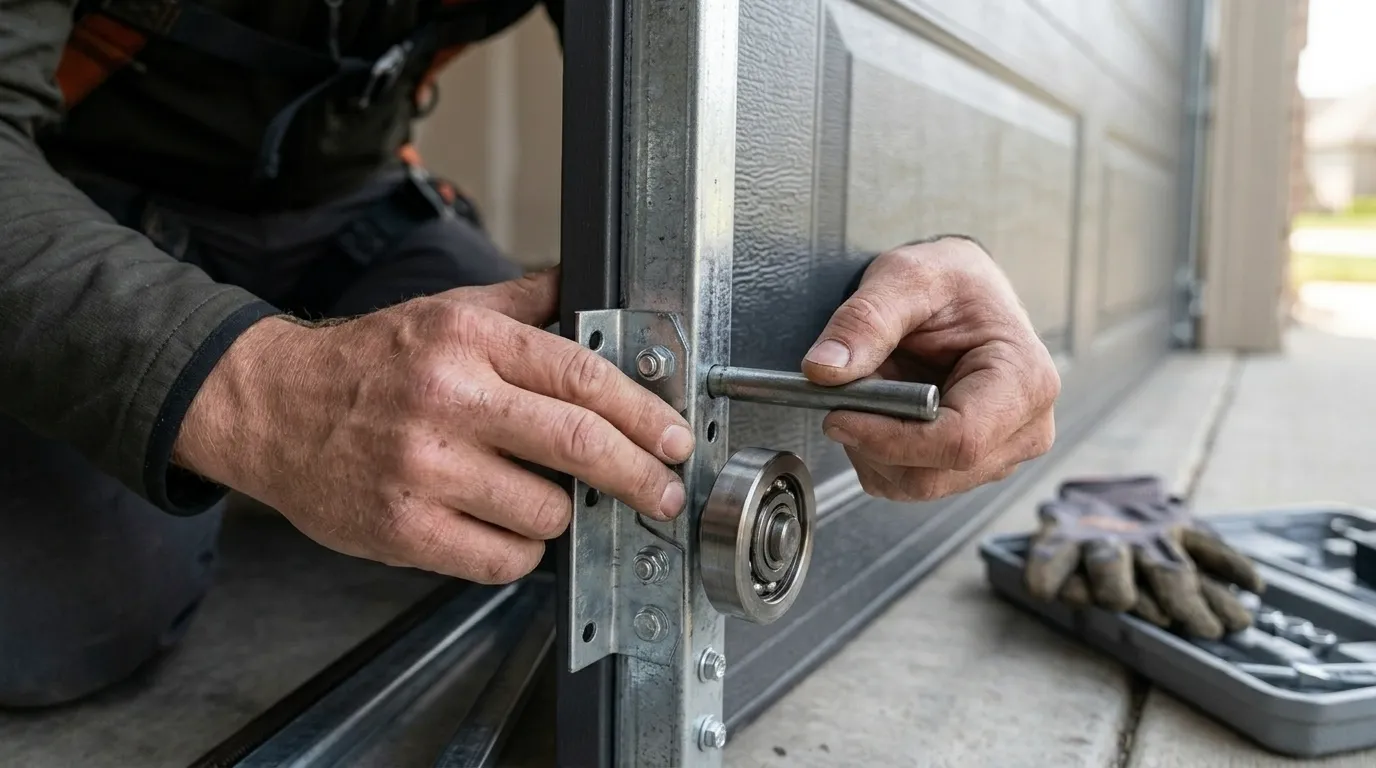
For an opening this age, the two things that come up most are track hardware sized for a narrower jamb and spring assemblies rated for the older panel weights common on doors from that era. We carry standard torsion and extension spring stock on the truck, along with the track brackets that fit both older narrow-jamb openings and current door widths, so a swap doesn't turn into a special order. What we don't stock is anything custom-milled to match an original 1957 frame profile - if the header or jamb has been altered from the original over the years, that part may need to be ordered, and that can add a few days before install. We'll flag that on the walkthrough, not after we've started the job.
How It Shows Up
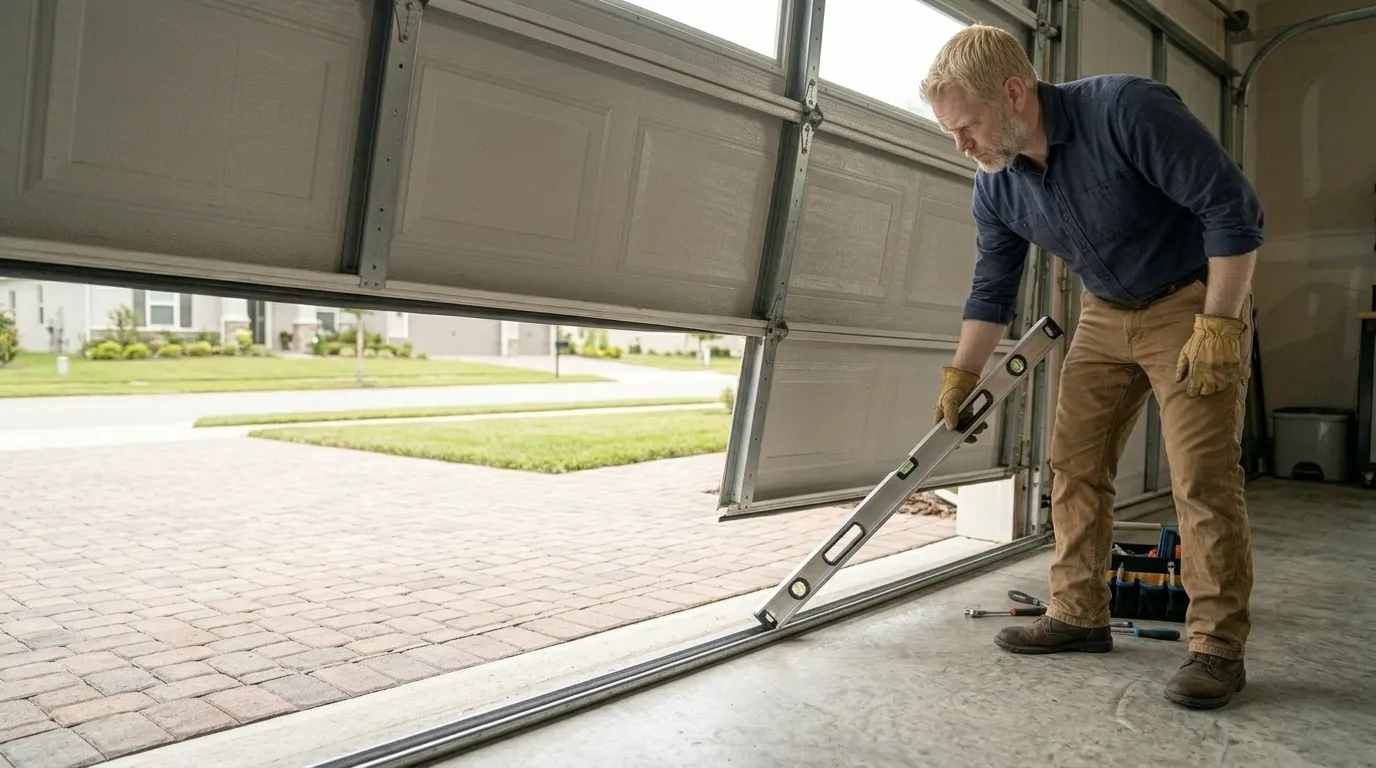
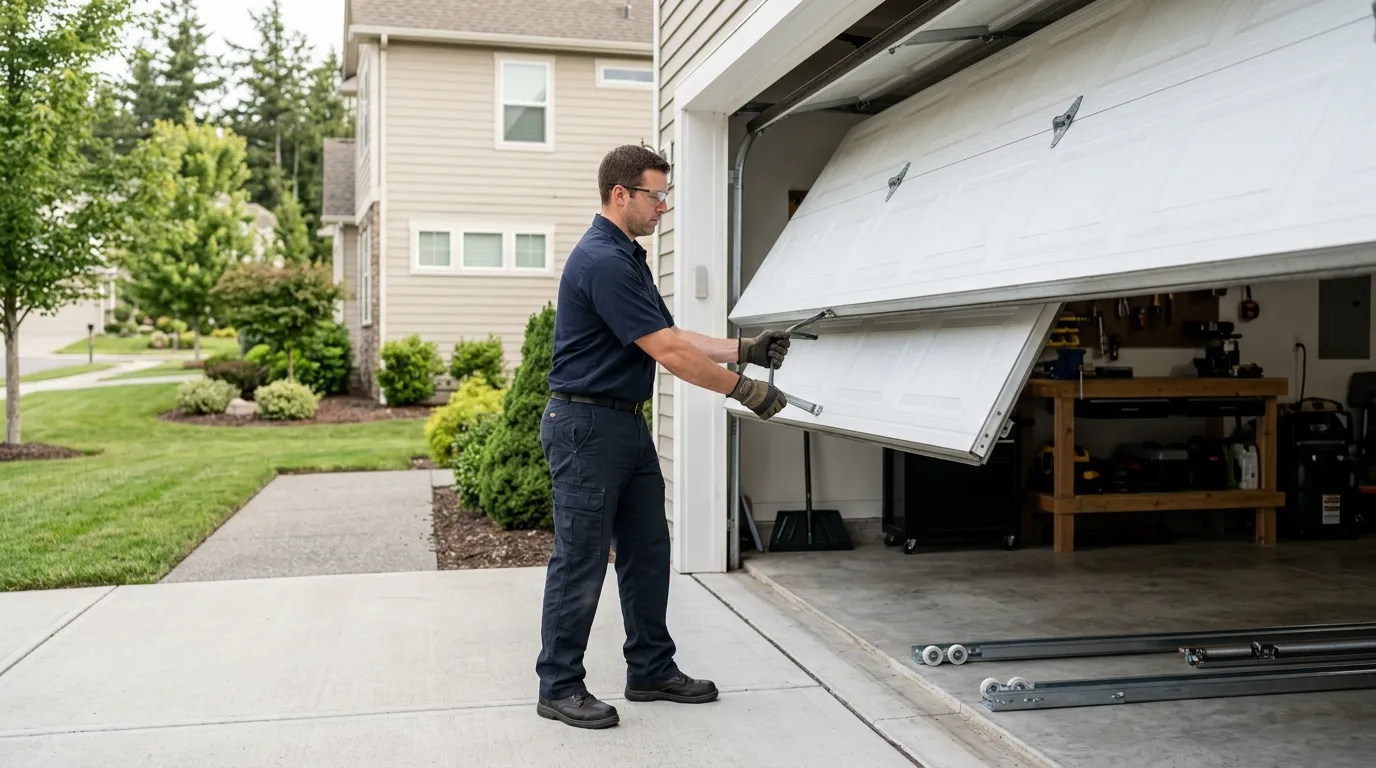
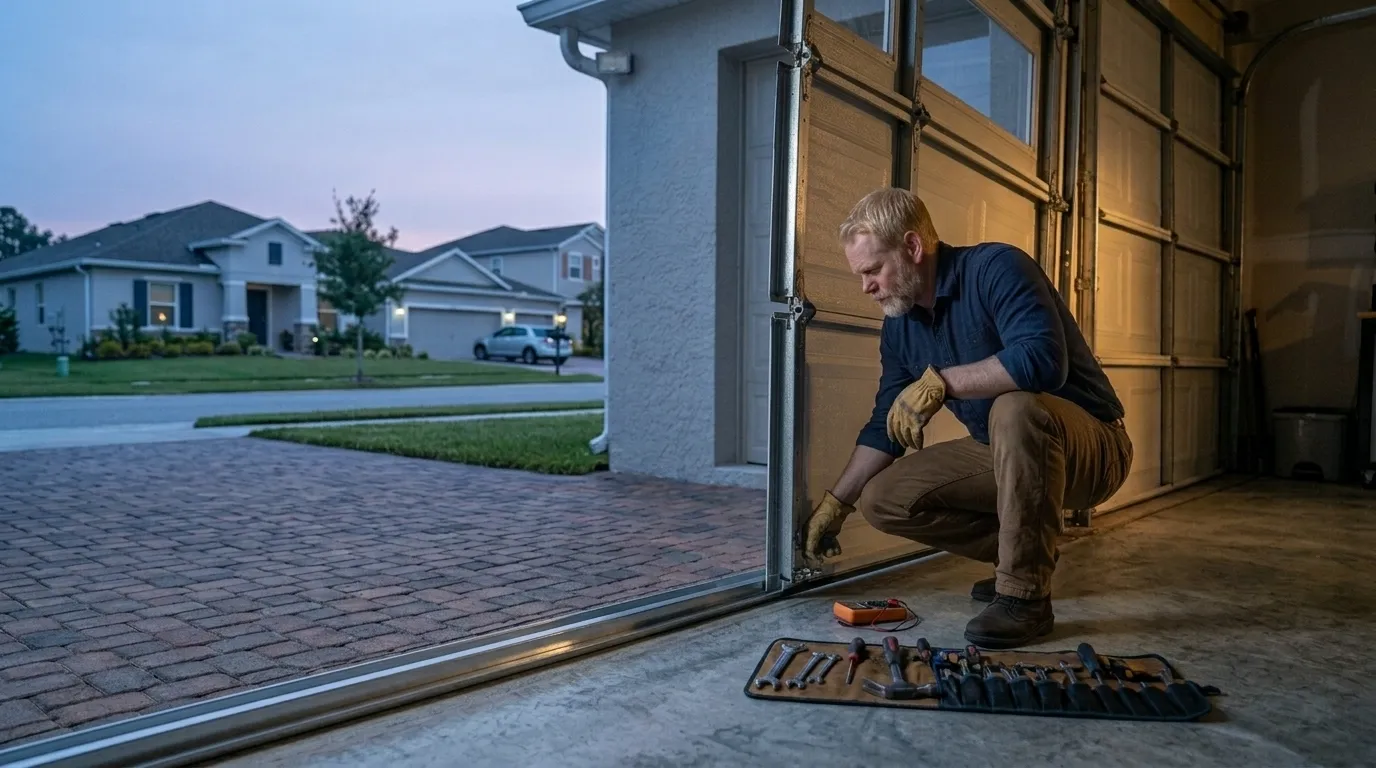
On a house from this era the failure pattern is usually the same: the door starts dragging on one side first, because the original track was set for a lighter panel than whatever's been hung on it since a past repair. You'll notice the opener straining harder before you notice the gap at the bottom. Cold-moderate winters make it worse - steel contracts, the seal at the bottom panel shrinks, and a door that was already running slightly out of square starts catching on the track guide. That's usually the point where an owner calls, thinking it's the opener, when the actual cause is a 1957 opening carrying hardware it was never framed for. Twenty miles from Northbrook, we still see this pattern often enough across the older stock in this part of the service area that it's the first thing we check.