How Local Conditions Play In
Northbrook's housing mostly went up between the 1960s and the 1970s, with the broader stretch running 1938 to 1996 and a median build year around 1974. That matters for noise because a door installed on a house from that window is likely running its second or third opener but its original track and hinges, and sometimes its original springs. Steel ages differently than the house around it, and nobody replaces a torsion spring on schedule the way they replace a furnace filter.\n\nThe cold-moderate climate band this area sits in adds a second layer. Steel contracts in a hard freeze, and grease that felt fine in October turns to something closer to wax by January. A door that ran quiet all fall can start groaning on the first fifteen-degree morning, not because anything broke overnight, but because the lubricant stopped doing its job and the metal is tighter than it was. If your house sits closer in toward Techny, you're getting the same winter swing as the rest of Northbrook - there's no pocket of town that dodges it.\n\nSo when a Northbrook door starts making noise in December that it wasn't making in September, the first question isn't \"what broke\" - it's \"what changed with the cold.\"
What Most People Get Wrong
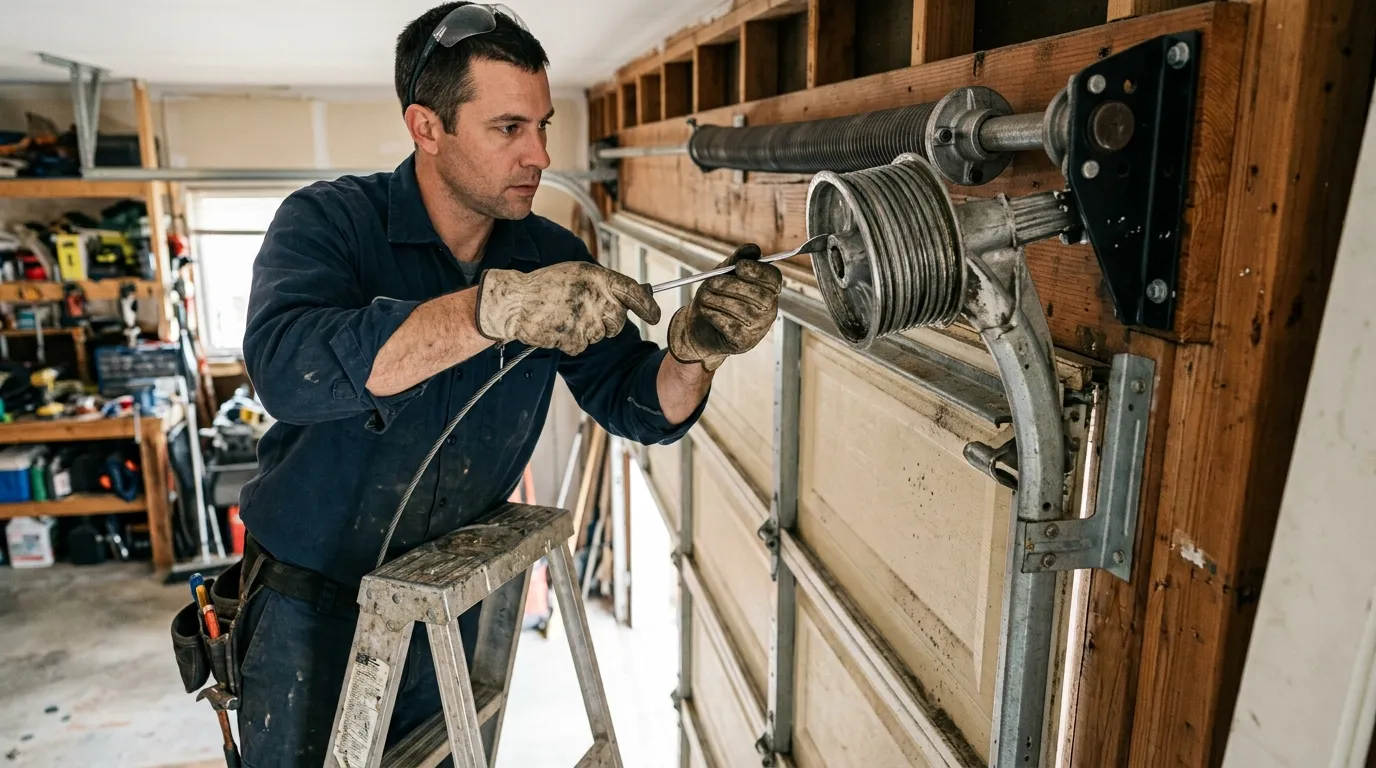
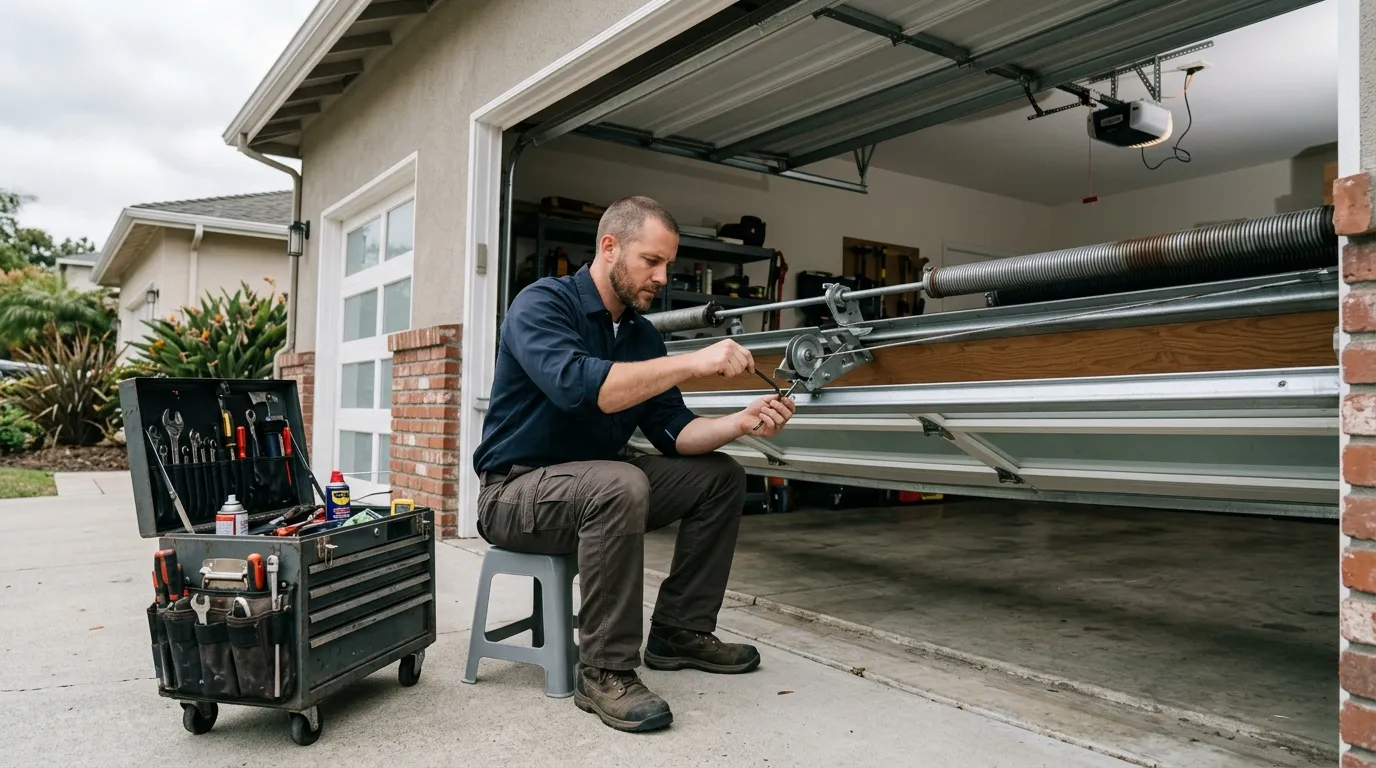
The most common mistake is assuming a loud door means a dying opener. In houses built in that 1960s-70s Northbrook run, the opener is usually the newest part on the whole assembly - it's been swapped once or twice since the house was built. The track, the hinges, and often the springs are older than that, and they're usually where the noise starts.\n\nThe second mistake is spraying WD-40 on everything and calling it lubrication. WD-40 is a solvent, not a grease - it cleans out old lubricant and then evaporates, which can make a squeak worse within a week. On a door with original hardware from that build era, what's needed is a lithium or silicone-based grease on the hinges, rollers, and springs, not a degreaser on the tracks.\n\nThe third mistake is waiting. A grinding or scraping noise on a door from a 1960s or 70s Northbrook build is often a roller that's worn down to the bearing, and a worn roller left running will eventually chew the track it rides in. That's a bigger job than the roller itself.
When to Get Help
Call before the door stops working, not after. A spring that's straining but hasn't snapped is a controlled job; a spring that's already let go under tension, especially on a heavier double door, is not something to handle yourself. If your door is grinding on the track or banging on cold mornings, that's worth a call now rather than a fix-it-yourself attempt with a can of spray lubricant.\n\nOne honest limitation: if the noise is coming from the opener's internal gears on an older chain-drive unit, sometimes the part isn't worth sourcing anymore and replacement is the better call than repair - we'll tell you straight if that's where you're at instead of running up a bill chasing a part that's hard to find.\n\nIf the sound just started this week and the weather just turned cold, give it a day of running the door a few extra times before assuming the worst. Grease redistributes with movement, and half of winter noise complaints quiet down once the hardware works itself in again.