How Local Conditions Play In
Northbrook's housing stock runs from 1938 up through 1996, with most of it going up in the 1960s and 70s across the area's named subdivisions. That means a lot of doors and openers original to the house are pushing forty, fifty, even sixty years old on hardware that wasn't built for today's insulated panels or heavier steel doors. Combine that with a cold, moderate winter climate band, and you get steel tracks that contract in January and swell back out in July, torsion springs that lose tension faster in temperature swings, and lift cables that corrode where humidity collects on unheated slab garages. A tech who works this area first asks how old the door and the house are before touching a wrench, because a 1966 build and a 1994 build fail in different places, and the fix for one is often the wrong fix for the other.
What Most People Get Wrong
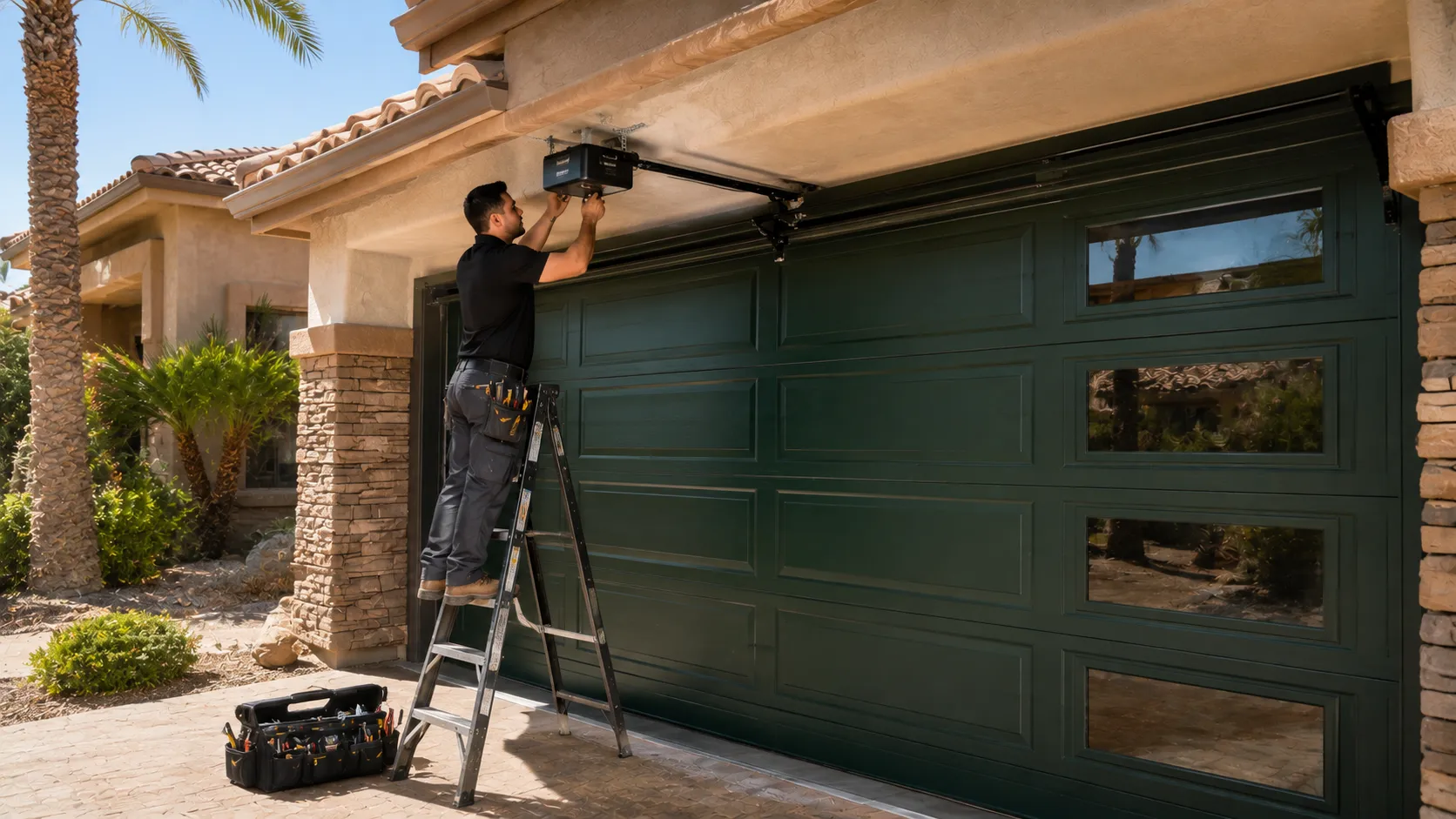
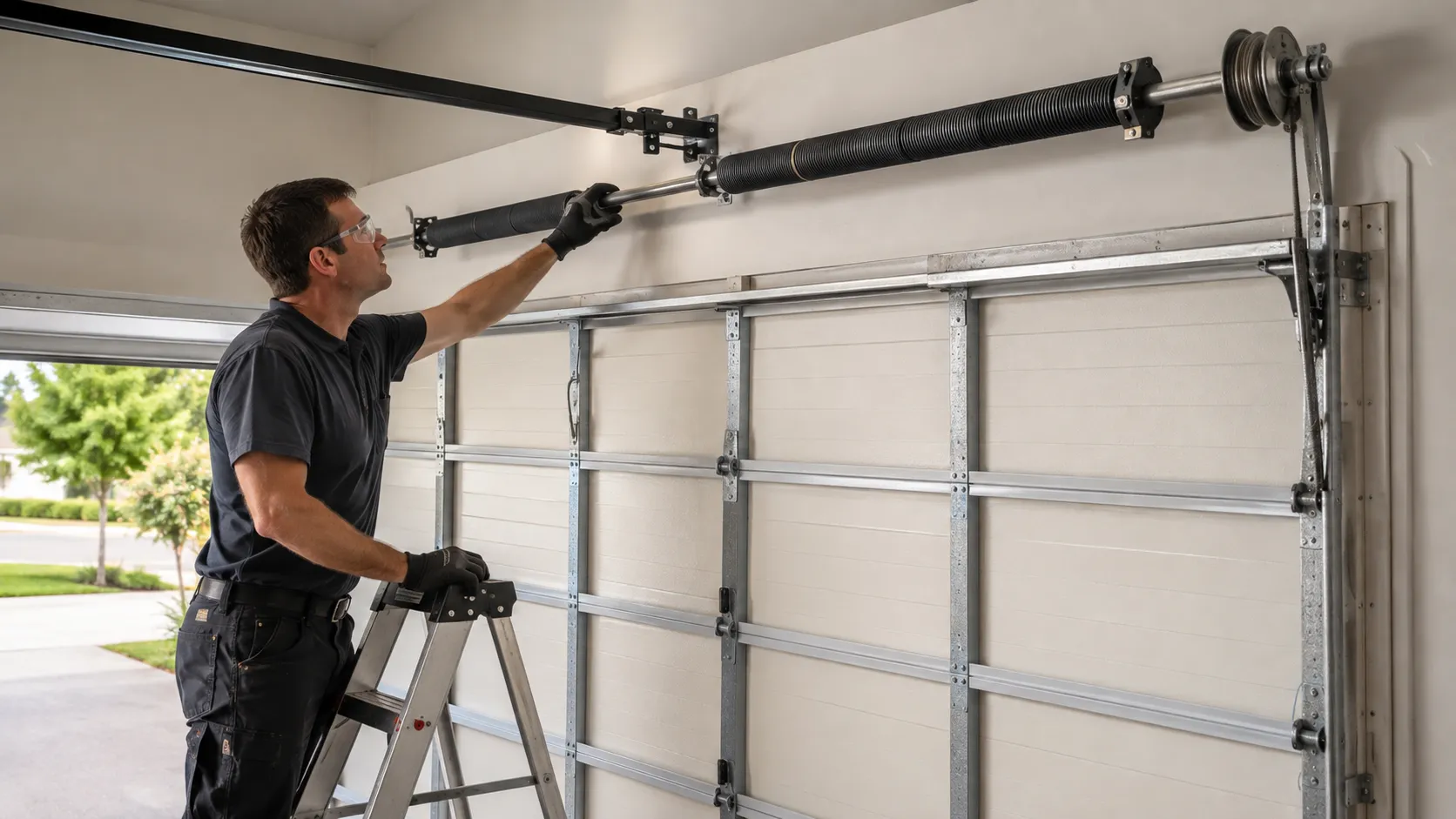
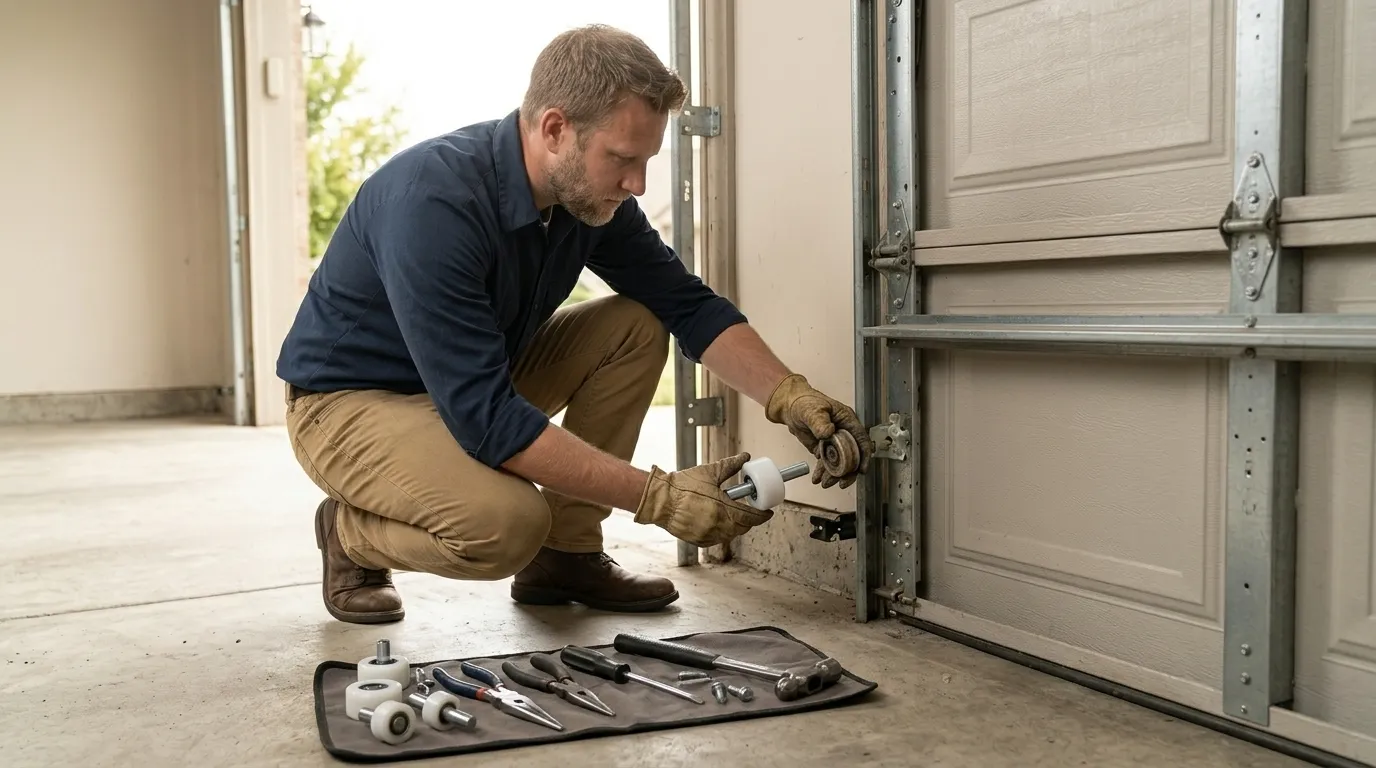
Most homeowners call about the opener because that's the part that makes noise or refuses to respond, and in a lot of houses built in this same era - 1960s and 70s stock across Northbrook's older sections - the opener is not actually the problem. The motor is doing exactly what it's told; it's straining against a spring that's lost tension or a track that's bent a few degrees out of true. Replacing an opener on a door with a bad spring just buys you a new opener that fails the same way within a year. The other common mistake: assuming a noisy door needs lubricant. Noise from an older torsion setup is almost always wear at the roller or the drum, not dryness, and oil on a worn part just masks the sound for a week before it comes back.
When to Get Help
If a door won't stay open on its own, or drops suddenly when you release it partway, stop using it - that's a spring or cable problem, and it's not one to troubleshoot yourself. Across the broader service area - 275,099 households, with 132,434 of them owner-occupied houses - most calls we get involve exactly this kind of hardware fatigue rather than anything dramatic. We don't take on jobs that turn into structural repair; if the header or jamb has shifted, that's a carpenter's call before it's ours. One honest limit: we can't always source a matching panel for a discontinued style on an older door, and sometimes replacement is the straighter path than a repair that won't outlast the season. Techny sits about a mile southeast of the core service area, and the same age and climate pattern holds all the way out to the towns within a dozen miles.