How We Get to You
Franklin Park sits about 14 miles from our Northbrook shop, which puts it on the outer edge of the routes we run most days. We don't keep a truck parked here and we're not going to pretend we do. What we do is schedule the drive so a Franklin Park call gets slotted with other jobs heading the same direction, rather than treated as an afterthought tacked onto the end of a day. If you call early, you've got a better shot at getting on that day's route. If you call after we've already loaded the truck for the areas closer to the shop, you're looking at the next available slot. That's the honest version of how this works, and it's better than a promise about a response window we can't actually back up from 14 miles out.
We don't cover every suburb in the region, and we're specific about it: this page exists because Franklin Park is inside our service radius, not because we've got a location here we haven't told you about.
What That Means for Doors
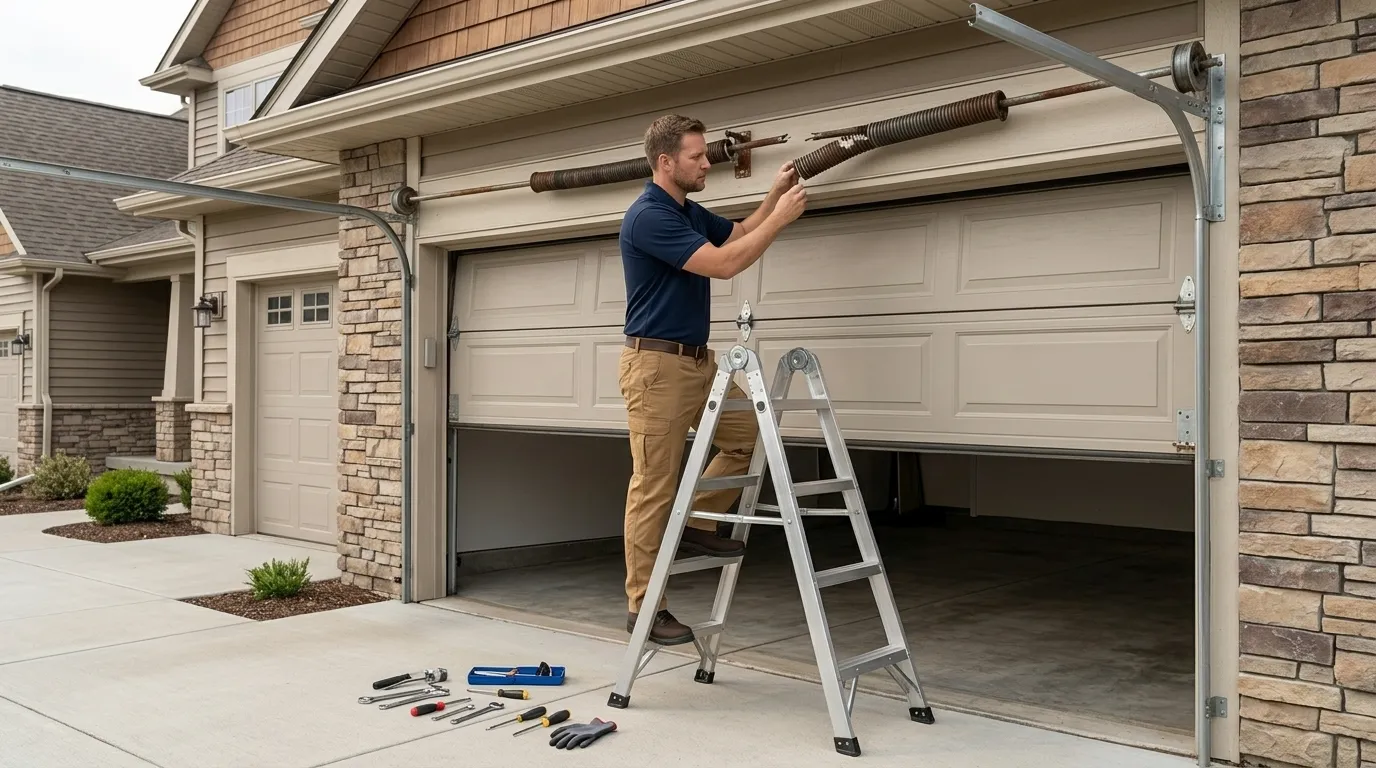
The city-wide housing stock we work across runs 1938 to 1996 with a median around 1974, but Franklin Park itself centers on 1956. That's a meaningfully older build year, and it shows up in the doors. Homes from this era were more often built with single-piece slab doors on side-mounted track and extension springs bolted to the header, not the torsion bar setup that became standard in newer construction. If your house dates to that stretch, the parts on your door may not match the torsion spring and cable kits we carry as the default stock item, so we sometimes need to source hardware that fits an older track geometry rather than swap in a modern replacement kit.
That's the honest limitation: on a door this old, a straight parts swap isn't always possible in one visit, and we'd rather tell you that up front than pretend every part on the truck fits every track from 1956.
What Was Built Here
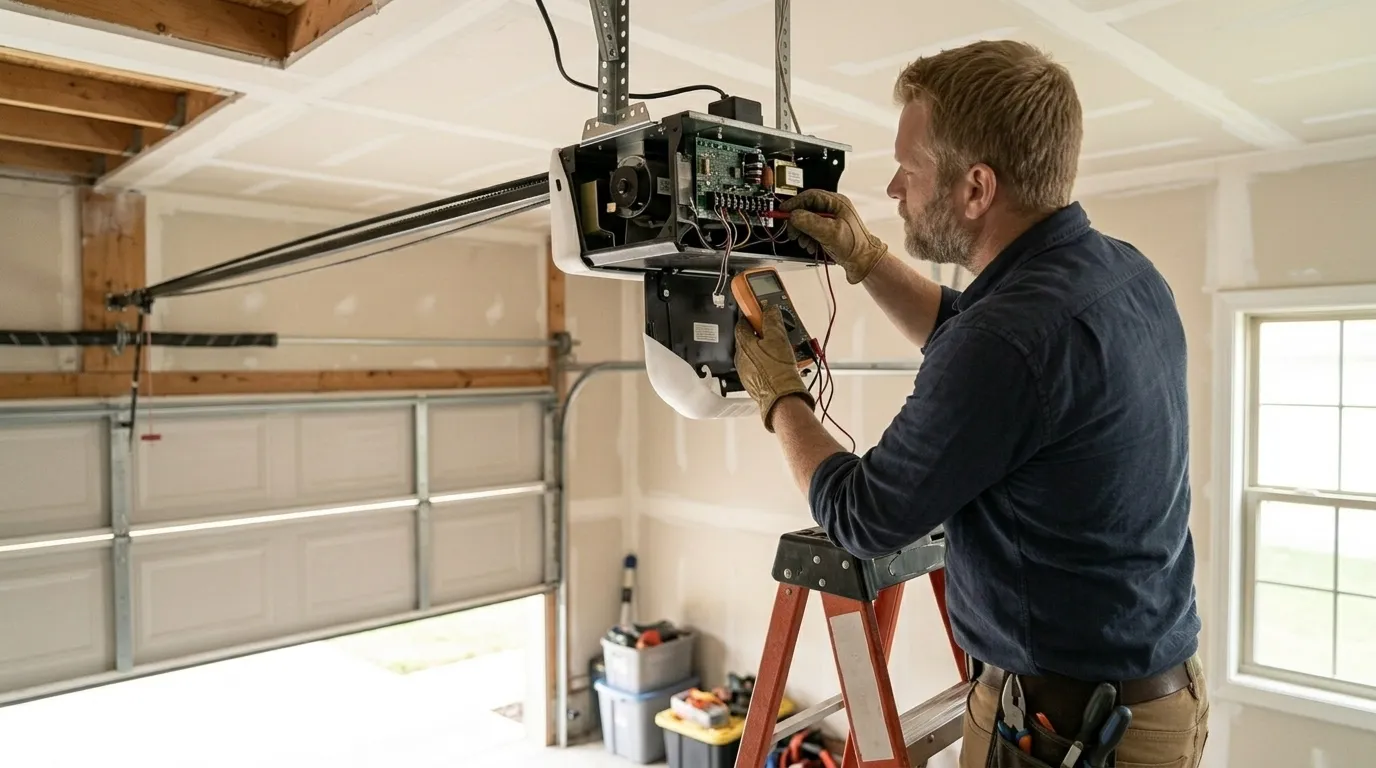
With a median build year of 1956, most of the housing here predates the automatic opener as a standard feature - openers on these doors are almost always retrofits, added years after the house went up, which means the bracket and header reinforcement weren't planned for the load in the original framing. Around 5,900 households sit in this pocket, smaller than the wider service area's numbers, and median income here runs about $76,009, well under the roughly $103,561 median across the full territory we cover. That gap tends to line up with more repair calls and fewer full-door replacements, which fits what an older, working-class housing stock usually needs: keep the door running rather than swap it out. Winters here fall in the same cold-moderate climate band as the rest of the region, so the freeze-thaw stress on old steel tracks and worn rollers is the same problem we see everywhere we work - it just shows up sooner on hardware installed before 1960.