24/7 Emergency Service Open 7 days · 7am–8pm Serving Northbrook, IL & nearby
(224) 353-7696
Northbrook, IL

Why a Door Goes Off Track Here

Northbrook's 1960s-70s housing stock and cold winters put specific strain on garage door track. Here's what actually causes it and when a repair still makes sense.

Why a Door Goes Off Track Here

How Local Conditions Play In

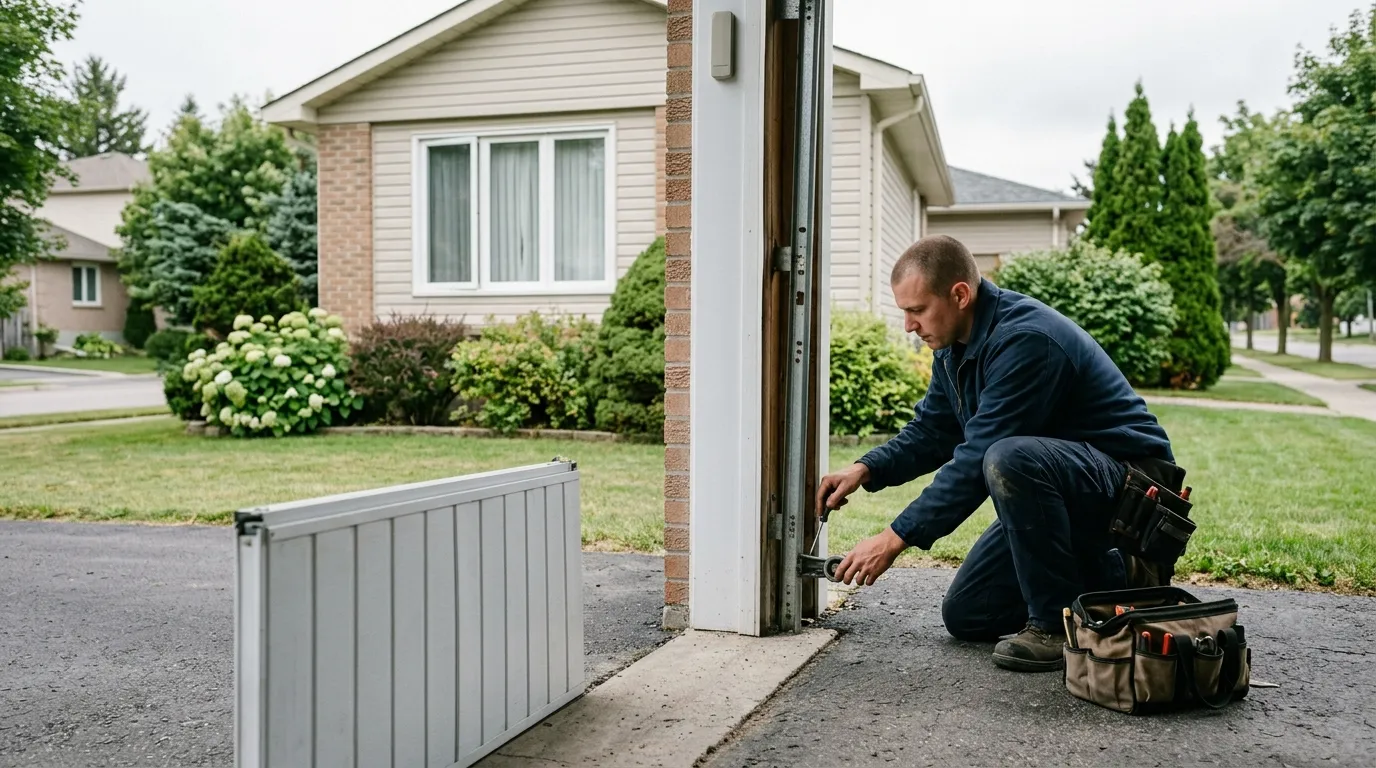
Northbrook's houses mostly went up between 1938 and 1996, with the median build year landing around 1974 and the bulk of the stock dating to the 1960s and 70s. That matters for track failure because a door installed in that era is usually riding on steel track bolted straight into a wood jamb, not the newer galvanized track set on a metal jamb bracket that's become standard since. Fifty years of a cold-moderate climate means that jamb has swelled in humid summers and shrunk in dry winter heat more times than anyone's counted. Every cycle works the lag screws a fraction looser. Add a hard freeze-thaw stretch and the wood itself can check right where the track bracket sits. None of this shows up as a sudden event. It shows up as a door that's tracked fine for decades and then one cold morning binds on one side, walks the rollers toward the edge of the rail, and pops off. The age of the house is doing as much work here as anything that happened that week.

What Most People Get Wrong

The common assumption is that a door comes off track because something broke - a spring, a cable, a roller. Sometimes that's true. But on houses from Northbrook's 1960s-70s build wave, the more common story is slow bracket drift, not a snapped part. Owners look for the broken piece, don't find one, and figure the door is fine again once they've muscled it back onto the rail. It isn't. If the jamb bracket has worked loose from decades of seasonal movement, the door will walk off again, usually worse, because the screw holes are now stripped larger than the screws that go back into them. Another mistake: assuming a slightly bent track is cosmetic. On original steel track that's had fifty-plus years of temperature swing, a bend usually means the rail has already lost its true line, and the rollers are riding the edge rather than the channel. Tightening the bracket without addressing the bent section just relocates the problem a few inches down the rail.

What Is Going On

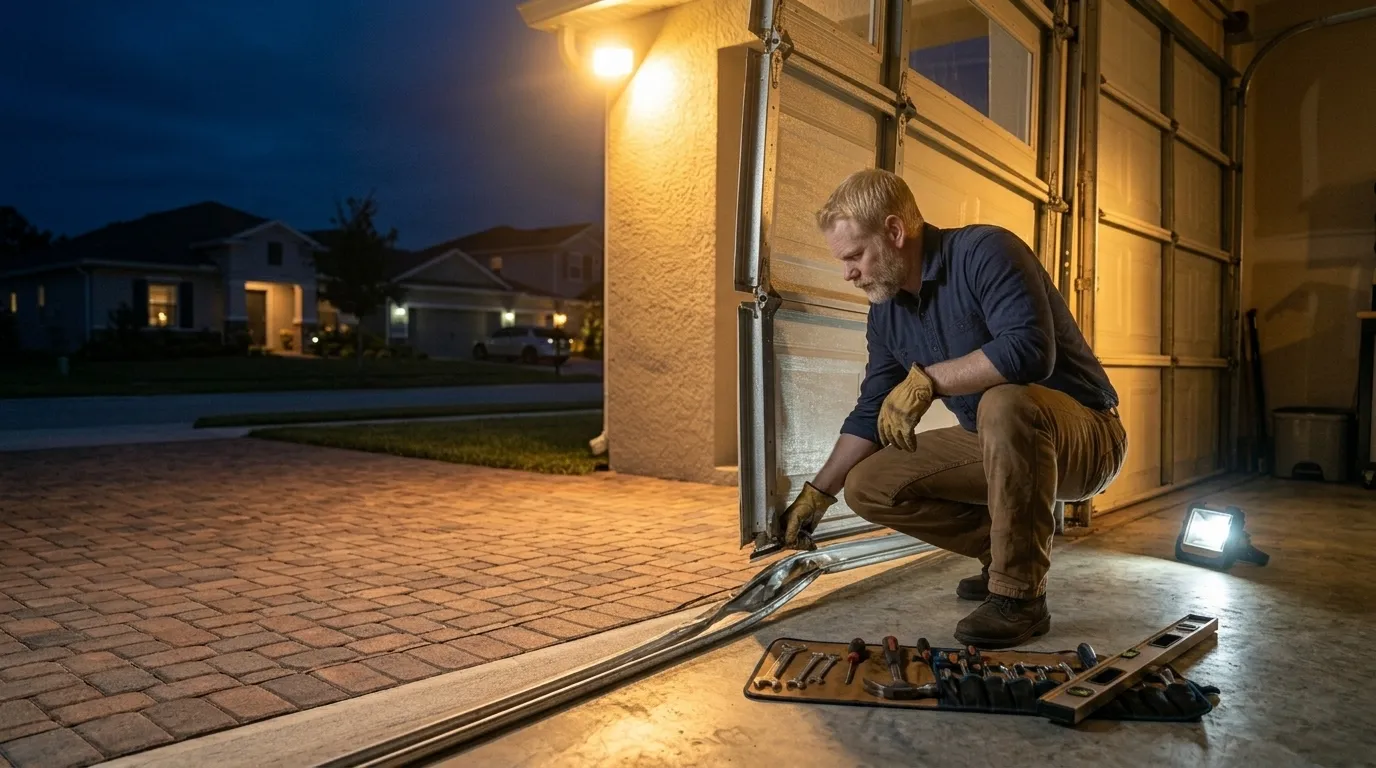
Most off-track calls in this area come down to one of three things tied directly to the age of the house and the climate. First, loosened jamb brackets - wood that's moved enough over the decades that the lag screws no longer bite. Second, a bent or twisted section of track, often from age-related metal fatigue rather than a single impact, since original steel track from the 1960s and 70s wasn't built to today's gauge. Third, rollers that have worn oval instead of round after enough freeze-thaw seasons pushing grit and moisture through the channel. Any one of these lets the roller catch the lip of the rail instead of running inside it, and once one roller jumps, the door racks and the opposite side follows. On a house from this era, it's rarely one clean cause - it's usually two of the three happening at once, which is why a quick tighten-and-push-back-on rarely holds for long.

When to Get Help

If the door has come off track more than once, don't keep pushing it back on yourself - a door under spring tension that jumps rail can drop or swing hard, and that's not a one-person job to force back into place. Call if you hear the rollers grinding before it happens, if the door looks tilted in the opening, or if it's come off on the same side twice. We'll tell you straight if it's a bracket and screw fix or if the track itself is bent past saving - on original steel track from a house this age, replacement track is often the more honest answer than trying to straighten it back true. One limit worth knowing: if the wood jamb underneath the bracket has rotted or split, that's carpentry before it's a garage door repair, and we'll say so rather than bolt new hardware into wood that won't hold it.

How it works

From “it’s stuck” to “it’s fixed”

A quick, honest process - no guesswork and no surprises, start to finish.

  1. 1
    Tell us what’s wrong - Northbrook garage door service

    Tell us what’s wrong

    Describe the symptom - won’t open, loud bang, opener runs but the door won’t move.

  2. 2
    On-site diagnosis - Northbrook garage door service

    On-site diagnosis

    A technician tests the door under power and by hand and finds what actually failed.

  3. 3
    Clear, up-front plan - Northbrook garage door service

    Clear, up-front plan

    You get the fix that’s needed and what drives the cost - before any work starts.

  4. 4
    Repaired & tested - Northbrook garage door service

    Repaired & tested

    The repair is done, the door is set true and tested, and the work area left clean.

Serving Northbrook, IL - tell us what your door’s doing and we’ll take it from there.

How we work

What to expect

  • Diagnosis firstEvery visit starts by finding what actually failed - not a pre-written parts list.
  • The right part for the doorSprings and openers matched to the door’s weight and age, so the fix holds up.
  • Straight answersWhen a repair makes more sense than a replacement - or the reverse - you hear it plainly.
  • Clean, careful workTension released safely, hardware set true, the door tested under power before we leave.
Questions

Frequently asked

Straight answers about garage door repair in Northbrook. Still unsure? Ask us directly.

01Is it normal for an older Northbrook garage door to come off track?

It's common on houses from the 1960s and 70s building wave, where original steel track was bolted into a wood jamb that's had decades of cold-climate swelling and shrinking. That movement loosens the hardware gradually, so a door that tracked fine for years can suddenly walk off the rail on a cold morning.

02Can I just push the door back onto the track myself?

You can try, but if it's come off more than once, pushing it back on doesn't fix why it happened. A door under spring tension that's already off rail can shift or drop while you're handling it. If it's happened twice, that's worth a call before you're doing it a third time.

03Does a bent track always mean full replacement?

Not always, but on original track from a house built in that 1960s-70s era, the metal gauge is lighter than what's sold today, and a bend often means the rail has already lost its straight line rather than just having one dented spot. We'll look at the actual bend before saying replace versus straighten.

Ready to get your garage door sorted?

Tell us what it’s doing and where you are in Northbrook - we’ll take it from there.

Request a QuoteCall