How Local Conditions Play In
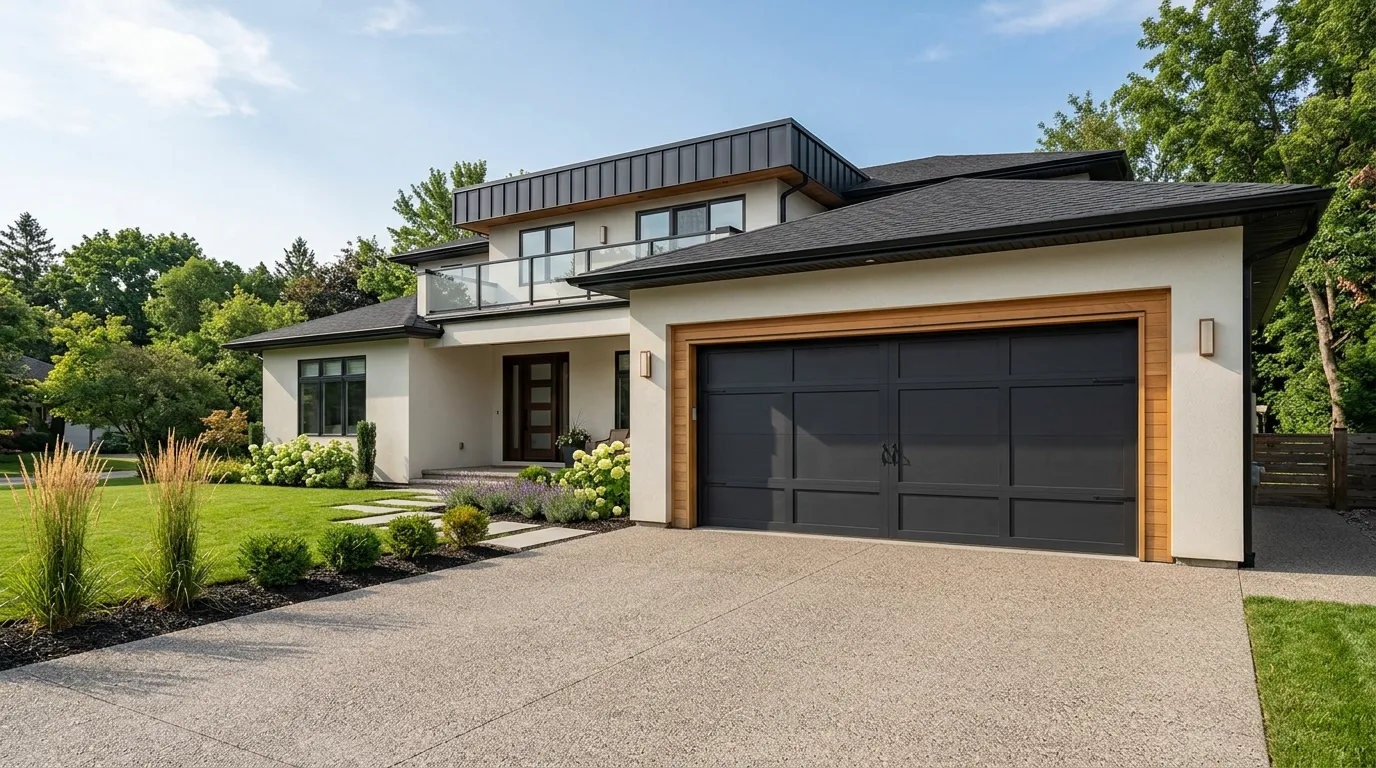
Most houses in this part of the North Shore went up between 1938 and 1996, with the bulk of the stock dating to the 1960s and 70s. That era favored wider garage openings than what you'd find in older city housing - two-car doors in the 16-foot range became standard, and a door that wide catches a lot more wind than a single-car door ever will. Wind pushes on a garage door as flat, even pressure across the whole panel. Double that panel's width and you roughly double the load the track, rollers, and springs have to fight. Add in a COLD moderate climate band, where steel hardening and thermal cycling happen every winter, and the tracks and hinges on a house built in that 1974 median year have had five decades of expansion and contraction to work loose. None of this is dramatic on its own. It's cumulative wear meeting a door style that was never over-built for wind in the first place. A newer wide door with reinforced struts handles gusts differently than the original steel panel that likely still hangs in a lot of these openings.
What Most People Get Wrong
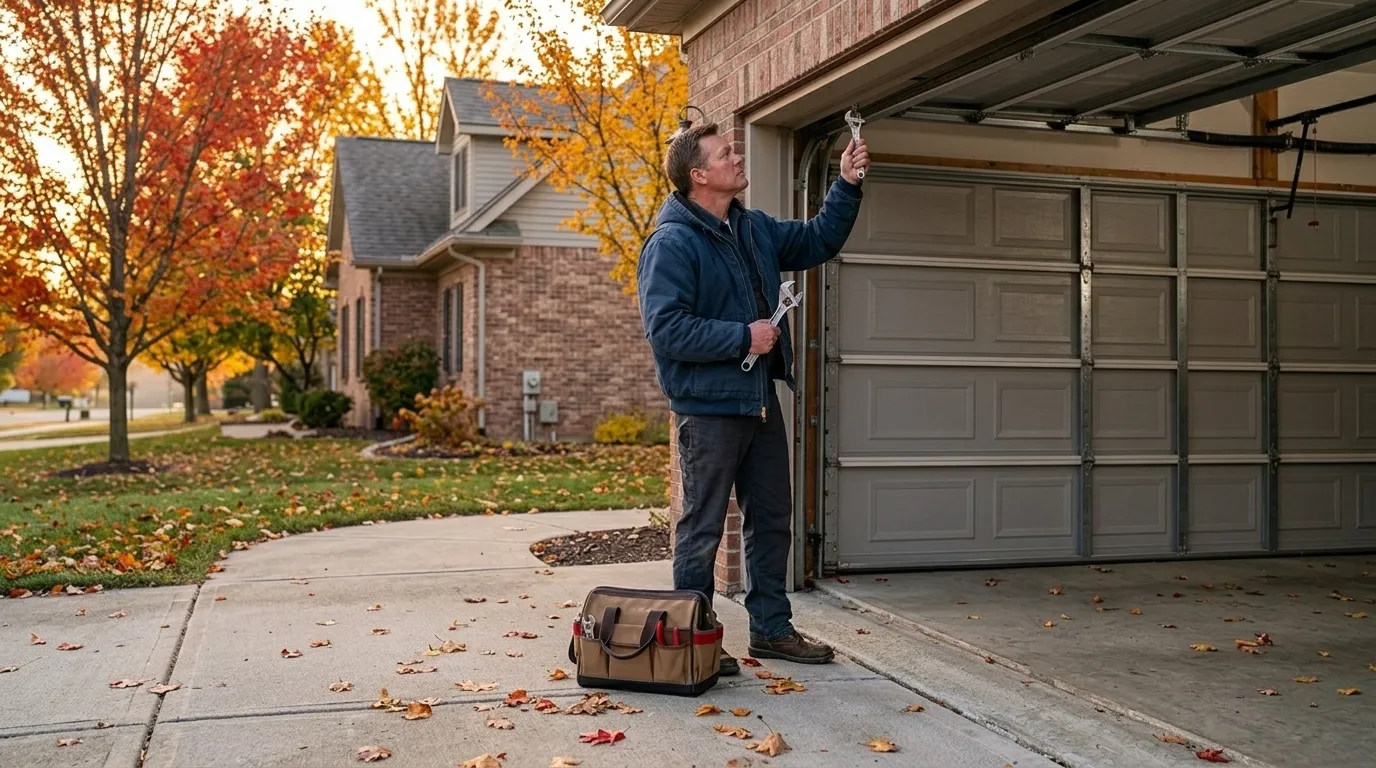
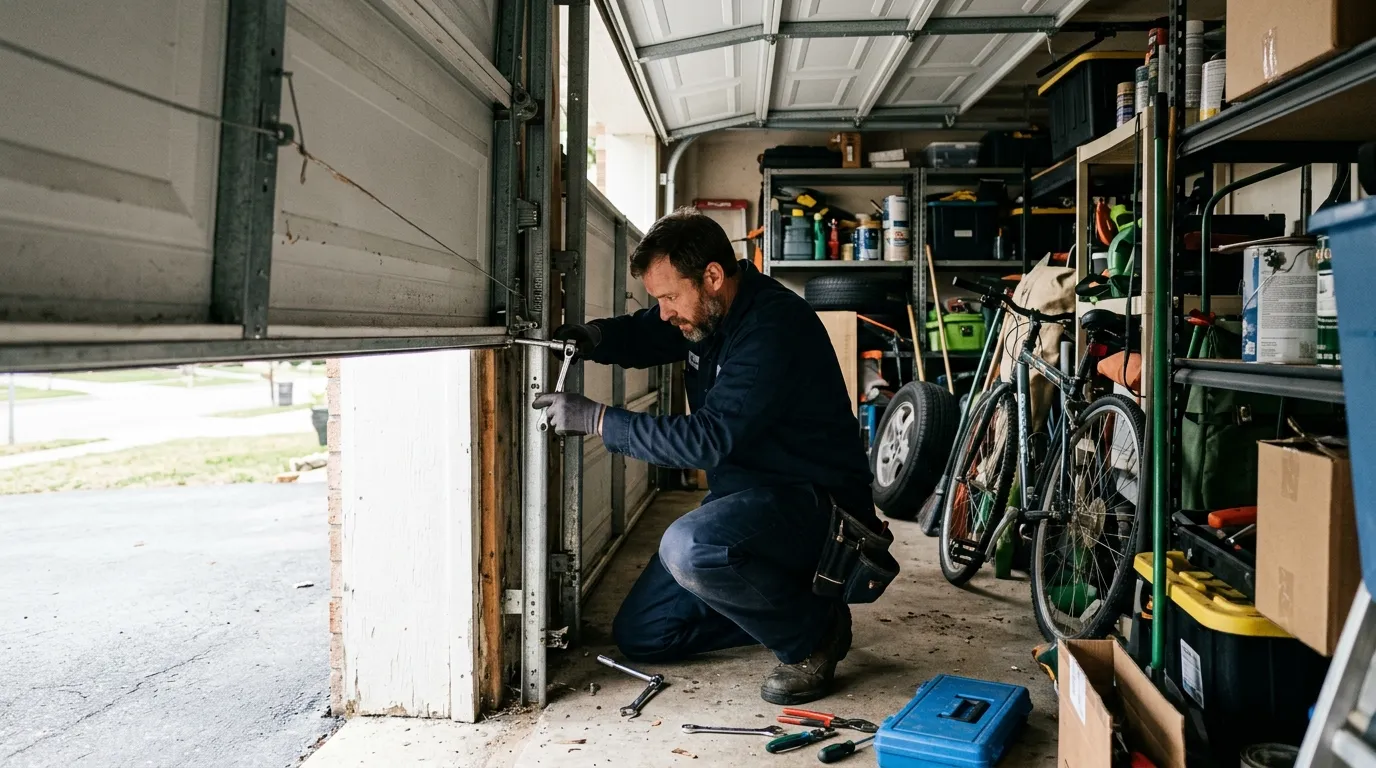
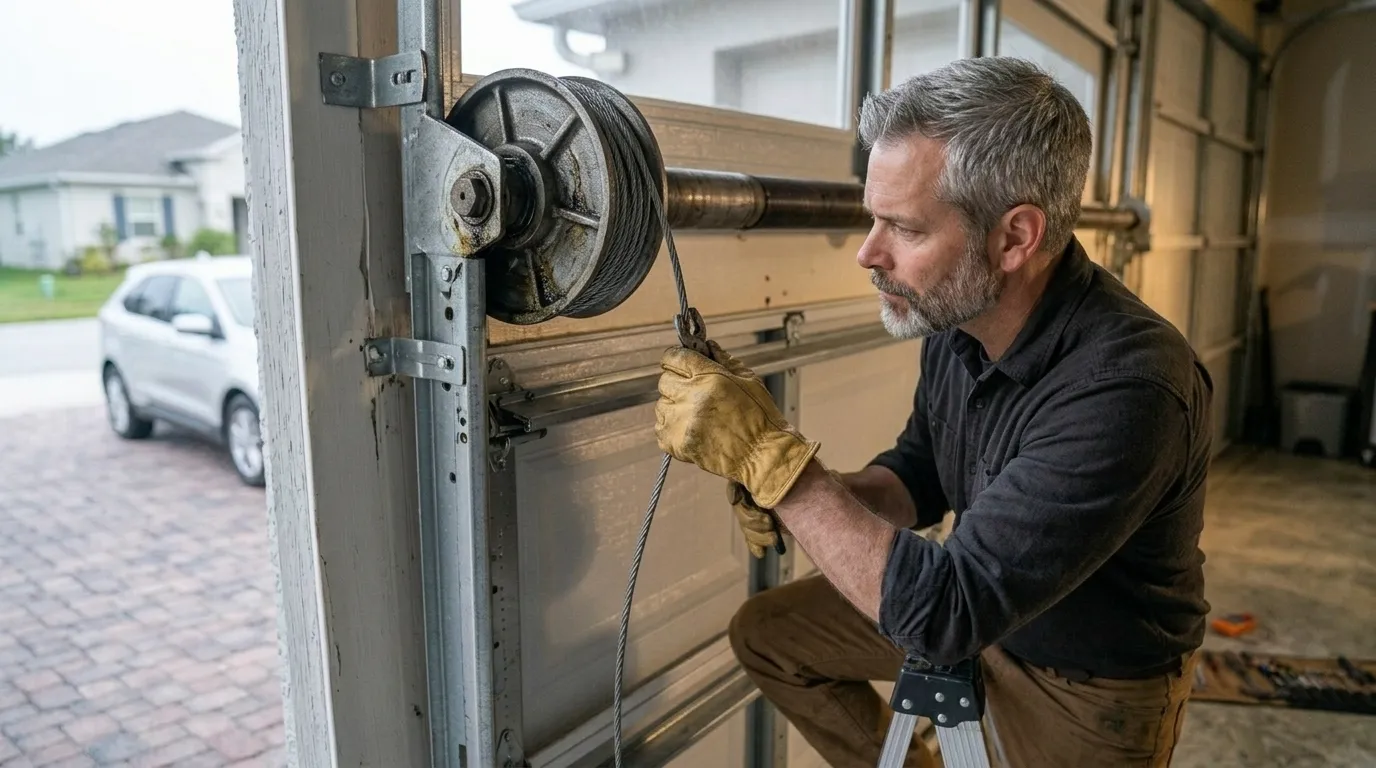
The common assumption is that wind damage means a dramatic blow-in, something you'd notice right away. On a wide door from this housing era, it's usually the opposite - it's slow. A track bracket that's been flexing under wind load for years loosens a quarter-turn at a time. Rollers wear unevenly because the door racks slightly every time wind hits one side harder than the other. People check their door after a storm, see it's still closed and still opens, and assume it's fine. Meanwhile the hardware holding a 16-foot panel in place has taken more cumulative stress than a narrower door ever would, and on a house from the 1960s or 70s, that hardware is original or close to it far more often than people expect. The other mistake is treating a wide door like two narrow doors bolted together. It isn't. The center of a wide panel has more unsupported span, which is exactly where wind pressure concentrates and where struts matter most.
When to Get Help
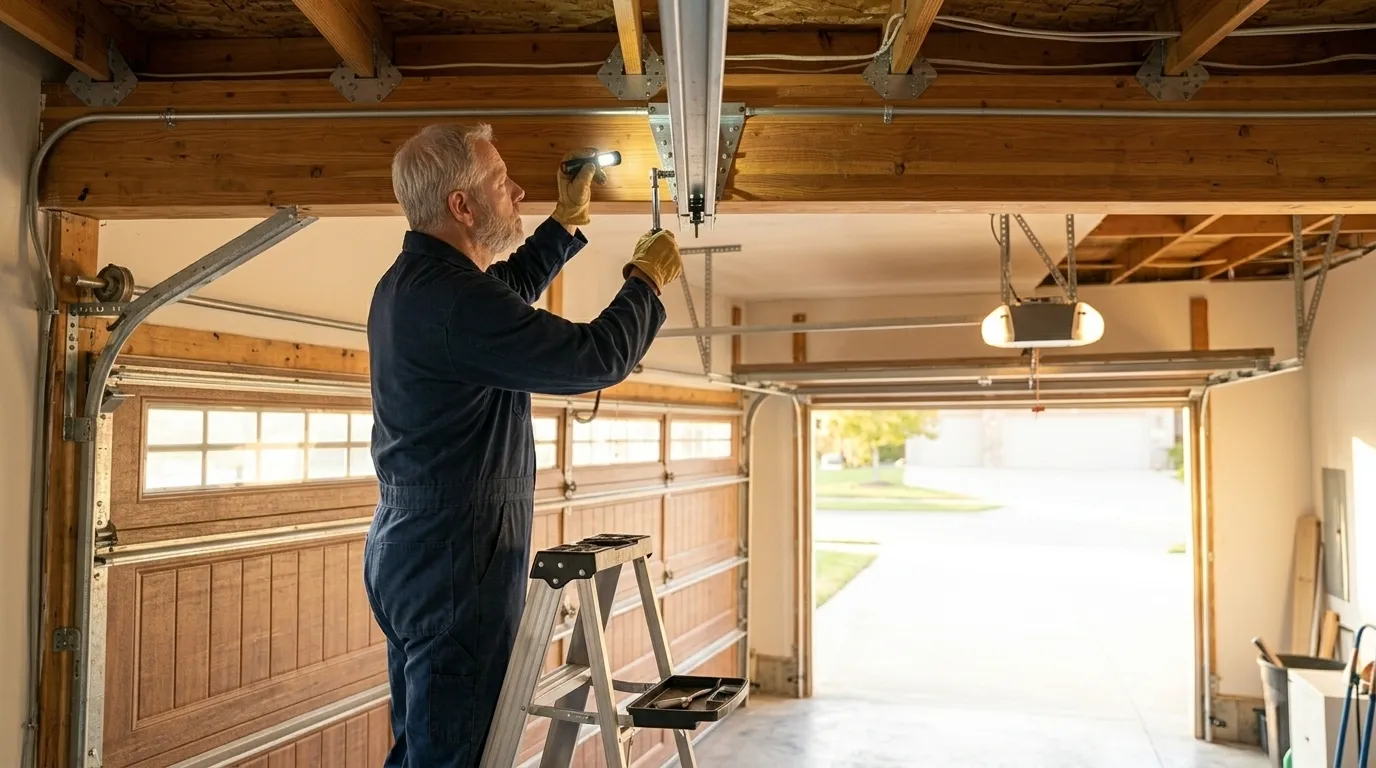
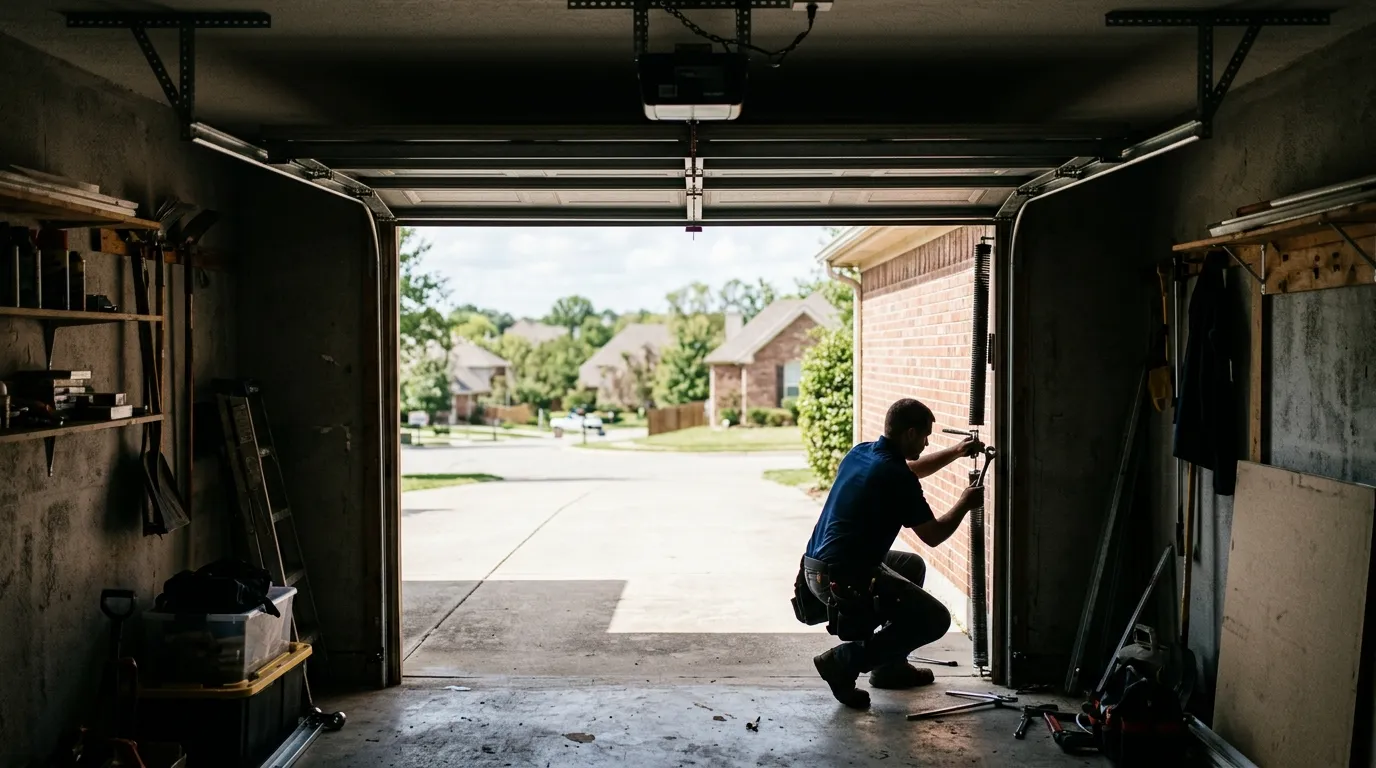
If your door shudders, bows, or rattles hard in wind rather than standing still, that's a hardware or reinforcement issue, not something to wait out. Same goes for a track that looks bowed at the center or brackets with visible play when you push on them. We don't recommend reinforcing struts on a door that's already failing structurally elsewhere - at that point replacement is the honest answer, not a patch. If the panel and frame are sound and it's really a bracket or roller problem, that's a straightforward repair. We can look at the door in person and tell you which situation you're in. Find us at /