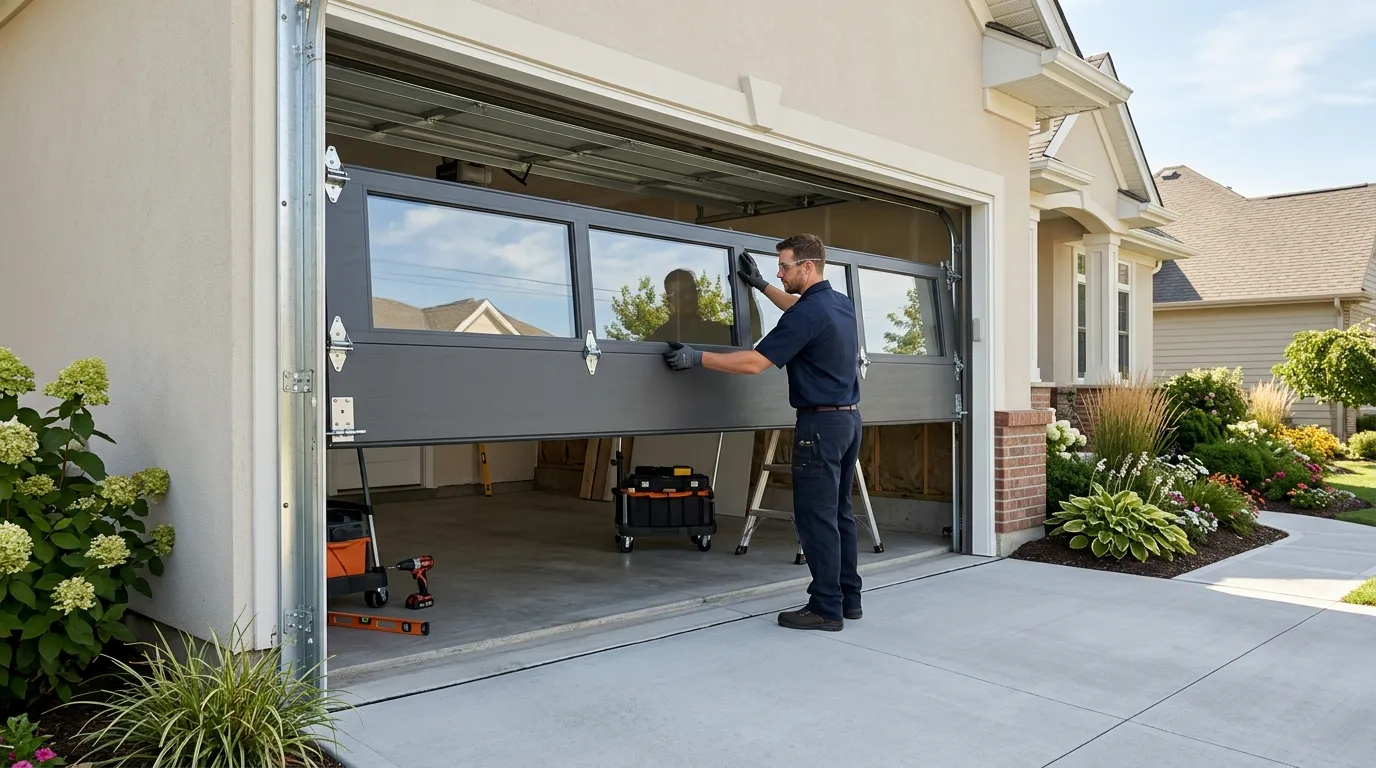
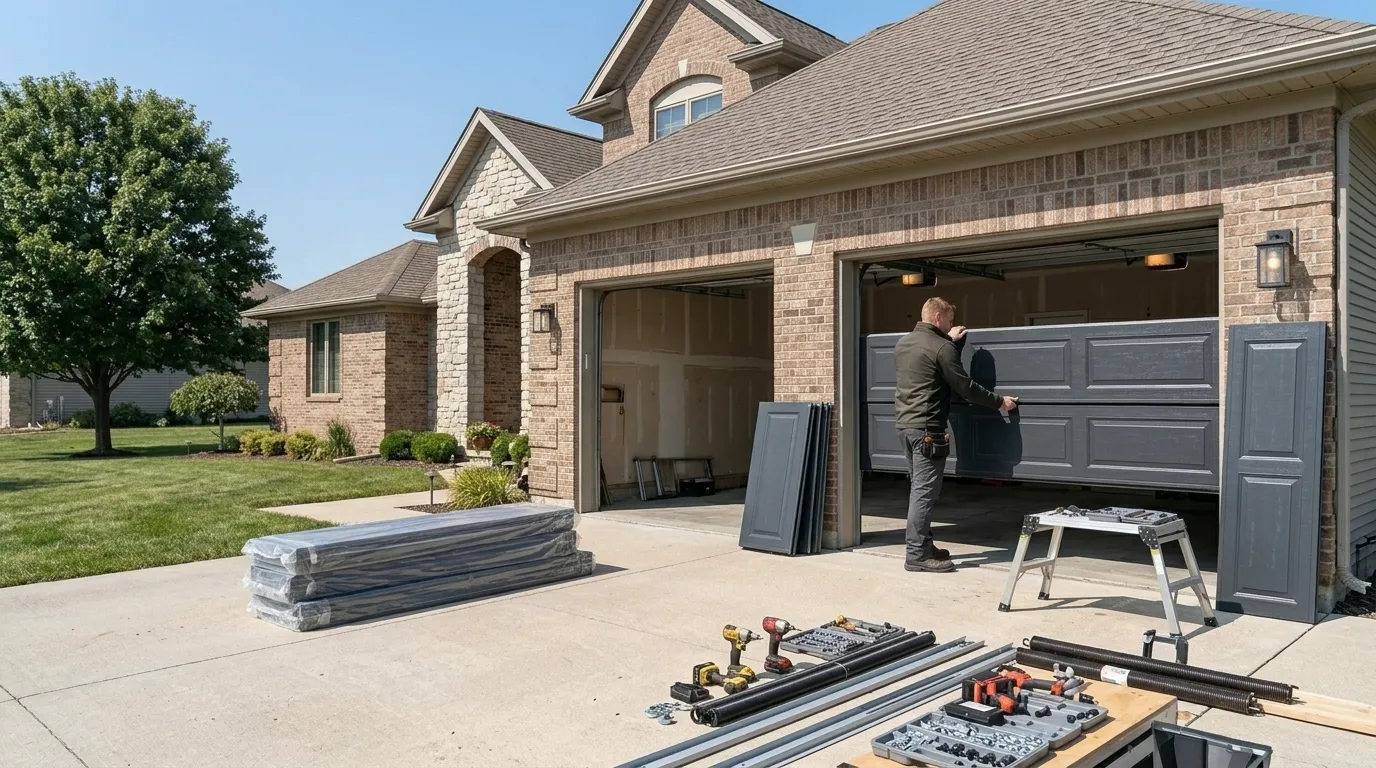
Why It Happens Here
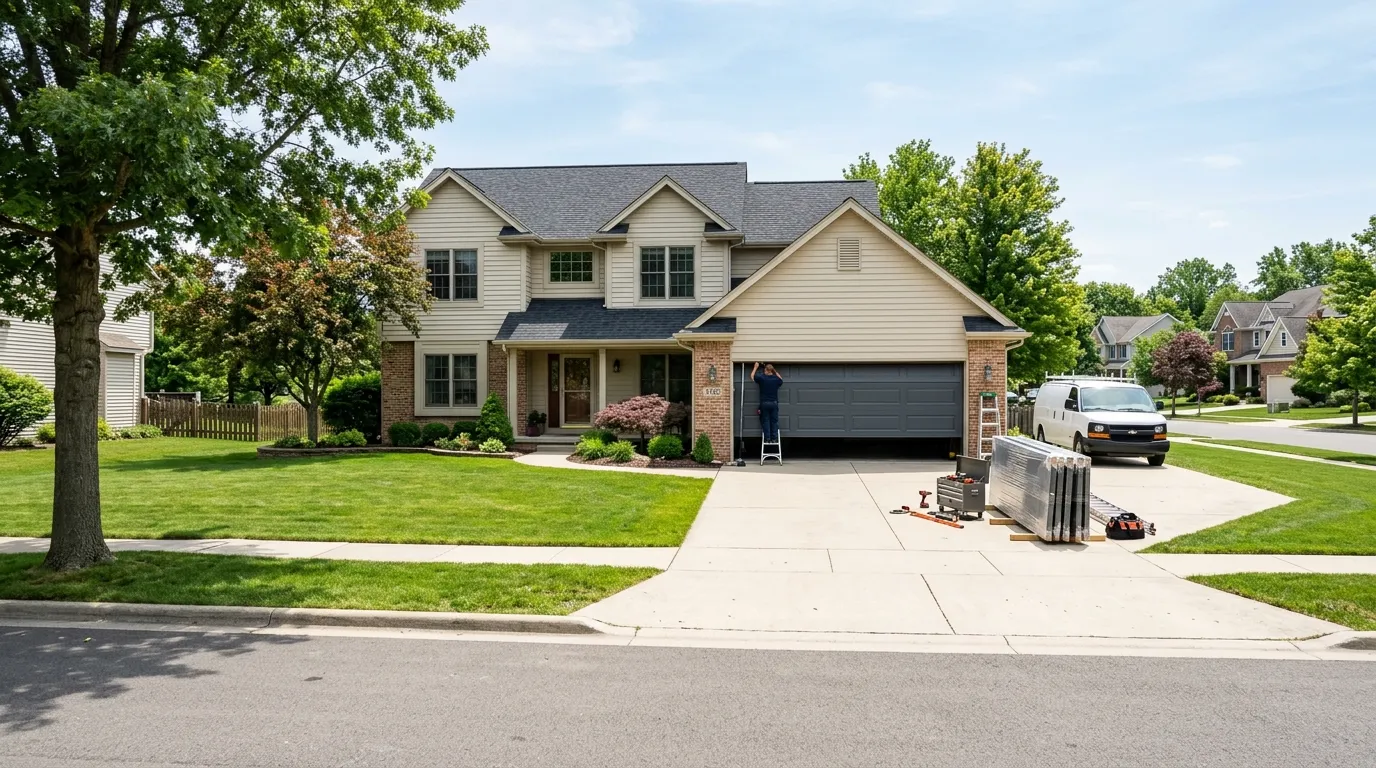
Most of the housing stock in this part of the North Shore went up between 1938 and 1996, with the median build year landing around 1974, and that's the range that matters for garage doors. A door installed on a house built in the 1960s or 70s is running on hardware that was never meant to last fifty-plus years - steel torsion springs lose tension gradually, and the galvanized coating on cables and rollers thins out long before anyone notices a problem.
Northbrook sits in a cold-moderate climate band, which means the garage takes real freeze-thaw cycling every winter. Metal contracts in the cold, lubricant thickens or dries out, and a spring that was already near the end of its wind count is the part most likely to snap on a January morning rather than a July afternoon. That combination - an aging housing stock plus a climate that stresses metal twice a year - is why torsion spring failure and track misalignment show up so often as service calls here rather than as one-off surprises.
Unincorporated pockets like Techny, just south of the village, share the same building era as the rest of Northbrook, so the pattern holds close to home, not just out toward the older suburbs nearby.
The DIY Question
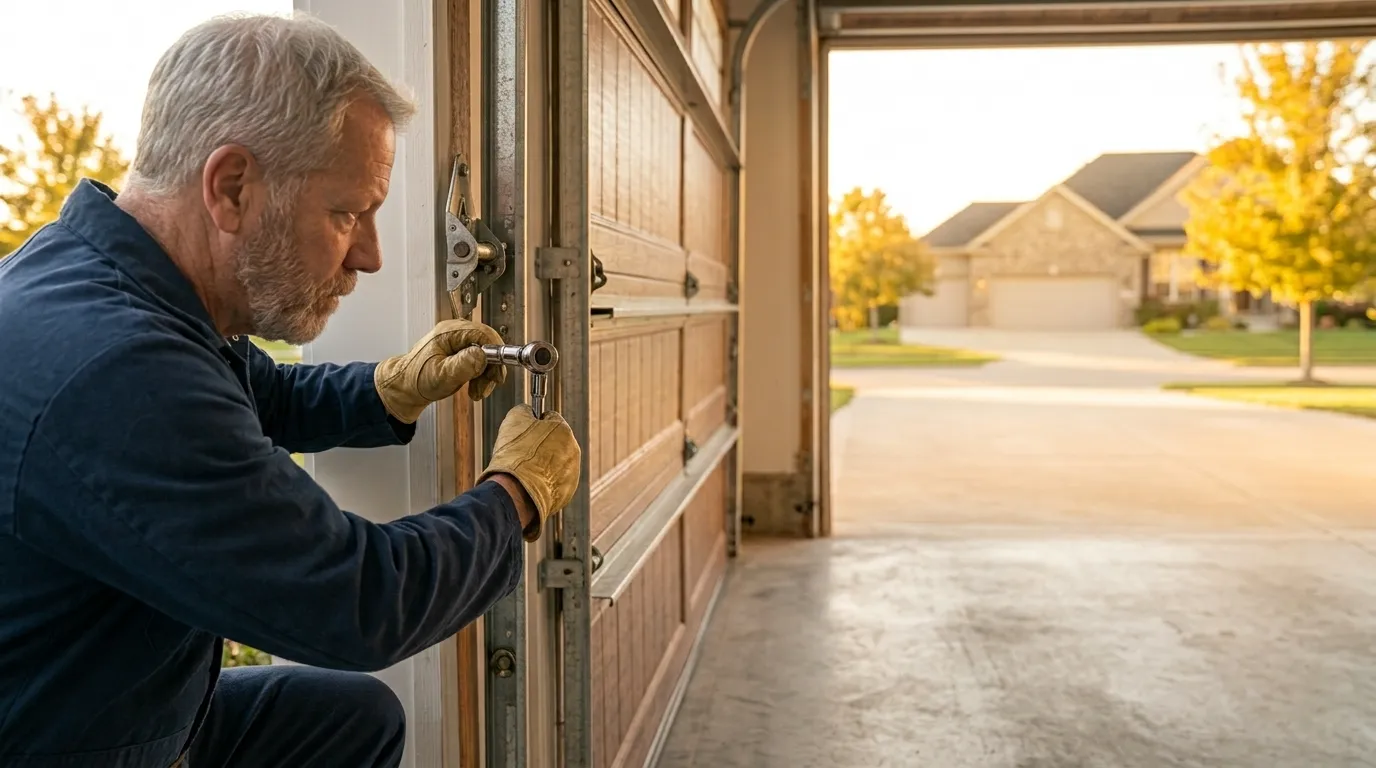
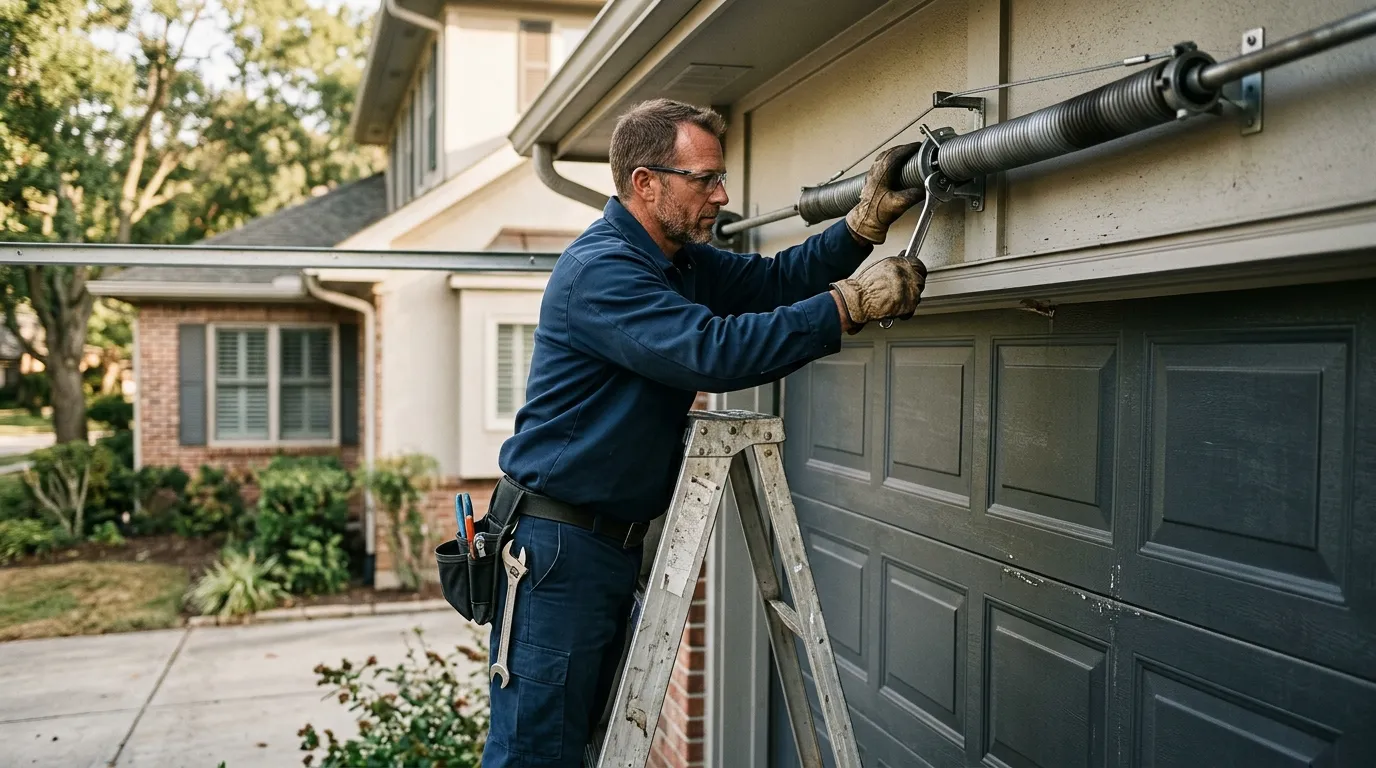
A torsion spring holds enough stored force to break a finger or worse, and on the older doors common in Northbrook - the ones installed when the house was built in the 60s or 70s - the spring size and drum setup often don't match anything sold at a hardware store today. That's the honest limit here: replacing a torsion spring yourself on a door this age is not a weekend project, and we won't pretend otherwise.
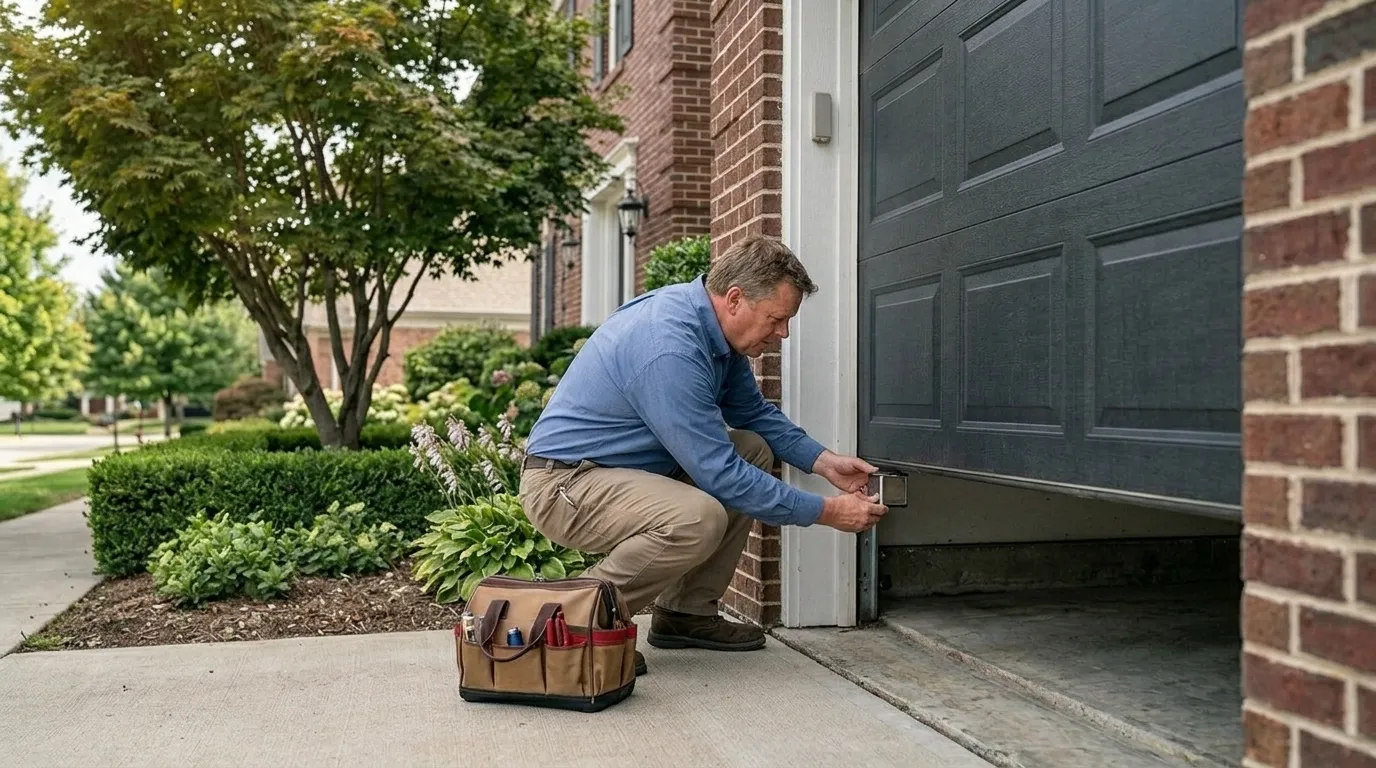
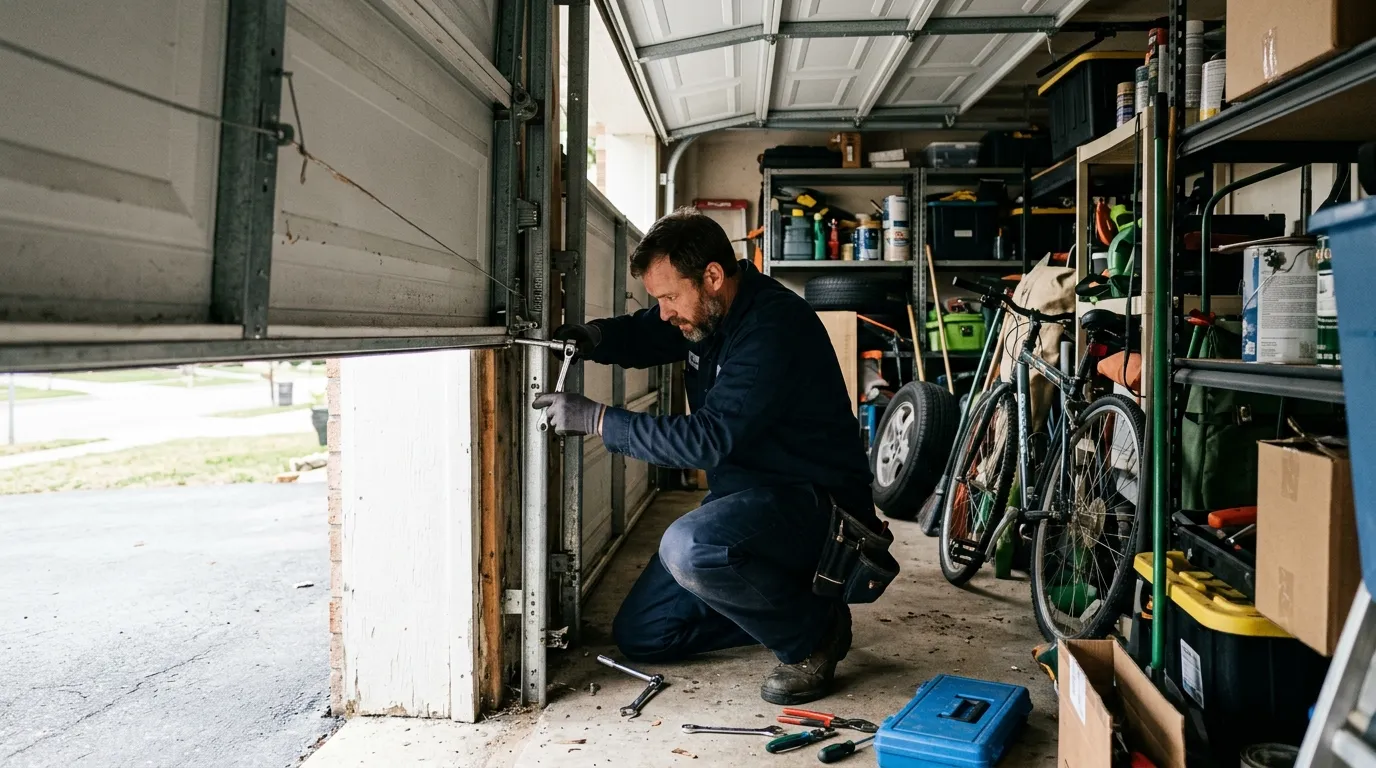
What you can check safely: the reversing sensors near the floor, whether the door is visibly off its track, and whether the noise is coming from rollers versus the opener motor. If the door won't budge and the springs look stretched or gapped, that's a call, not a project. If it's just a squeaky roller, a shot of the right lubricant on the tracks and hinges buys you time.
We'd rather tell a homeowner what's safe to try than sell a truck roll for a five-minute fix. But once torsion cable is involved, the risk-to-savings math doesn't favor doing it yourself.
Where This Job Goes Sideways
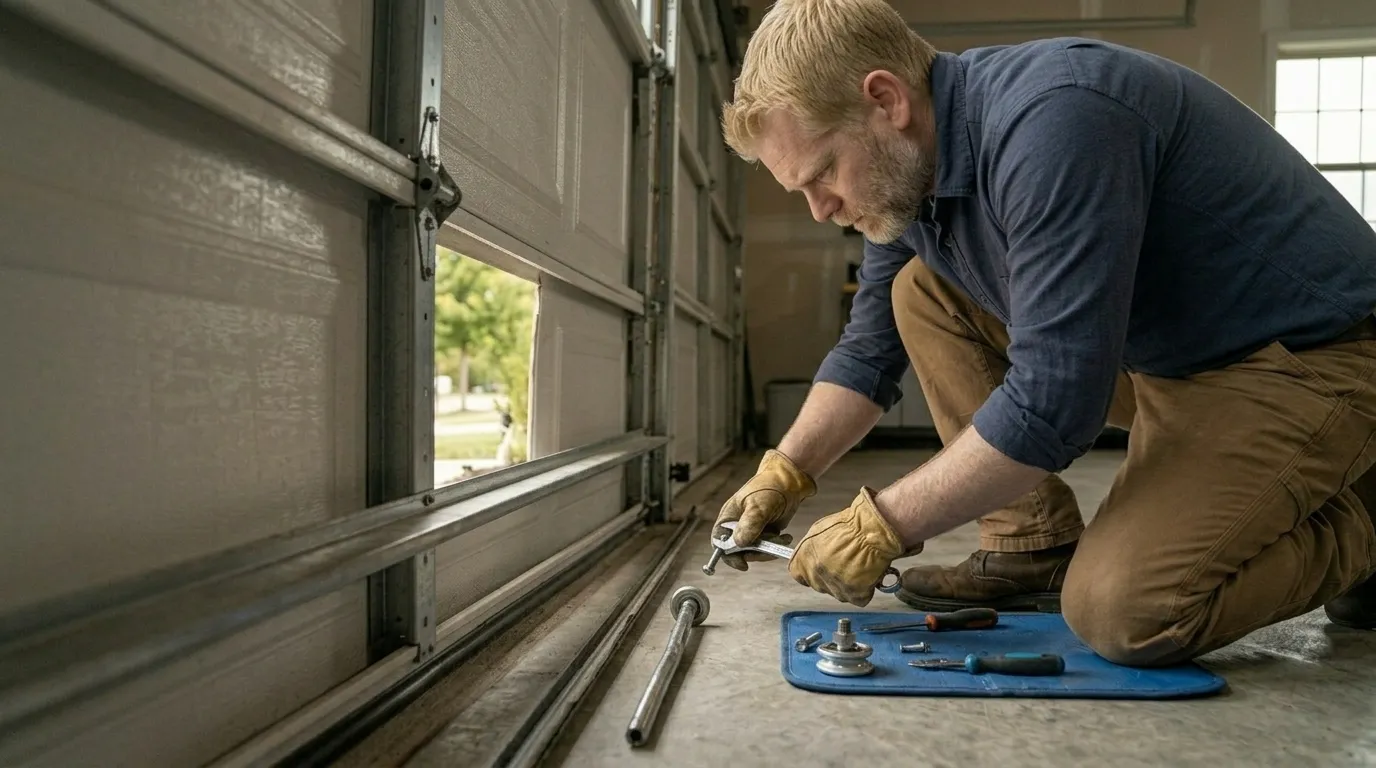
The most common misstep on a house from this era is treating a spring replacement as a like-for-like swap without checking the drum and cable diameter, which on original 1960s-70s hardware often don't match what's stocked for current doors. Force a mismatched spring onto old drums and the door will run unevenly or bind, and you're back to another service call within months.
The other place it goes wrong is skipping the track and hinge inspection because the spring was the obvious complaint. On a door old enough to have never had that hardware touched, the track is usually bent slightly out of plane just from decades of use, and a new spring on a bent track still won't travel smooth. Given the median household income across the service area is over $103,000, most owners here are choosing full correction over a patch that fails again in a year - but that's a call each household makes for itself, not something we assume.