How Local Conditions Play In
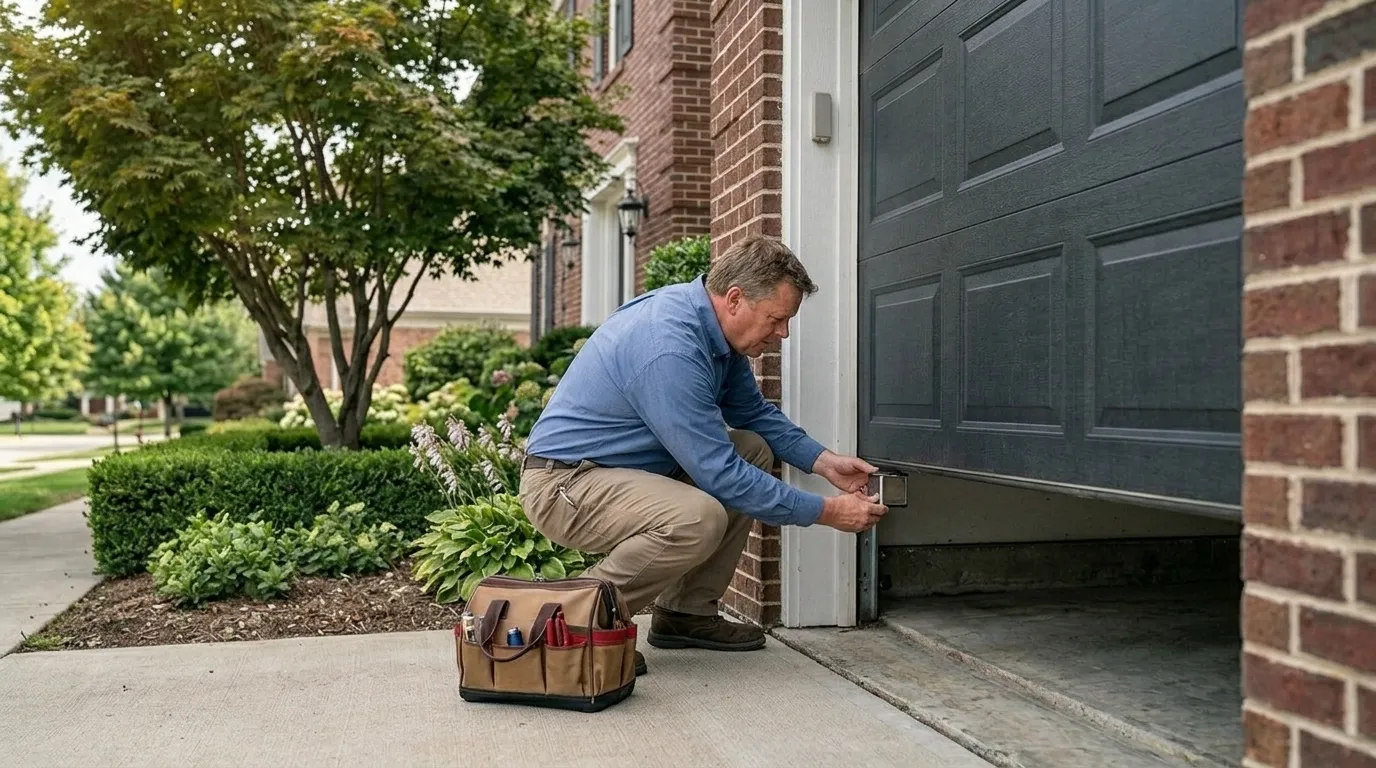
Northbrook's housing stock runs from 1938 to 1996, with the median build year landing at 1974. That's not a small detail - it means a large share of the doors we get called on are original or close to it, installed when torsion springs, rollers, and track hardware looked different than what's sold today. A lot of these houses sit close to Techny, just a mile off, and the stock there tracks the same era: mid-century construction with garages added as standard, not as an afterthought.
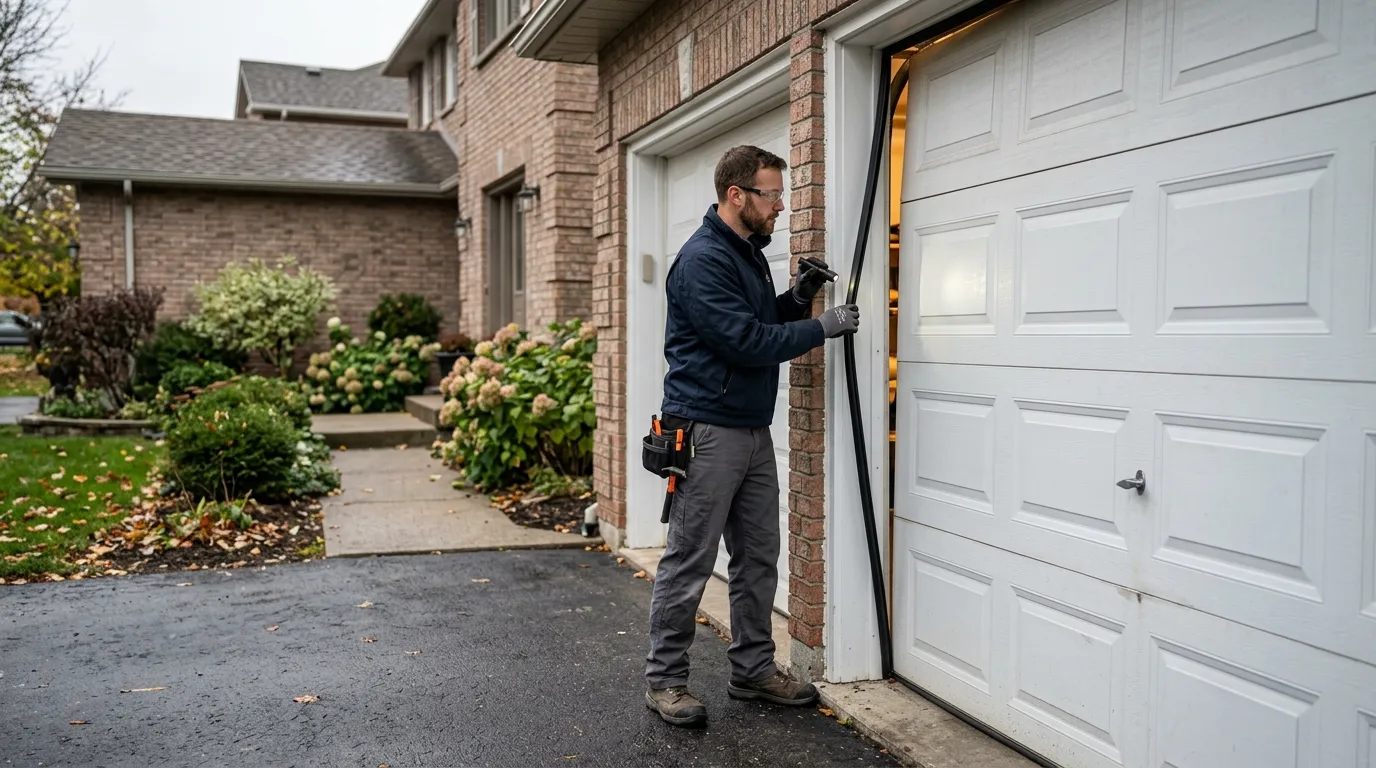
Northbrook's climate band is cold-moderate, which matters more for garage doors than people think. A door built in the 1960s or 70s almost never has real insulation value - it's a single skin of steel or wood over an air gap. Over decades of freeze-thaw cycles, the panels warp at the seams, the weatherstripping hardens and cracks, and the bottom seal stops doing its job. None of that is a defect. It's just what forty-plus winters do to a door that was never built with an R-value in mind.
What Most People Get Wrong
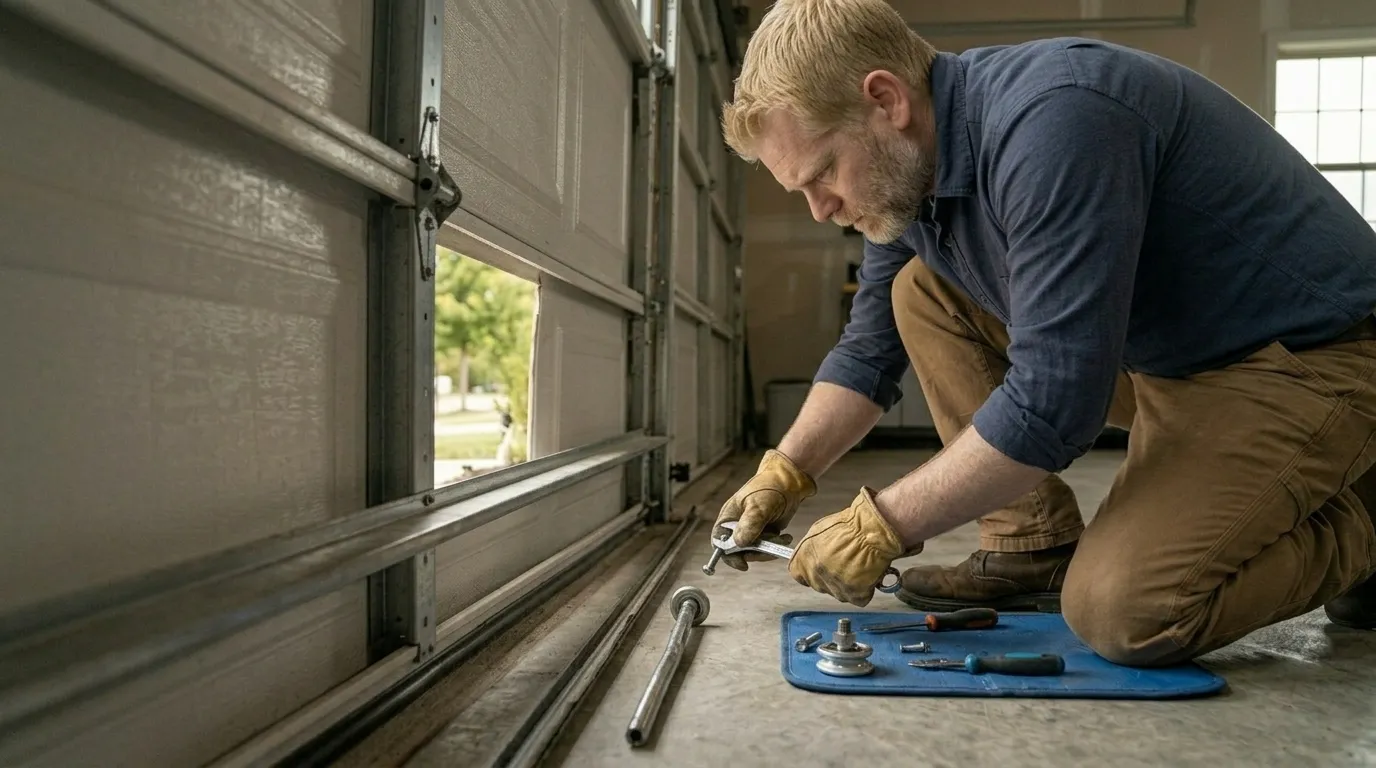
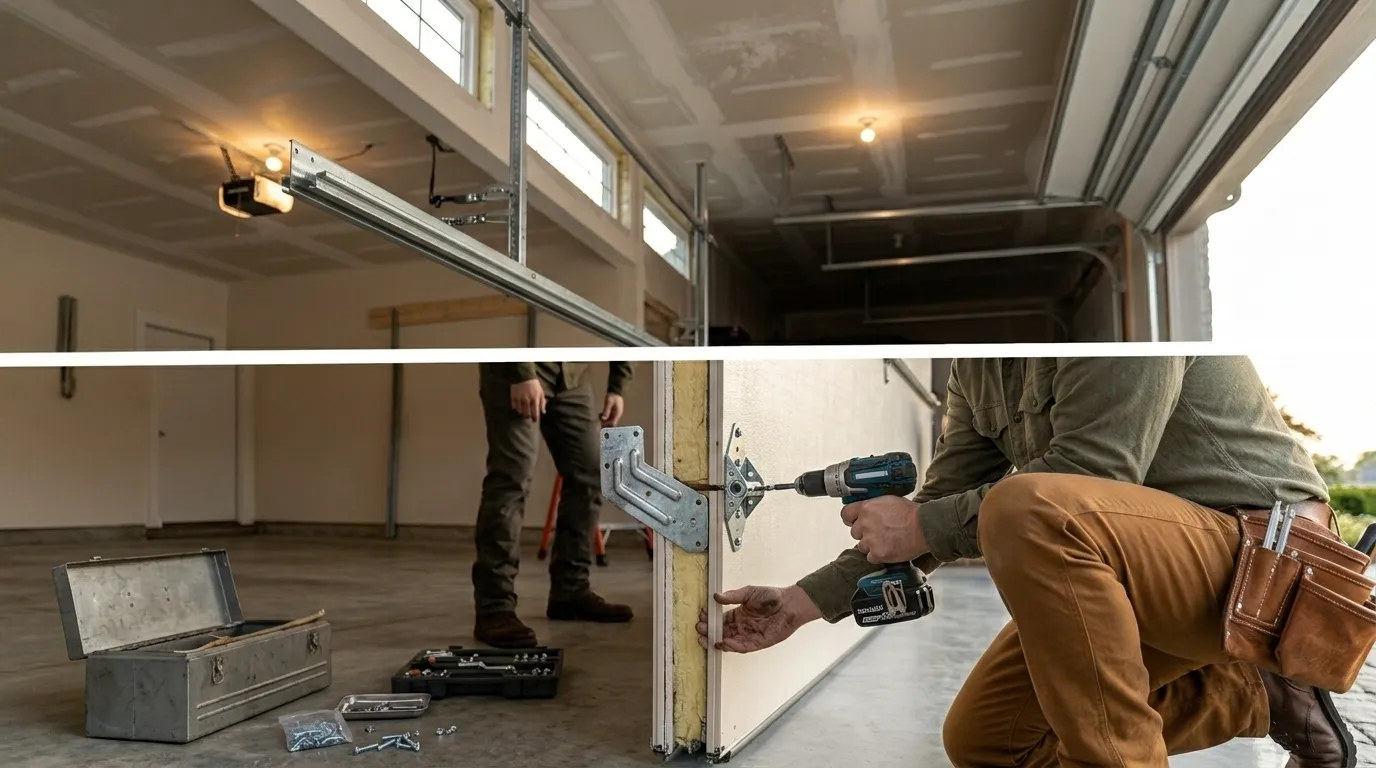
The most common mistake we see is spending money to fix a spring or a cable on a door whose panels are already failing. If the springs are original to a door from the 1960s-70s wave that makes up most of this area's stock, replacing the spring alone is a short-term fix - the opener and hardware are working harder than they should because the door itself has gone out of square.
The other mistake is assuming a quiet, working door is a healthy one. A door can open and close fine for years while the bottom panel rots from the inside, or a torsion spring sits one cycle away from breaking. Age alone isn't the deciding factor - a well-maintained door from 1974 can outlast a poorly installed one from 2005. What matters is whether the track is straight, the panels are structurally sound, and the hardware matches the door's actual weight and balance.
When to Get Help
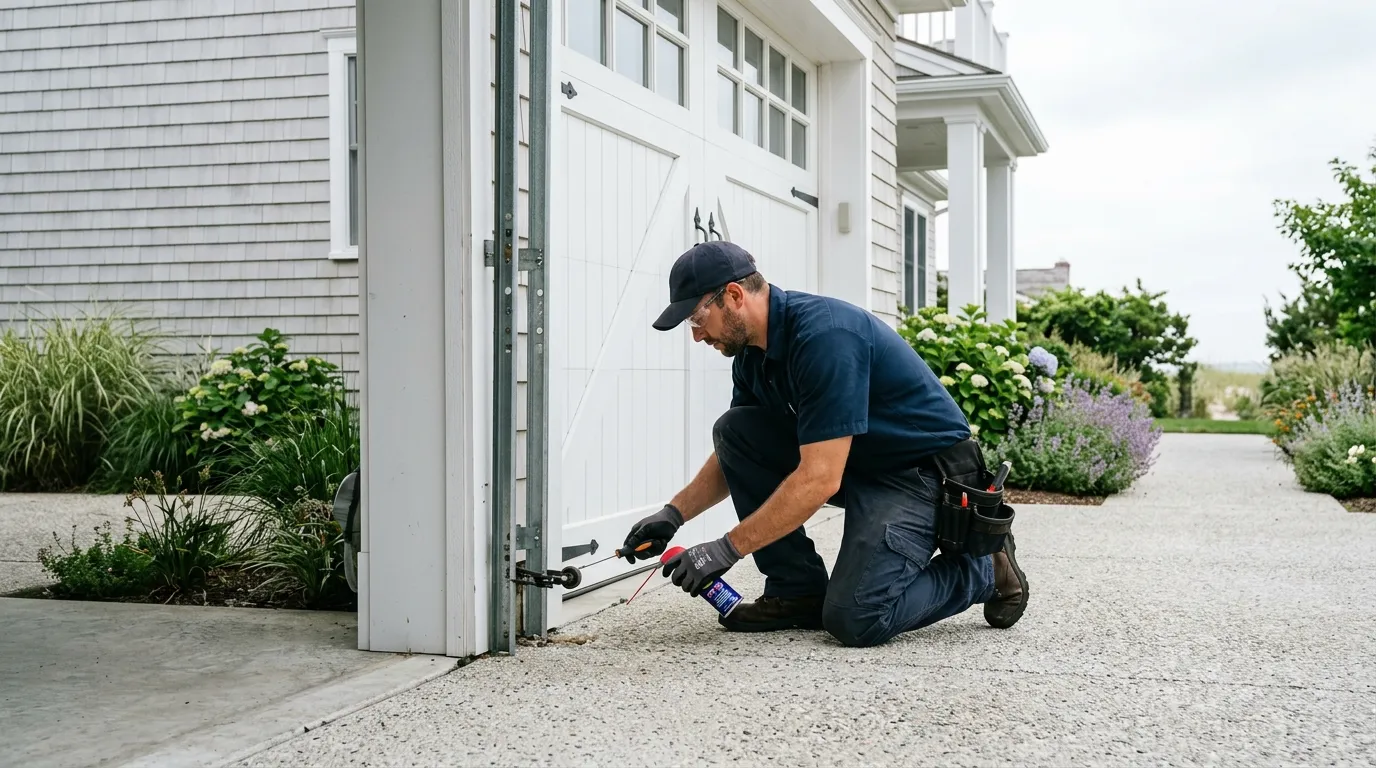
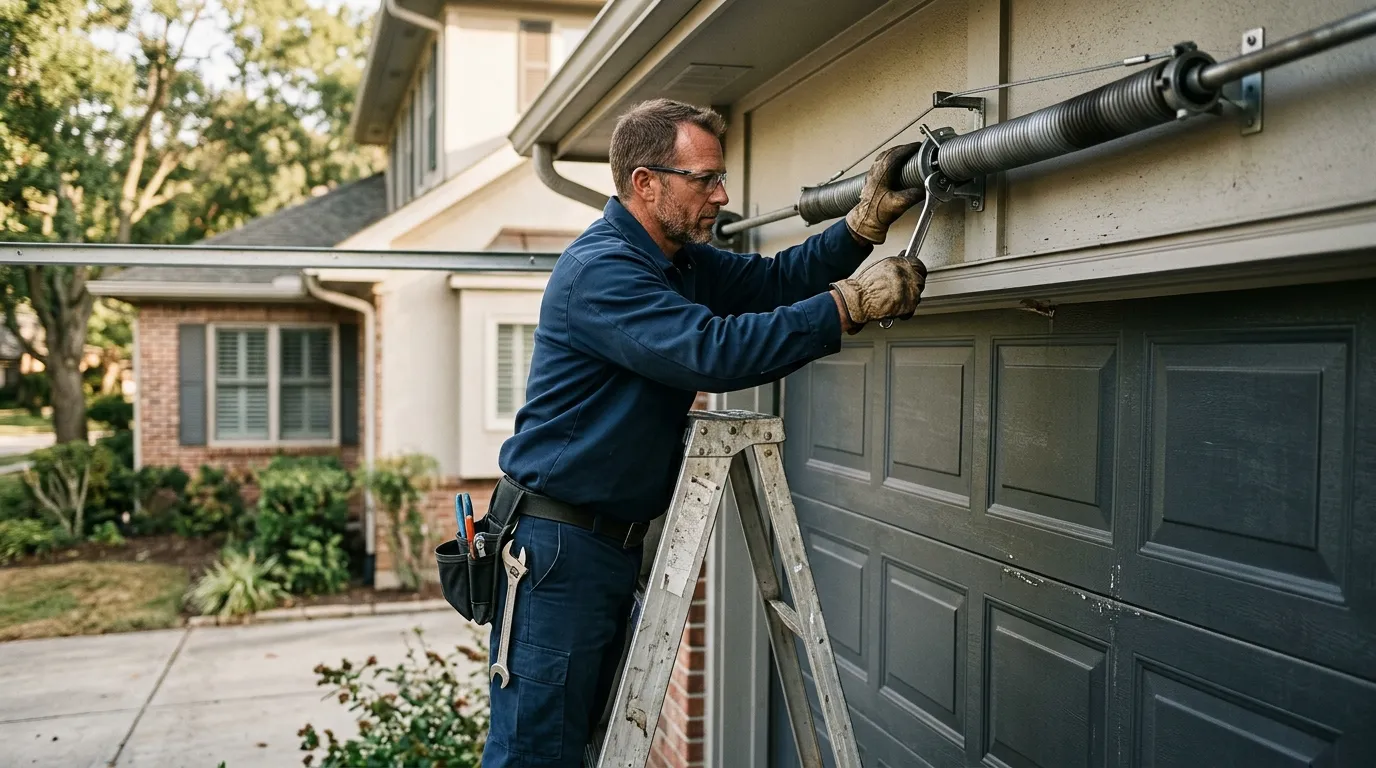
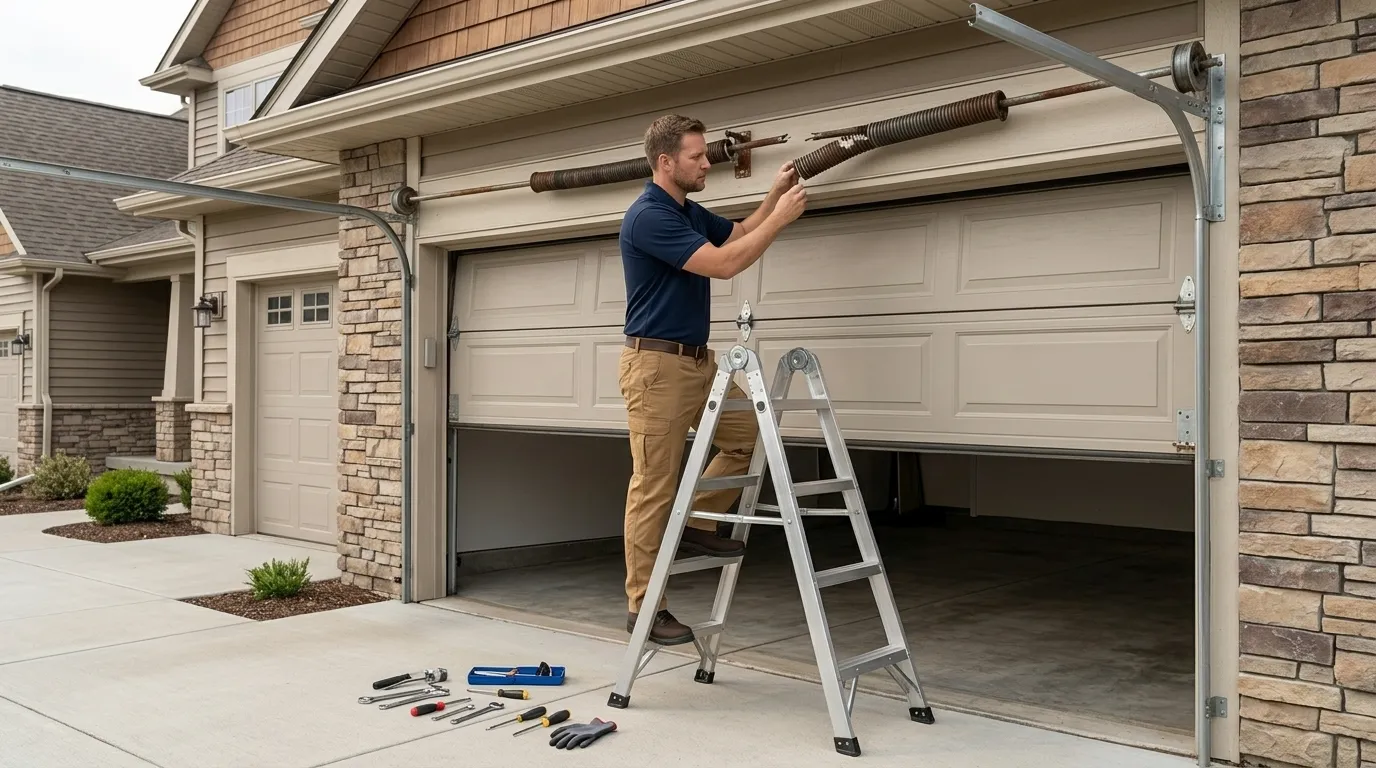
Call before you touch anything if the door is a double door with a broken torsion spring - the spring under tension on a door that size can cause real injury, and this isn't a job for a ladder and good intentions. Same goes for a cable that's frayed or already snapped; the door can drop without warning.
If your door dates to that 1960s-70s wave that's common here and it's still moving smoothly, get it looked at before winter rather than after - cold makes stiff seals and worn rollers fail faster, not slower. We'll tell you straight if a repair makes sense or if you're better off putting that money toward a new door. One honest limit: if the track is bent beyond a certain point or the frame itself has shifted, no amount of hardware replacement will fix it, and we'll say so instead of running up a bill.