
How We Get to You
We run out of Northbrook, and Hanover Park is about 19 miles from that shop. That's a real drive, not a rounding error, and it's why we don't promise a same-day slot the way we might for a street two miles from the truck. What we do is schedule the trip with the rest of that day's route so the visit makes sense on both ends. If you're calling from Hanover Park, tell us up front - it changes how we plan the day, not whether we come.
We're not going to pretend there's a Hanover Park depot or a crew that lives around the corner. There isn't. The company works this area from Northbrook, and the honest version of that is: expect a booked appointment, not a walk-up. Once we're on site, the work itself doesn't care how far we drove to get there - a broken spring or a dead opener gets fixed the same way whether it's 2 miles out or 19.
What That Means for Doors
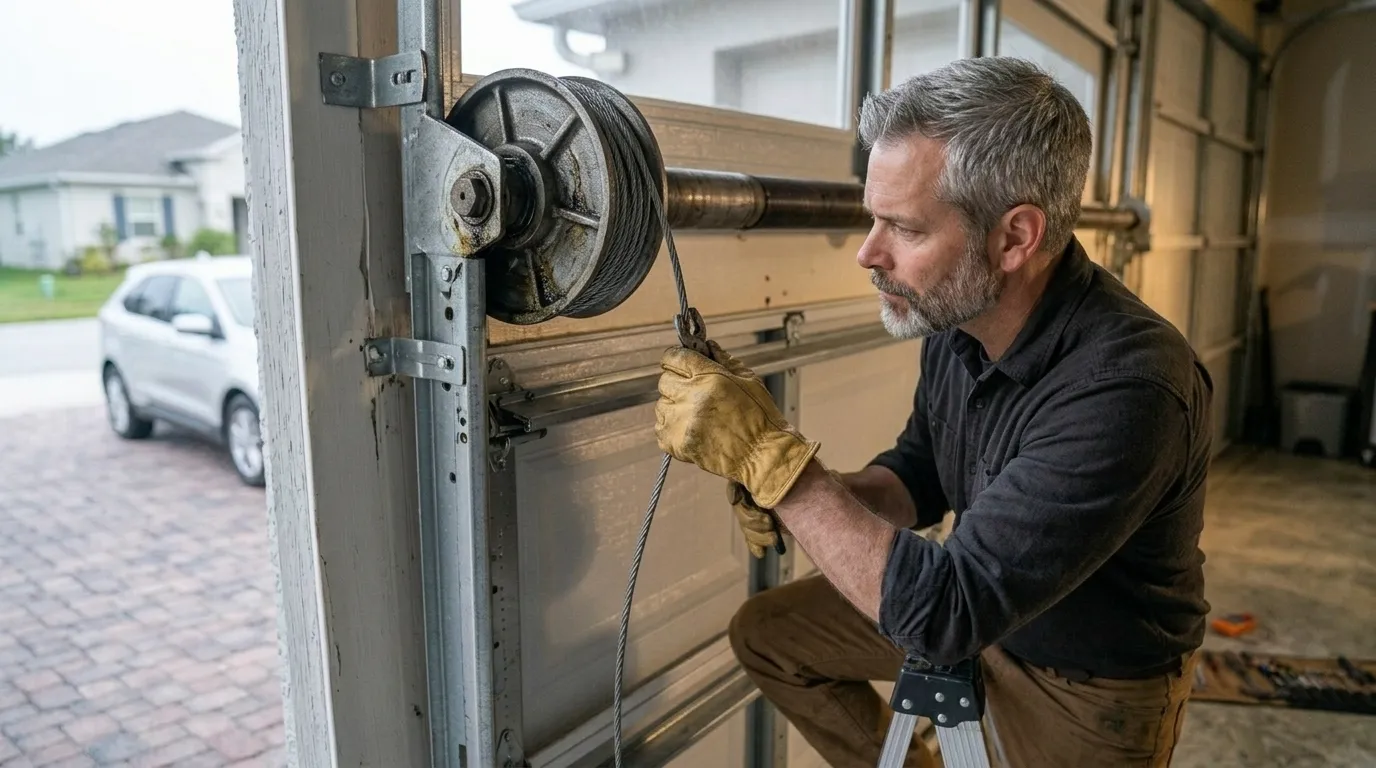
The median home in Hanover Park went up in 1976, which puts it right in the middle of the broader service area's 1960s-70s building wave - this isn't unusual housing stock for the region, but it does mean specific things for the doors on it. A door installed anywhere near that build year is likely on its second or third opener by now, and the original torsion hardware, if it's still there, is carrying decades of spring fatigue nobody's tracked.
Household income here runs around $92,263, a bit under the wider service area's median of $103,561. That gap doesn't change how we fix a door, but it does shape what we recommend - we'll tell you when a spring replacement makes more sense than a full door swap, and when it doesn't. The area sits in the same cold-climate band as the rest of our territory, which matters for weatherstripping and for how steel panels handle a hard freeze-thaw cycle over a winter.
What Was Built Here
With a median build year of 1976, most garage doors in Hanover Park started life as steel sectional doors on torsion spring systems - the standard setup for that era, replacing the older extension-spring and one-piece doors that showed up in slightly earlier tracts. If a house here hasn't had the door replaced since it was built, the springs are well past their rated cycle count, and the opener, if original, predates anything with a safety reversal sensor that meets current expectation.
Across the wider service area, roughly 132,434 owner-occupied houses sit in that same 1938-1996 build window, with the bulk clustering in the 1960s-70s stretch that Hanover Park falls into. That's useful context, not a Hanover Park-specific fact on its own - but paired with the 1976 median here, it tells us what to expect before we even open the panel: worn rollers, a spring that's been holding weight longer than it should, and hardware that's original enough to need a full swap rather than a patch.